How old is the Indian tradition of wearing jhumkas?
The tradition of wearing ear ornaments in India is placed at roughly 4,000 to 5,000 years old. Figurines excavated from the Indus-Sarasvati (Harappan) civilisation show ear ornaments clearly. In Indian tradition the practice is tied to the Karnavedha samskara, counted among the sixteen samskaras.
In Indian culture, jhumkas (karnabhushan) were never merely decorative — they carried religious, cultural and health-related associations. The Sushruta Samhita and the Grihyasutras mention the Karnavedha samskara, linking it to health, protection and social identity. The Ramayana, the Mahabharata and temple sculpture likewise depict goddesses and royal women wearing elaborate ear ornaments.
From a scientific angle, the earlobe is understood to hold several nerve points (acupressure points), and Ayurvedic and acupressure traditions hold that gentle pressure there may support mental balance, concentration and circulation. Modern medical science, however, has not fully verified these traditional claims, so they are best regarded as belief rather than established fact.
Even today, jhumkas are worn widely at weddings, Teej, festivals, puja and other auspicious occasions. The designs have changed — once heavy gold karnaphool, now lighter kundan and oxidised silver — but their cultural meaning has held.
What are these Zeneme jhumkas, and who are they made for?
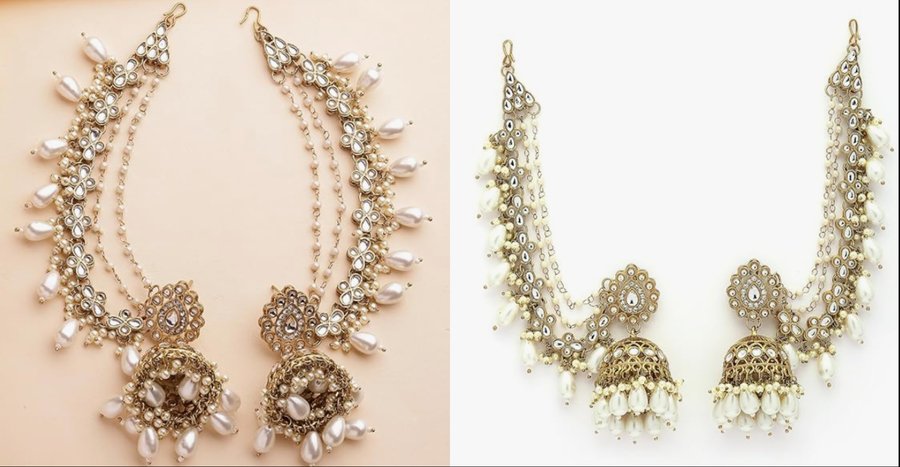
Zeneme traditional jhumkas are gold-plated alloy earrings set with kundan and white pearls, supplied with a multi-layered ear chain (sahara). They are built for weddings, festivals and ceremonial occasions — not for daily wear. At around ₹690, they deliver a full, bridal-style look.
Their most recognisable feature is the long chain running from the earring into the hair, where it clips in — known in north India as the sahara. Traditionally this served both ornament and purpose: shifting the weight of heavy earrings off the earlobe and onto the hair. This design carries three strands, set with teardrop white pearls and kundan.
Below sits the classic bell-shaped jhumka, its rim hung with a pearl fringe — the part that sways as you walk and gives a jhumka its life.
How do they look at first glance?
Most reviews say these look better in person than in the photographs. The finish is clean, the kundan setting is fine, and the gold tone is bright without turning gaudy. The recurring first reaction is much the same everywhere — they look more expensive than they cost.
An anti-tarnish finish is claimed, which should mean the shine holds up with reasonable care. The pairing of white pearls with gold-toned metal lets them work across red, maroon, green and cream outfits alike — a real practical advantage.
How do they feel when actually worn?
This is where their defining trait shows — they are heavy, and this is the single most repeated point across reviews. The sahara chain manages much of that weight, but does not remove it entirely. Worn continuously beyond four or five hours, the ears will feel it.
One further point raised in reviews: some women found the post noticeably thick, and it did not pass easily through smaller piercings. If your piercing is small or has partly closed over, weigh this up before buying.
For a long function such as a wedding or Karwa Chauth, clip the sahara chain firmly into your hair — that is the real trick to carrying the weight. In heat and humidity, perspiration dulls plating faster, so wipe the earrings with a soft dry cloth when you get home and store them in an airtight pouch. Put your perfume and hair spray on first, and the earrings last.
What are the pros and cons?
✅ Pros
- Sahara chain included — the single biggest relief for heavy jhumkas
- Most reviews agree they look better in person than in photos
- Fine kundan setting and a neat pearl fringe
- Gold-and-white pairing works with almost any outfit colour
- Anti-tarnish finish claimed — shine holds with care
- Well suited to gifting — they arrive boxed and look expensive
⚠️ Cons
- They are heavy — the most repeated complaint; ears tire over long wear
- Thick post — may not pass easily through smaller piercings
- Not for daily wear — both size and weight suit occasions only
- Opinions on the price are divided in some reviews
Who should buy these jhumkas, and who should skip them?
These are for women who want a full, traditional look for weddings, festivals or Karwa Chauth and can carry a little weight. If you want light earrings for everyday wear, or your piercing is small, these are not the right pair.
| Right for ✅ | Not right for ❌ |
|---|---|
| Women attending weddings, receptions and festivals | Daily office or college wear |
| Brides wanting a full traditional look | Anyone who prefers very light, small earrings |
| Those with open hair or a bun (for the sahara chain) | Small or delicate piercings |
| Gift buyers — they arrive boxed | Anyone who cannot tolerate weight on the ears |
How do you wear jhumkas in modern life?
Jhumkas are no longer confined to sarees and lehengas. A good pair transforms a plain kurta, an indo-western dress, even a white shirt — provided the rest of the jewellery stays light.
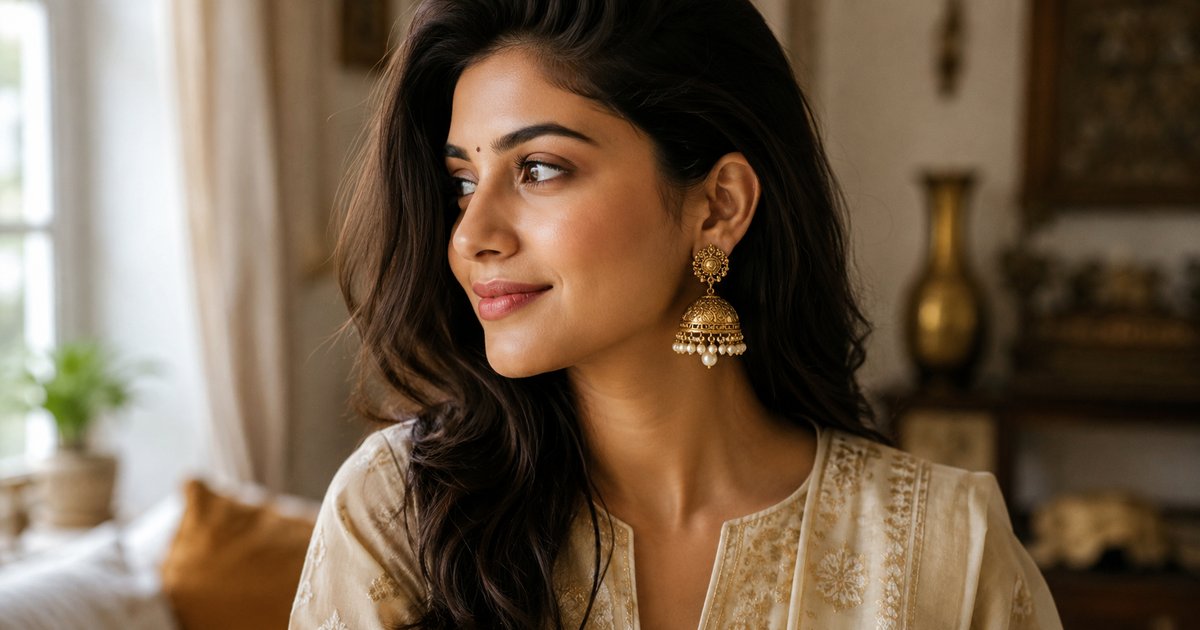
One easy rule worth remembering: if the earrings are large, leave the neck bare. That is exactly what the photograph above does — a simple kurta, hair tucked behind one ear, and the earrings as the only ornament. It is the most composed look available to a woman today, holding tradition and modernity at once.
A second suggestion — save heavy jhumkas like these for the evening. Pearls and kundan come alive under evening light in a way they never do in daylight. And on the day you wear them, keep your hair open or in a loose bun, so the sahara chain can clip in properly and be seen.
Final verdict — are they worth buying?
Yes for occasions, no for everyday
At around ₹690, these jhumkas deliver the kind of full traditional presence that usually costs considerably more — the fine kundan setting, the pearl fringe and the included sahara chain make them read as more expensive than they are. The score of 7.6/10 reflects that: they are strong on looks and craftsmanship, but the weight is a genuine limitation that cannot be waved away, since many buyers raise the same point, and the thick post can be an obstacle for smaller piercings. So the plain answer is this — if you are shopping for a wedding, for Karwa Chauth or for one special evening, these will not disappoint you. If you want earrings for daily wear, look instead at lighter oxidised pairs. And on the day you step out wearing them, you will be carrying forward a tradition that has travelled from the figurines of Harappa all the way to your ears. 🌸
Frequently Asked Questions
Which type of jhumka is in trend right now?
Which earrings look best on a round face?
How do I match jhumkas with a saree?
What are the best jhumka designs for girls?
How can I wear heavy jhumkas without pain?
How old is the tradition of wearing jhumkas in India?
Are there any health benefits to wearing jhumkas?
What should I check when buying jhumkas online?
🛒 Check today's price and availability
Zeneme Traditional Kundan Pearl Jhumkas + Multi-Layered Ear Chain · Roopalia Score 7.6/10