🪔 Tradition Guide
SOLAH SHRINGAR · KARWA CHAUTH 2026
Solah Shringar — The Complete List & Meaning
And Your Full Karwa Chauth 2026 Guide, Head to Toe
Solah Shringar — the sixteen adornments — is a tradition of the Indian woman that goes back thousands of years: sixteen elements from head to toe, each with its own meaning, its own story, its own blessing. And Karwa Chauth is the day this tradition comes fully alive. This year Karwa Chauth falls on Thursday, 29 October 2026. In this guide: all 16 adornments with their significance, and the complete preparation for the vrat — everything in one place.
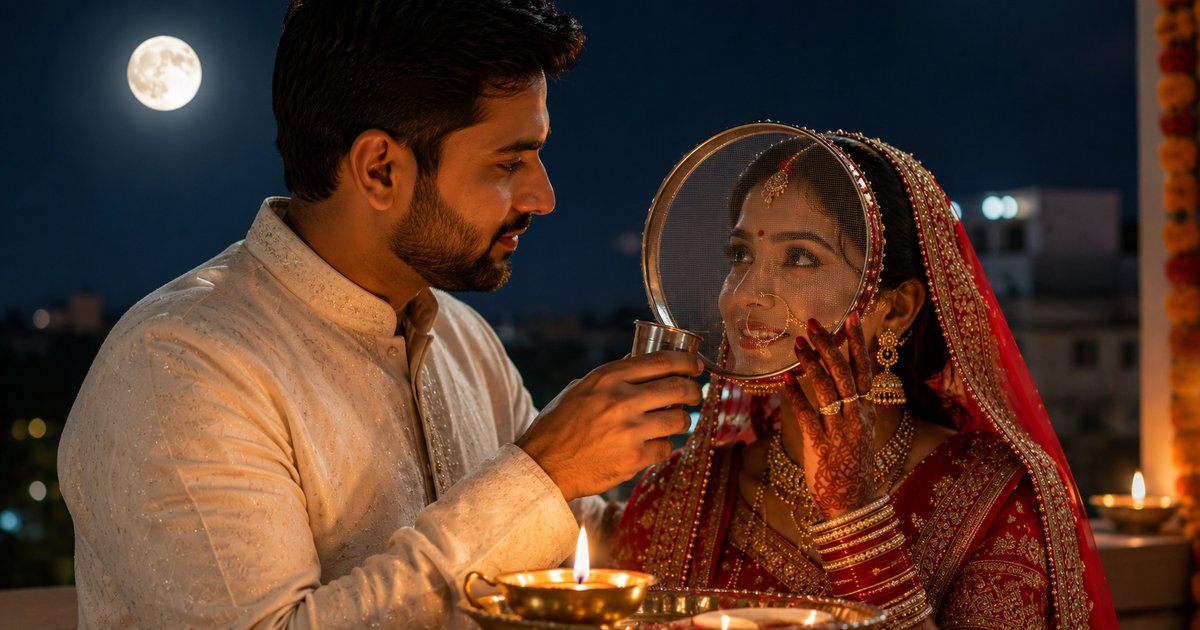
Solah shringar is not merely beauty — it is a living expression of love, devotion and the celebration of married life. On Karwa Chauth evening, when a woman adorned head to toe looks first at the moon through a sieve, and then at her husband's face through the same sieve — in that one moment, the whole day's hunger and thirst turn to sweetness. The selfless resolve of the nirjala fast says simply: your long life is my greatest wish. And that resolve pours a new sweetness into the marriage, year after year.
In a hurry? The short answer: The sixteen adornments are — sindoor, bindi, maang tikka, kajal, nath, necklace, earrings, mehndi, armlet, bangles, waistband, ring, saree, hair, fragrance and ubtan. Use the table below to jump to any of them. If you are planning your shopping, order the mehndi now (you get practice time), and the rest by the first week of October.
What Is Solah Shringar — and Why Sixteen?
'Solah' means sixteen, 'shringar' means adornment. But the tradition is about more than beauty — it is linked to the sixteen phases (kalas) of the moon: just as the moon reaches fullness through sixteen phases, a woman's adornment reaches completeness through sixteen elements. The Puranas connect it to Goddess Lakshmi and Parvati — it is said Goddess Parvati wore these very sixteen adornments at her wedding. That is why a married woman's solah shringar is seen as a symbol of good fortune, positive energy and unbroken suhaag — with special significance on Karwa Chauth, Teej and Diwali.
The Sixteen Adornments — Head to Toe, One by One
Below is the significance of each adornment. Where we have reviewed products on our own site, you will find our pick as well — prices are written as "around" because Amazon prices keep changing.
1
1. Sindoor (Vermilion)
Sindoor in the hair parting is the most sacred sign of a married woman. It is believed that the longer the sindoor line, the longer the husband's life. On Karwa Chauth evening, after the puja, the husband fills his wife's parting with sindoor — the most emotional moment of the entire vrat.
2
2. Bindi
Worn at the centre of the forehead, the bindi sits at the Ajna chakra (the third eye) — a symbol of wisdom and inner sight. A married woman's red bindi is considered a mark of good fortune. On Karwa Chauth, a large decorative bindi completes the festive look beautifully.
3
3. Maang Tikka
Resting at the centre parting, the maang tikka sits at the point believed to house the soul. It symbolises a woman's judgement and balance — the crowning glory of a bride's shringar.
4
4. Kajal
Kajal deepens the beauty of the eyes and is traditionally believed to guard against the evil eye. From the morning sargi to the moonrise — a kajal that lasts the whole day is the right choice for Karwa Chauth.
5
5. Nath (Nose Ring)
The nath is the most striking piece of a married woman's shringar — the first thing the eye falls on. In Ayurveda the left nostril is linked with feminine health, which is why tradition places the nath on the left side.
6
6. Mangalsutra / Necklace
A necklace rests close to the heart — which is why it is seen as a symbol of love and protection. The mangalsutra is the sacred bond of marriage, and a festive necklace beside it is the soul of the whole shringar.
7
7. Earrings (Karnphool)
Jhumkas sway with a woman's every step — like music in motion. Ayurveda links gentle pressure on the earlobe with wellbeing, which is why ear ornaments have always been integral to shringar. (Our necklace sets above come with matching earrings.)
8
8. Mehndi (Henna)
They say the deeper the mehndi's colour, the deeper the husband's love. Applying mehndi the evening before Karwa Chauth is the sweetest ritual of this vrat — done sitting among friends, amid laughter and teasing.
9
9. Baju-band (Armlet)
Once worn by warriors and queens, the armlet is a symbol of strength and protection. Today it is a regal adornment for special occasions, gracing the arms alongside a lehenga or saree.
10
10. Choodiyan (Bangles)
The tinkling of bangles is considered the sound of suhaag — an auspicious ring through the house. Glass bangles are believed to keep energy in motion, which is why a married woman's wrist is never left bare.
⚠️ One honest note — these are glass bangles, so one or two may arrive broken in transit (reviews mention 3 broken out of 120). That risk comes with glass; the set is generous enough that it hardly matters.
11
11. Kamarband (Waistband)
The kamarband was a favourite of Mughal queens. It symbolises a woman's dignity and grace — worn over a lehenga, it turns the whole look royal.
12
12. Ring (Anguthi)
The ring on the fourth finger marks the marital bond. The old belief holds that a vein from this finger runs straight to the heart — which is why the engagement ring is placed here.
13
13. Saree / Lehenga
On Karwa Chauth, red, maroon and pink are the auspicious shades — the colours of suhaag. New brides often wear their wedding outfit itself, so that day comes alive once more.
14
14. Kesh Shringar (Hair)
Well-dressed hair is the foundation of shringar — bun, braid or open waves, jewellery only shines when the hair beneath is groomed. The old texts give kesh-rachana its own place among the sixteen adornments.
15
15. Itra (Fragrance)
Fragrance is the one shringar that cannot be seen, yet lingers longest in memory. From the Mughal queens to today, scent has been the signature of a woman's presence.
16
16. Ubtan / Skin Glow
Solah shringar begins with the bath and ubtan — brightening the skin with turmeric, sandalwood and saffron is a tradition thousands of years old. Preparing the skin before adornment is the true foundation of shringar.
Preparing for Karwa Chauth — A Simple Timeline
1️⃣ A week before
Begin the skin prep — 2-3 drops of kumkumadi oil at night. Finalise the saree or suit and get the blouse fitted. Gather the bangles, bindi and nath in one place so the final day is calm.
2️⃣ One or two days before
Apply the mehndi — its colour is deepest after 24-48 hours. Soak the powder 12-20 hours ahead. Wash the hair in advance so only styling remains on the day.
3️⃣ On Karwa Chauth day
Sargi before sunrise. Rest through the day — conserve strength during the nirjala fast. Do the solah shringar before the evening puja. Keep the chalni, diya and puja thali ready in advance, and check your city's moonrise time in the panchang — the first-Karwa-Chauth guide shows where to look it up, and what to do if cloud hides the moon.
🙏 About cost: This article names no shop and no brand, and carries no buying links. Every piece of shringar exists at every price. What you already own, and what suits you, is the right answer.
One Last Thing
🌙
The adornment is of the body; the resolve is of the heart
Truthfully, the real beauty of solah shringar lies not in sixteen objects but in the feeling with which they are worn. On Karwa Chauth evening, when you look at the moon through the sieve and then at your life partner's face through the same veil — in that moment, a tradition thousands of years old breathes within you. Dress up, adorn yourself, and take pride in your culture — that self-respect is the seventeenth, and loveliest, shringar of all. Wishing you all a very happy Karwa Chauth in advance. 🌸
Frequently Asked Questions
What are the 16 items of Solah Shringar?
From head to toe, the sixteen adornments are — sindoor, bindi, maang tikka, kajal, nath (nose ring), mangalsutra/necklace, earrings (karnphool), mehndi, baju-band (armlet), bangles (choodiyan), kamarband (waistband), ring, saree/lehenga, kesh shringar (hair), itra (fragrance) and ubtan/bath. Some lists also count bichiya (toe rings) and payal (anklets) — the list varies slightly by region, but the spirit is the same: a woman's complete adornment from head to toe, symbolising beauty and good fortune together.
When is Karwa Chauth in 2026?
Karwa Chauth 2026 falls on Thursday, 29 October. It is observed on the Chaturthi of Krishna Paksha in the month of Kartik. Married women keep a nirjala fast (without food or water) from sunrise to moonrise. Moonrise timing differs slightly by city (roughly around 8 pm), so do confirm your city's exact time and puja muhurat with a local panchang.
Why is the moon seen through a sieve (chalni) on Karwa Chauth?
The chalni ritual is the most beautiful moment of this vrat. Tradition holds that viewing the moon through a sieve, rather than directly, shields one from the moon's dosha. A lit diya is placed in the sieve; the woman first views the moon through it, then her husband's face through the same sieve — as if to say, my moon is right here. The husband then offers her water with his own hands to break the fast. This is the moment the whole day waits for.
What is sargi and when is it eaten?
Sargi is the pre-dawn thali that a mother-in-law gives her daughter-in-law — fruits, sweets, dry fruits, mathri and seviyan. It is eaten on Karwa Chauth morning before sunrise (around 4-5 am), to give strength for the day-long nirjala fast. Sargi carries the mother-in-law's blessing. After sunrise the fast begins, and no food or water is taken until moonrise.
Which colours should be worn on Karwa Chauth, and which avoided?
The most auspicious colours are red, maroon, pink, orange and gold — the colours of suhaag. New brides often wear their wedding outfit itself. Black and white are traditionally avoided on this day, as they are considered inauspicious for vrats and festivals. Green is also auspicious in many regions, especially green bangles.
Can unmarried girls do solah shringar?
Solah shringar is traditionally the adornment of a married woman — items like sindoor, mangalsutra and bichiya are signs of marriage and are worn only after it. But the rest — kajal, mehndi, bangles, earrings, bindi — any girl can wear. In many regions, unmarried girls also keep the Karwa Chauth fast wishing for a good life partner, breaking it after sighting a star rather than the moon.
When should mehndi be applied so the colour is deep on Karwa Chauth?
Apply mehndi one or two days before Karwa Chauth, since its colour deepens over 24-48 hours. Soak the powder 12-20 hours ahead, keep the paste on for 4-6 hours, and after removing it avoid water — rub in mustard oil or a lemon-sugar mix instead. The old saying goes: the deeper the mehndi, the deeper the husband's love — so give it its full time to set.
Is there a scientific or Ayurvedic side to solah shringar?
Yes — solah shringar is not just beauty, it is old wisdom too. Kajal protected the eyes from dust, mehndi is cooling and calming, the gentle friction and ring of bangles was linked to keeping energy in motion, the nath is connected in Ayurveda with feminine health, and ubtan with turmeric and sandalwood was the original skincare. Tradition and self-care have always walked together here.