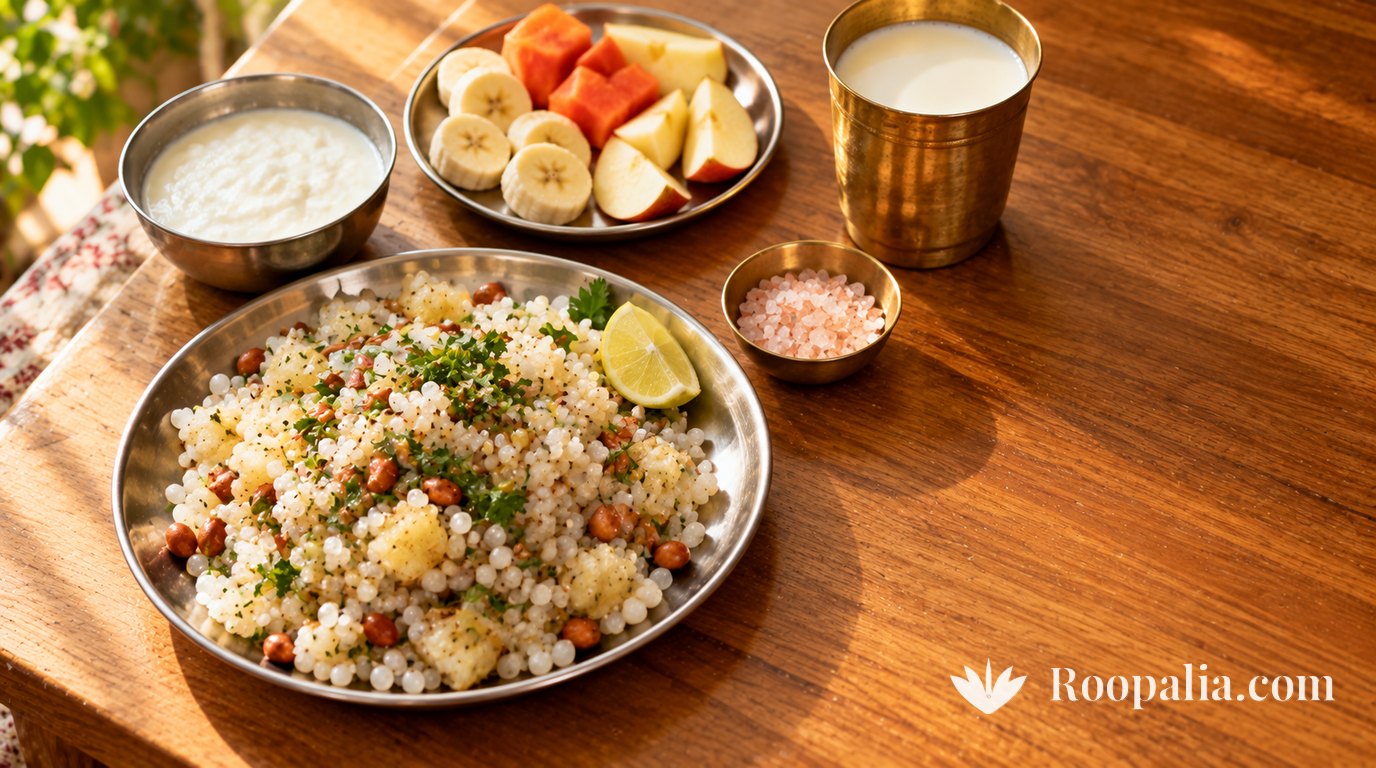
You are standing in a supermarket aisle holding a packet, reading the back of it, and you have no idea whether it is allowed.
There is nobody in the next room to ask. The shop has no fasting section. And the list you found online mentions singhare ka atta, which is not sold within forty miles of you.
Every guide to Hindu fasting food assumes you are cooking in India. This one assumes you are not.
So rather than another list you cannot use, here is the rule the lists are made from — one test you can apply to anything, anywhere.
🙏 Every scriptural reference below was opened and checked on wisdomlib, with the link beside it. Where we looked for something and did not find it, we say so — and one of those gaps concerns a rule almost every household treats as scripture.
🩺 Nothing here urges anyone to fast. It sets out what the tradition has said. Any decision about your own health belongs with your doctor.
First: which fast are you actually keeping?
This is the step everybody skips, and it decides everything that follows.
Hindu fasting is not one practice. The Garuda Purana sets out a whole graded series, and names two of them precisely:
“On the first day a devotee should observe Ekabhakta vrata (having food only once a day in the noon). On the second day he should observe Nakta vrata (having food only once a day in the night).”
— Garuda Purana — Different Kinds of Austerities
Above those sit harder ones — krichchha, paraka (twelve days on nothing), chandrayana (a month of food reduced and raised with the moon).
So "keeping a fast" does not by itself tell you what you may eat.
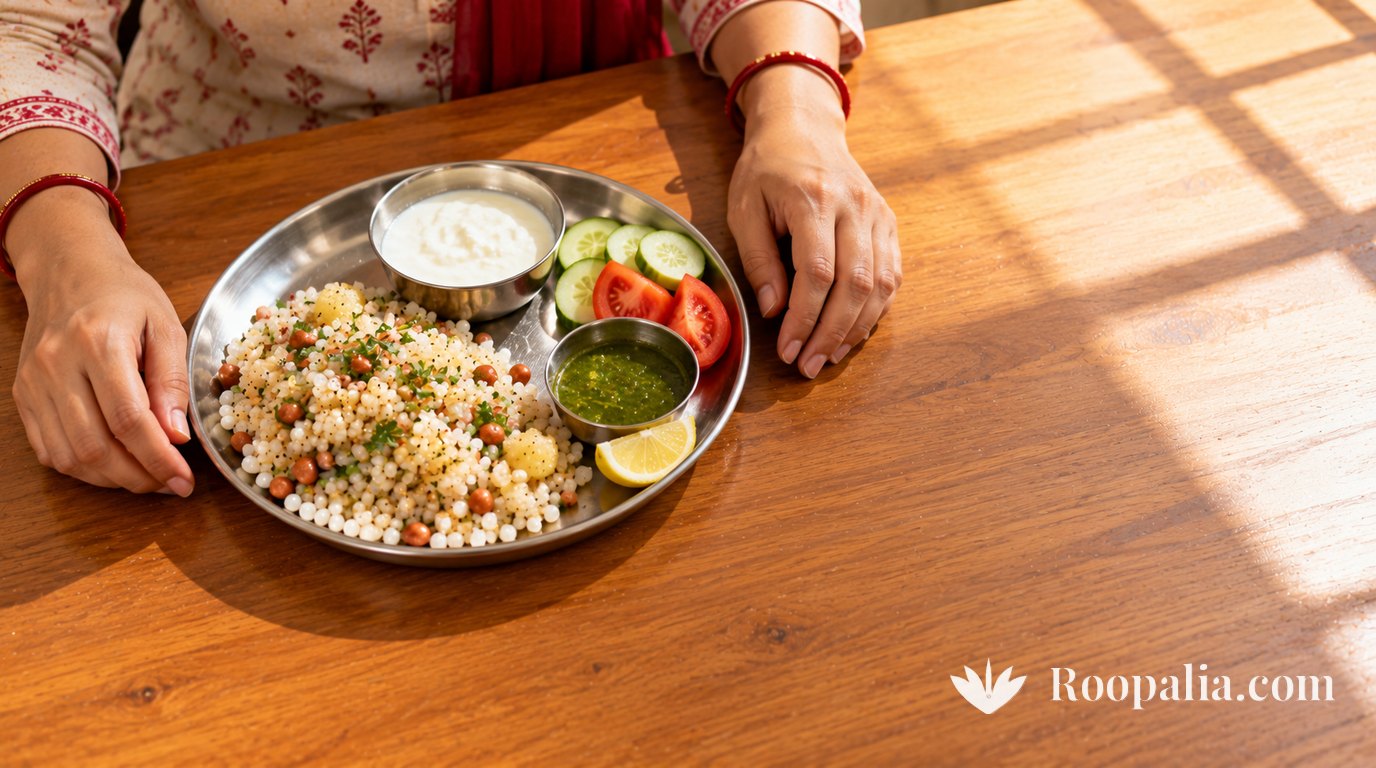
What most families actually keep is nakta — fruit and milk through the day, one proper meal after sunset. It has a name, it is defined in a Purana, and it is a complete fast in its own right.
If you have been quietly feeling that eating in the evening means you did not really fast — that is the fast. It has a name.
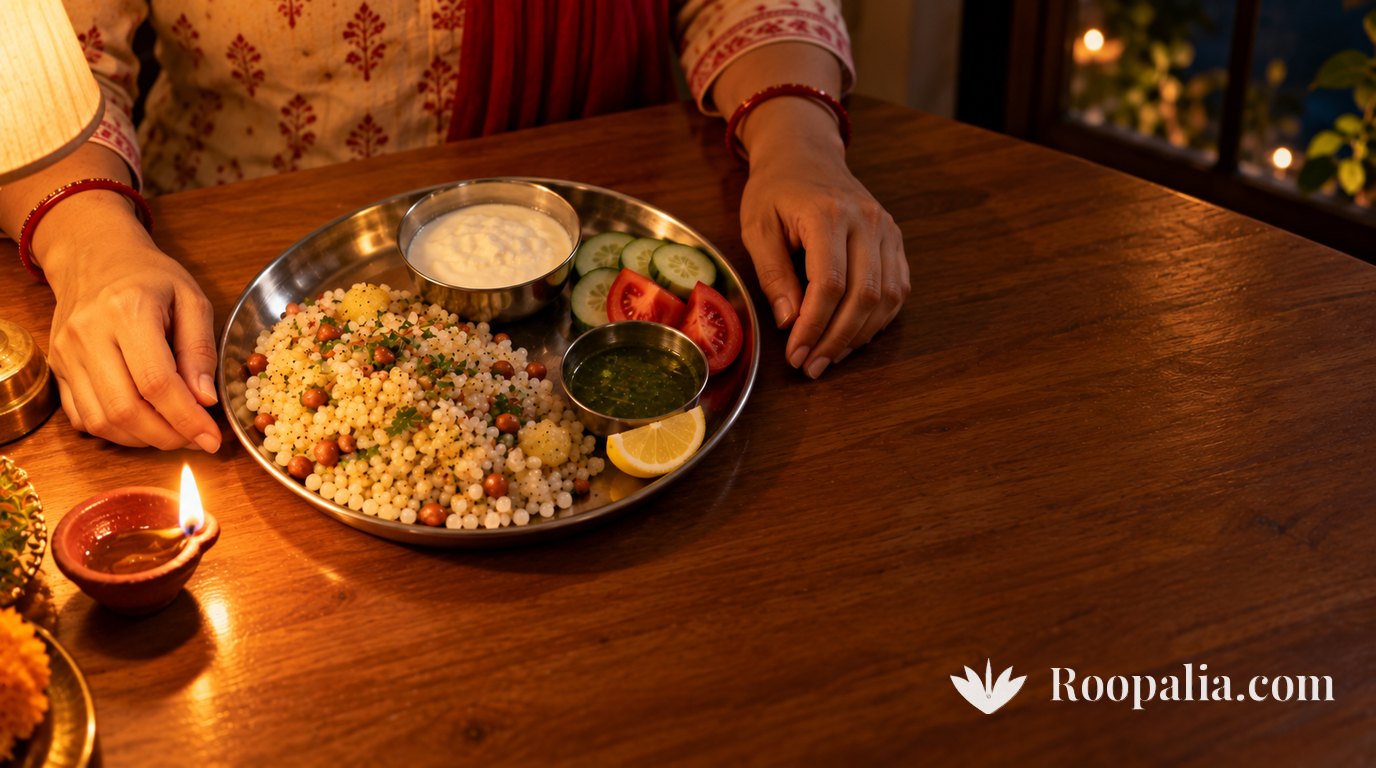
Same table. Same plate. Only the hour changed — and with it, the name of the fast.
The one test underneath every list
Here is the rule. Everything else is application.
Out: grains, pulses, and ordinary table salt.
In: whatever comes from a tree, an animal, or straight out of the ground.
That is the whole thing. Wheat, rice, maize, barley, millet, semolina and refined flour are out because they are cultivated grain. Lentils and gram flour are out because they are pulses. Table salt is out — more on that later, because the reason is not what you have been told.
And this is why kuttu and singhara are permitted at all: they are not grains. Buckwheat is a fruit seed, botanically closer to rhubarb than to wheat. Water chestnut grows in a pond. Amaranth is a leaf crop. They look like flour; they are not cereal.
Once you hold that test, you do not need anyone's list. You can turn a packet over, read the ingredients, and decide in ten seconds.
What you can eat
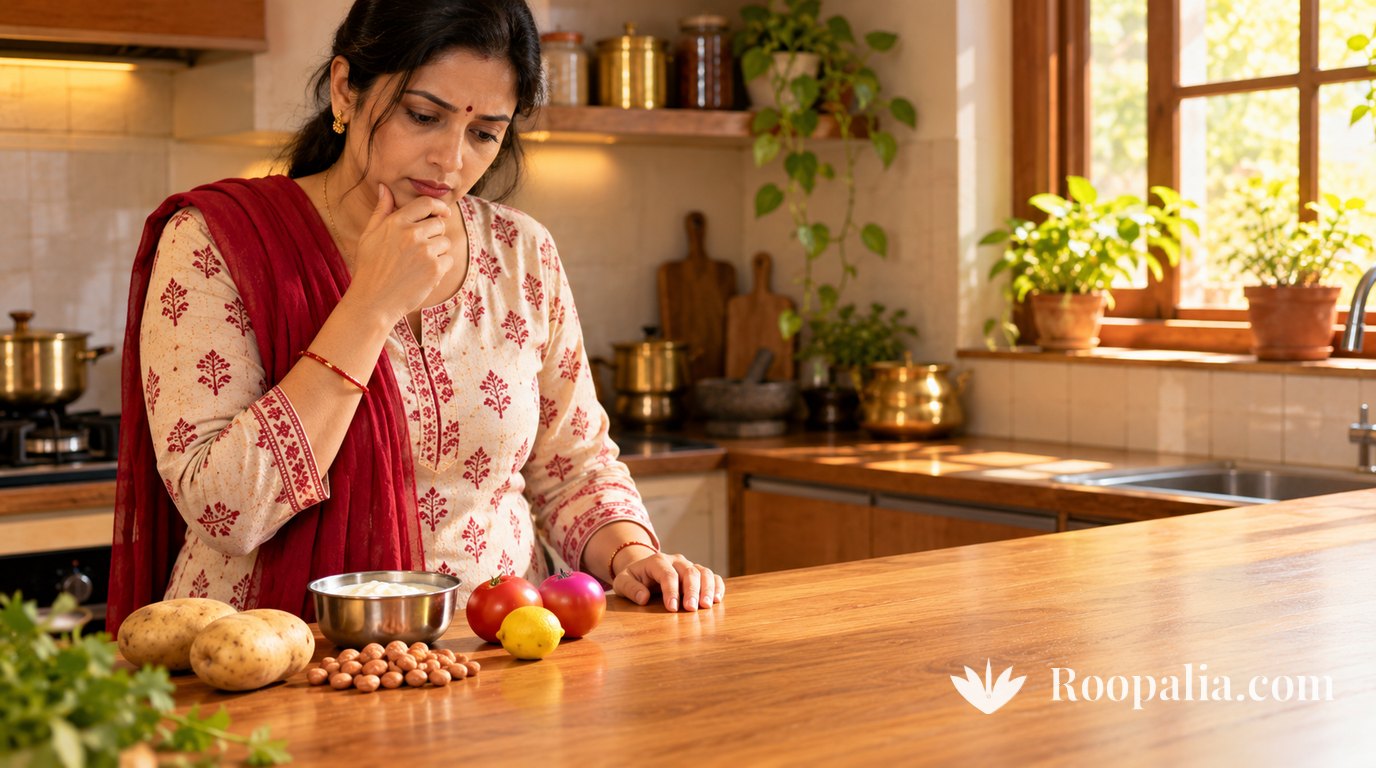
- Flours that are not cereal — buckwheat (kuttu), water chestnut (singhara), amaranth (rajgira), barnyard millet (samak)
- Tapioca pearls (sabudana) and fox nuts (makhana)
- Potato, sweet potato, colocasia, yam, raw banana, bottle gourd, pumpkin
- All dairy — milk, curd, paneer, butter, ghee, cream
- All fruit
- Peanuts, almonds, cashews, raisins, coconut
- Cumin, black pepper, green chilli, ginger, fresh coriander
- Rock salt in place of table salt
What you cannot
- Any cereal grain — wheat, rice, maize, barley, millet, semolina, refined flour
- Lentils, beans and gram flour
- Ordinary table salt
- Onion and garlic
- Meat, eggs and alcohol
The questions people actually type
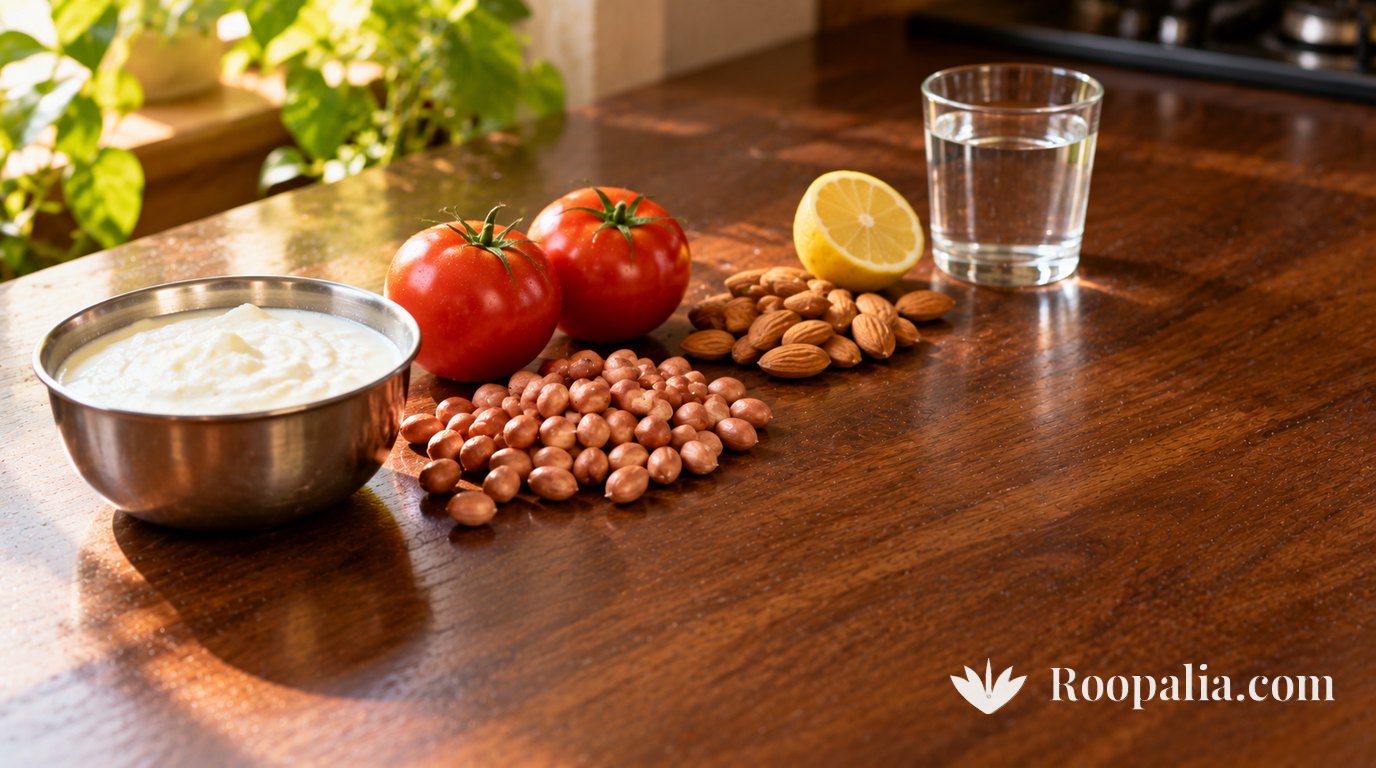
Google's own suggestions show which foods people name out loud. Here they are, answered:
| Food | Allowed? | Why |
|---|---|---|
| Cheese | Usually | It is dairy, so the principle allows it. But check for animal rennet — most hard cheeses outside India use it, and it is not vegetarian. Look for "vegetarian rennet" or "microbial enzymes". |
| Curd / yoghurt | Yes | All dairy is permitted. The one exception is the Friday Santoshi Mata fast, which forbids everything sour. |
| Tomato | Mostly | It is a fruit, not a grain. Practice varies by region and some families leave it out. |
| Peanuts | Yes | An oilseed, not a pulse — and the main source of strength in fasting food. |
| Almonds and nuts | Yes | All permitted. |
| Ice cream | Read the label | Dairy in principle, but shop ice cream usually carries starch, glucose syrup or wheat derivatives. |
| Fizzy drinks | No | Nothing shop-made is taken on a fast day by custom, and they sharpen hunger rather than settle it. |
| Lemon water | Yes | With rock salt. The simplest protection against the mid-afternoon crash. |
Packets labelled "vrat" or "falahari" deserve suspicion, not trust. A good many contain gram flour or refined flour regardless of the word on the front. The label is the authority, not the name.
When you cannot find kuttu, singhara or rock salt
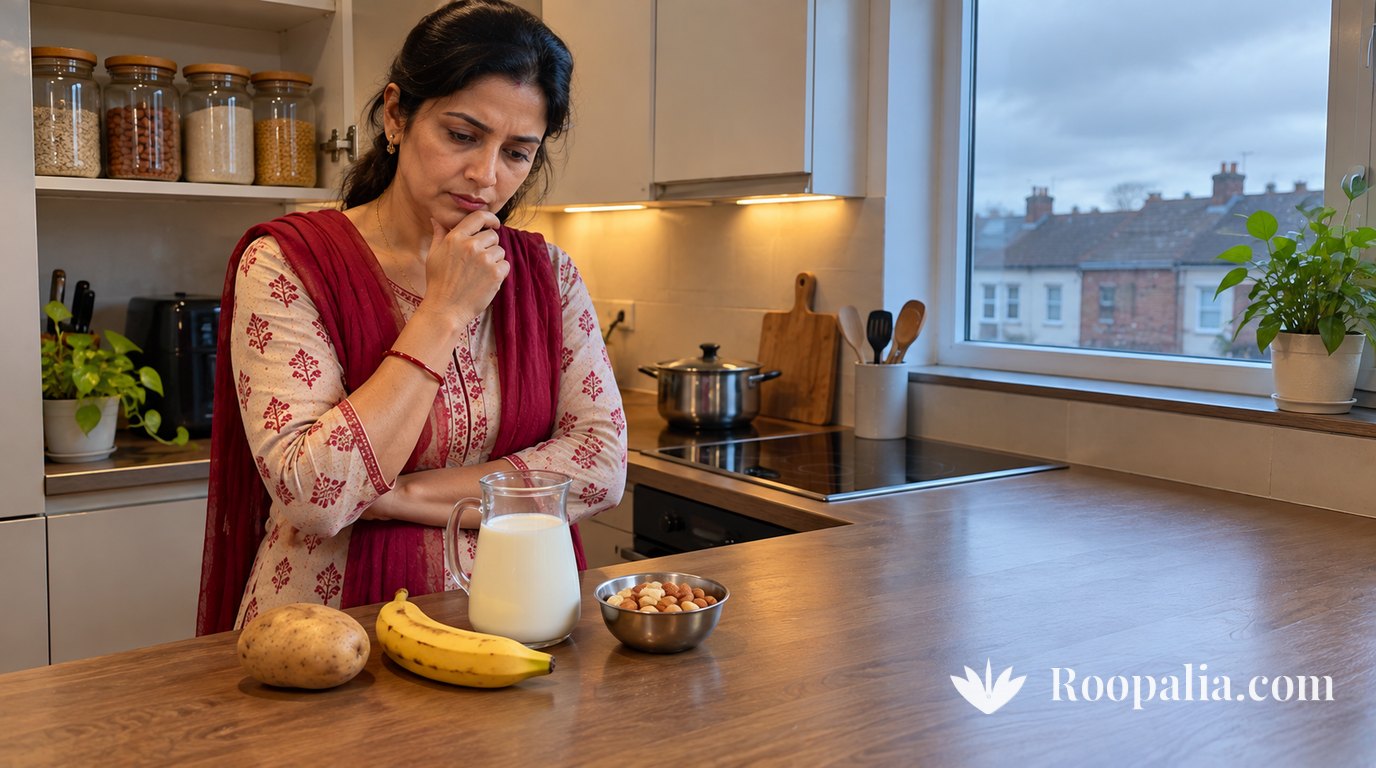
This is the part no Indian guide addresses, so here it is plainly.
- No buckwheat flour? Boiled potato, mashed, binds and fries perfectly well. Plenty of households in India do exactly this and think nothing of it.
- No water chestnut or amaranth flour? Health-food aisles almost everywhere stock buckwheat flour under that English name, and it is the same thing as kuttu. Amaranth is often sold as a "supergrain" despite not being one.
- No sabudana? It is sold as tapioca pearls in East and Southeast Asian shops, usually cheaper than at an Indian grocer.
- No rock salt? Pink Himalayan salt is the same mineral under a different marketing name. And if there is none at all, cook without salt — read the salt section below before you worry about this one.
- Nothing at all? Milk, curd, fruit, potatoes and nuts exist in every country on earth, and honestly, that is what fasting food is actually made of.
Fasting through a working day
A nine-to-five and a full fast do not sit easily together, and pretending otherwise helps nobody.
But nakta was built for precisely this life. Fruit and milk through the day, one proper meal when you get home. It is not a compromise or a lesser version — it is a named observance in the Garuda Purana, and it happens to fit an office day better than it ever fitted a farming one.
Two practical notes. Carry something — a banana, a handful of nuts, a small box of makhana — because the failure point is almost always four in the afternoon in a meeting. And lemon water with a pinch of rock salt at midday does more than plain water; the crash most people blame on hunger is often salt and water, not food.
Medicine, illness, and what the texts actually say
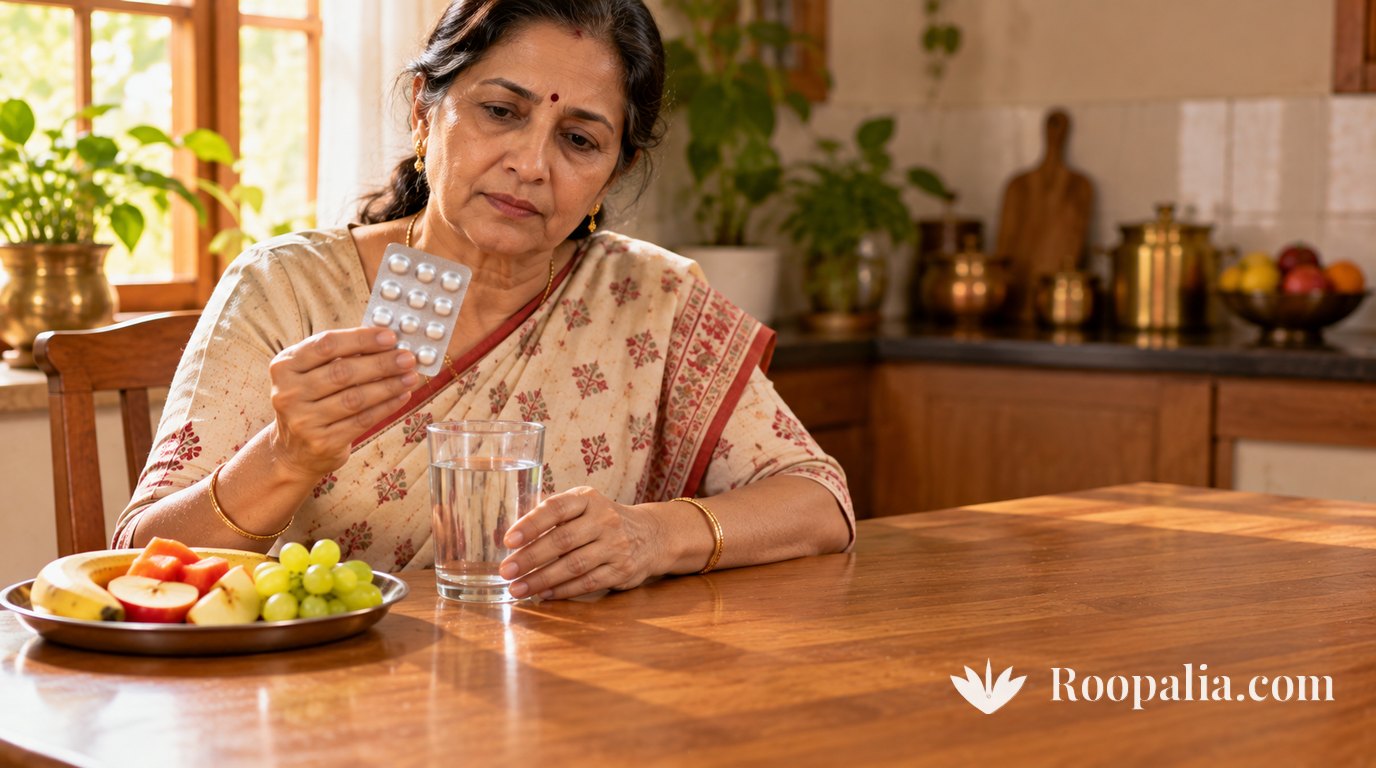
People do skip medication to keep a fast intact. It is worth knowing that the tradition never asked them to.
Devala-smriti lists the circumstances in which a vow is not broken:
Devala-smriti, verse 844 — the vow stands unbroken when breached because of:
(1) danger to or from any living being · (2) disease · (3) a genuine mistake · (4) the command of an elder
Illness is itself an exemption. Someone on regular medication should take it, and by this reckoning their vow is not damaged.
That matters most where the medicine and the meal are tied together — diabetes, blood pressure, thyroid. This article cannot replace your doctor: if you take anything regularly, ask them before you fast. And if you feel faint, if your vision greys at the edges, if your hands shake or your heart races — eat something immediately. No fast outranks your health, and the texts themselves say so.
Salt: what I looked for, and did not find
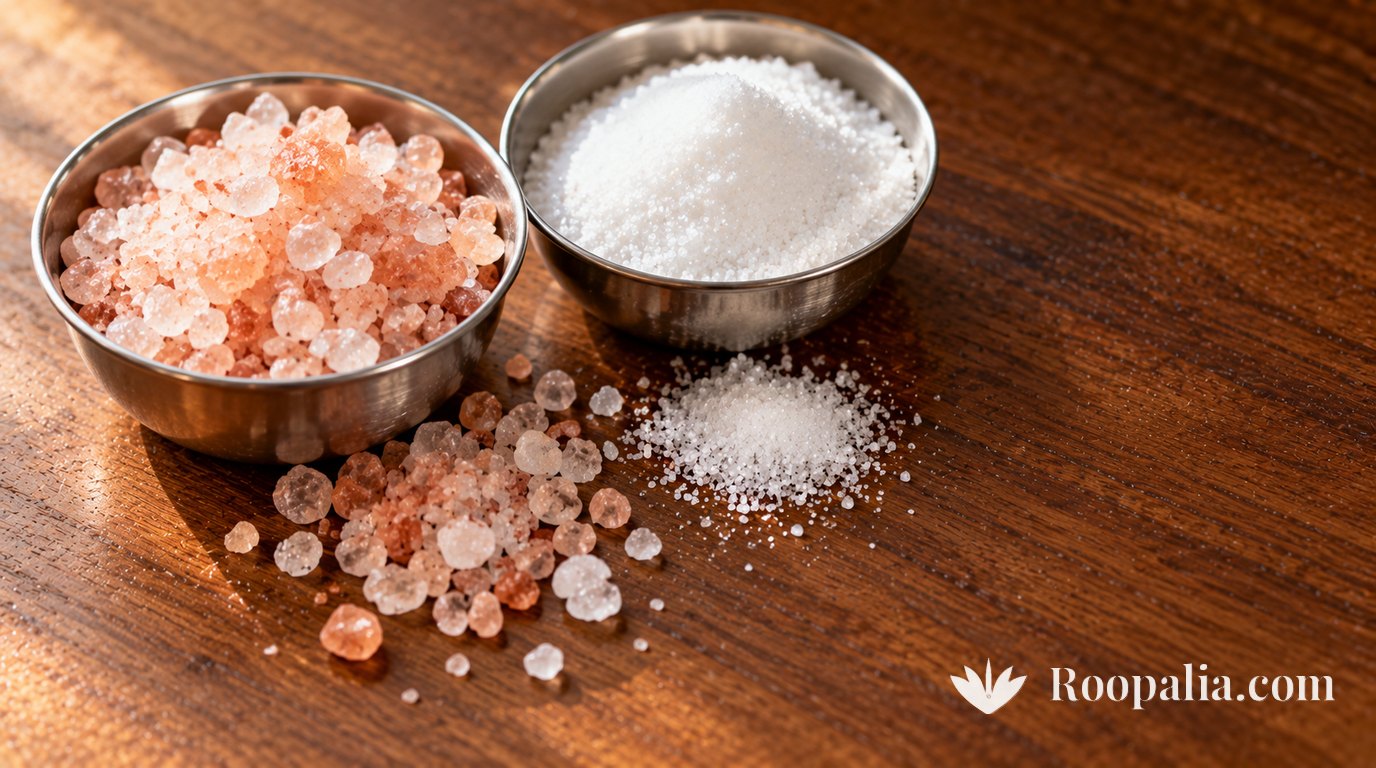
Everyone knows the rule. Far fewer pages say where it comes from — so I went looking.
The Sanskrit word is saindhava. Its reference entry cites nine works — Rasajalanidhi, Bhojanakutuhala, the Garuda Purana, Kashyapa Samhita, Manasollasa, Matangalila, Brihat Samhita and others.
Not one of them connects rock salt to fasting.
Every citation is medical, alchemical or culinary — treating wounds, snakebite, massage oils, even the care of elephants. Searching beyond those texts turned up the same pattern: the pages that explain the rule are salt sellers, recipe sites and Ayurveda shops, and none of them cites a scripture either.
This is not a claim that no such verse exists anywhere in Sanskrit literature — nobody can prove that. It is a report of what a serious search turned up, which was nothing.
The most defensible explanation is the simplest one. Rock salt is mined and used as it comes; table salt is manufactured. Fasting food runs on exactly that logic — the less a thing has been processed, the more suitable it is. Which makes the rule a sound tradition rather than a scriptural command, and there is no harm at all in keeping it. It is only worth knowing which of the two it is.
The same turned out to be true of phalahara, the word used for fasting food itself. Its entry cites the Matsya Purana, Sushruta and the Savitri episode of the Mahabharata — and none of them ties it to vrata. It means living on fruit, not fasting on fruit.
Which fast, which rule
| Fast | What is distinctive |
|---|---|
| Ekadashi | Grain absolutely forbidden, rice above all. Fruit, dairy and nuts permitted. |
| Monday (Somvar) | For Shiva. Fruit through the day, one meal after the evening puja. |
| Tuesday | For Hanuman. Jaggery and wheat are customary in many homes — so grain is not excluded here. |
| Thursday | Yellow foods — gram, jaggery, banana. Milk is taken. Many households use no salt at all. |
| Friday | Santoshi Mata — everything sour is forbidden: lemon, tamarind, curd, buttermilk, tomato, pickle, raw mango. |
| Saturday | Fruit through the day, one meal after sunset. |
| Pradosh | On the thirteenth lunar day; the meal follows the twilight puja. |
| Shivratri | Usually kept without food entirely, or on water and milk alone, broken the next morning. |
| Navratri | Nine days of the permitted-flour list, potato, fruit and dairy. No onion or garlic. |
One distinction on Ekadashi that is rarely mentioned. Devala-smriti's verse 863 holds that fasting on the eleventh day of both fortnights belongs to forest-dwellers and ascetics, while a householder should keep only the bright-fortnight Ekadashi — one a month, not two.
What breaks a fast, and what does not
Devala-smriti lists four things to avoid on the day itself:
“He should avoid drinking water repeatedly, eating the tambula, sleep during day time and cohabitation.”
— Devala-smriti, verse 848
Sleeping during the day breaks a fast. It is there in plain words, and it almost never survives into the modern lists.
And the four things the same text makes non-negotiable are not about food at all — celibacy, non-violence, truthfulness, and abstaining from meat. The tradition was always more interested in conduct than in the plate.
The short version
Do not memorise a list. Hold the test: grains, pulses and table salt are out; tree, animal and ground are in. That one line will get you through any supermarket in the world.
Decide which fast you are keeping before you decide what to cook — ekabhakta at noon, nakta after sunset, or nothing at all. All three are fasts. You were never required to choose the hardest one.
And if you are ill, on medication, pregnant or simply running out of strength — eat. That exemption has been written down for a very long time, and it was put there to be used.
What can you eat during a Hindu fast?
What can Hindus not eat when fasting?
Can I eat cheese during a Hindu fast?
Can I take medicine during a Hindu fast?
Why is rock salt used instead of ordinary salt during fasting?
What is nakta vrata?
How do I fast if I cannot find kuttu flour or rock salt where I live?
What breaks a Hindu fast?
What does upavasa actually mean?
What should I eat during Ekadashi fasting?
Sources and cautions: the scriptural references here were opened on wisdomlib and are linked in the article — the Garuda Purana (the definitions of ekabhakta and nakta vrata), Devala-smriti verses 841, 844, 845, 848, 849 and 863 (what breaks a fast, what does not, and the householder’s Ekadashi), and the reference entries for upavasa, saindhava and phalahara. Two caveats worth stating plainly. First, we could not find any scriptural source connecting rock salt or phalahara to fasting; both words appear across many Sanskrit works, but in medical, alchemical and culinary contexts. That is a report of what our search found, not a claim that no such passage exists anywhere. Second, the day-by-day and festival rules vary by region and by family — the table shows the most widespread practice, not a ruling. Nothing here urges anyone to fast, and any decision about your own health, especially if you take regular medication, belongs with your doctor.