The Thursday fast at a glance
How many Thursday fasts should be kept?
- 16 Thursdays is the most widely followed vow, with the udyapan on the 17th Thursday.
- 7 Thursdays is a shorter vow, often taken the first time.
- 11 Thursdays is common for a particular wish.
- Every Thursday, without counting: some women keep it for life, as a weekly discipline.
When to start: by custom, on the first Thursday of the Shukla Paksha (waxing moon) of any month, except the month of Paush, when new vows are traditionally not begun. Missed a Thursday because of illness, travel or your period? Carry on from the next one and add the missed Thursday at the end of your count.
Thursday fast rules: dos and don'ts
An honest note: the rules about not washing hair and not sending clothes to the washerman come from the vrat katha; I did not find them in a scripture outside it. Avoiding salt is an old custom followed in almost every region. Some regions also avoid rice and khichdi, or lending and borrowing money, on Thursday; those are local customs.
What can you eat in the Thursday fast?
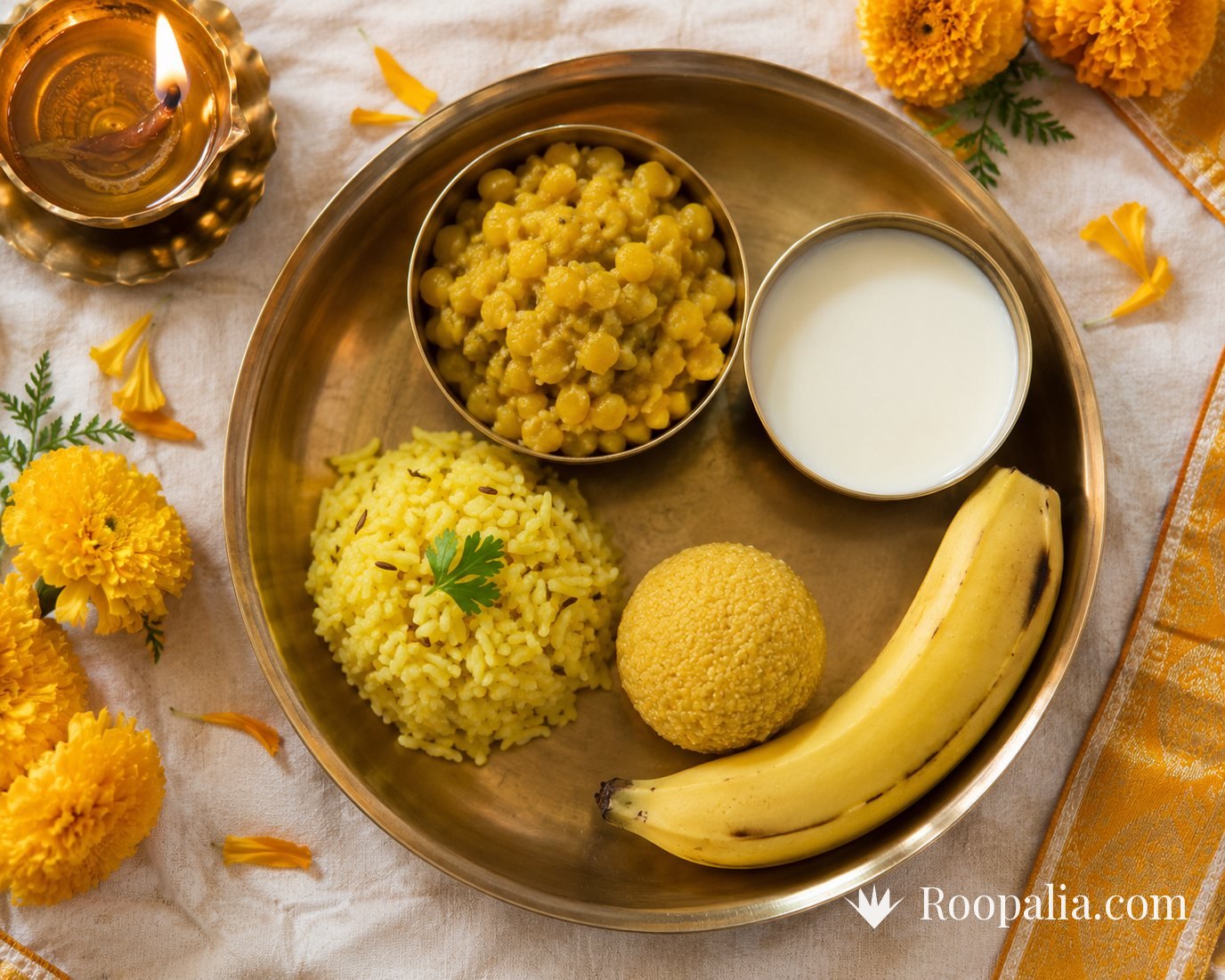
It is not a waterless fast. Most families eat once in the day, salt-free and yellow: chana dal, besan laddu or halwa, banana, jaggery sweets, milk, and turmeric rice where rice is not avoided. The katha itself says: eat yellow food, and only once in the day.
- Curd (yogurt): yes in most homes, since it is made from milk. Plain or lightly sweet, not salted raita or salted buttermilk.
- Potato: no scriptural rule either way (the potato reached India long after the old texts). Boiled or cooked without salt is common; salted sabzi and chips are not.
- Milk and tea: milk is fine, so is turmeric or saffron milk. One or two cups of milk tea, without salted snacks.
- Fruit: banana is considered the most auspicious, then yellow fruits like mango and papaya. No fresh fruit is forbidden.
- Salt: none, and in most homes not rock salt either. This is different from Ekadashi or Navratri, where rock salt is used.
The wider list of fasting foods, with supermarket swaps, is in what to eat during a Hindu fast.
What time should you break the Thursday fast?
The same evening. It is not an overnight fast like Karwa Chauth. The order is:
- Light the lamp in the evening and do the puja.
- Read or listen to the katha.
- Do the aarti and offer the chana dal and jaggery.
- Take the prasad, then eat your one meal. The fast is complete.
Most families eat before sunset; many eat after, and that is not considered wrong. The one firm rule is nothing before the puja and katha.
Thursday fast vidhi, step by step
- Bathe and wear yellow. A pinch of turmeric in the bath water, if you like.
- Sankalp (first Thursday). Hold a little rice, a flower and water, decide how many Thursdays you will keep, and release the water.
- Turmeric tilak on the forehead.
- Vishnu on a yellow cloth. Bathe the image or idol with water; offer yellow flowers, turmeric, rice grains and sandalwood.
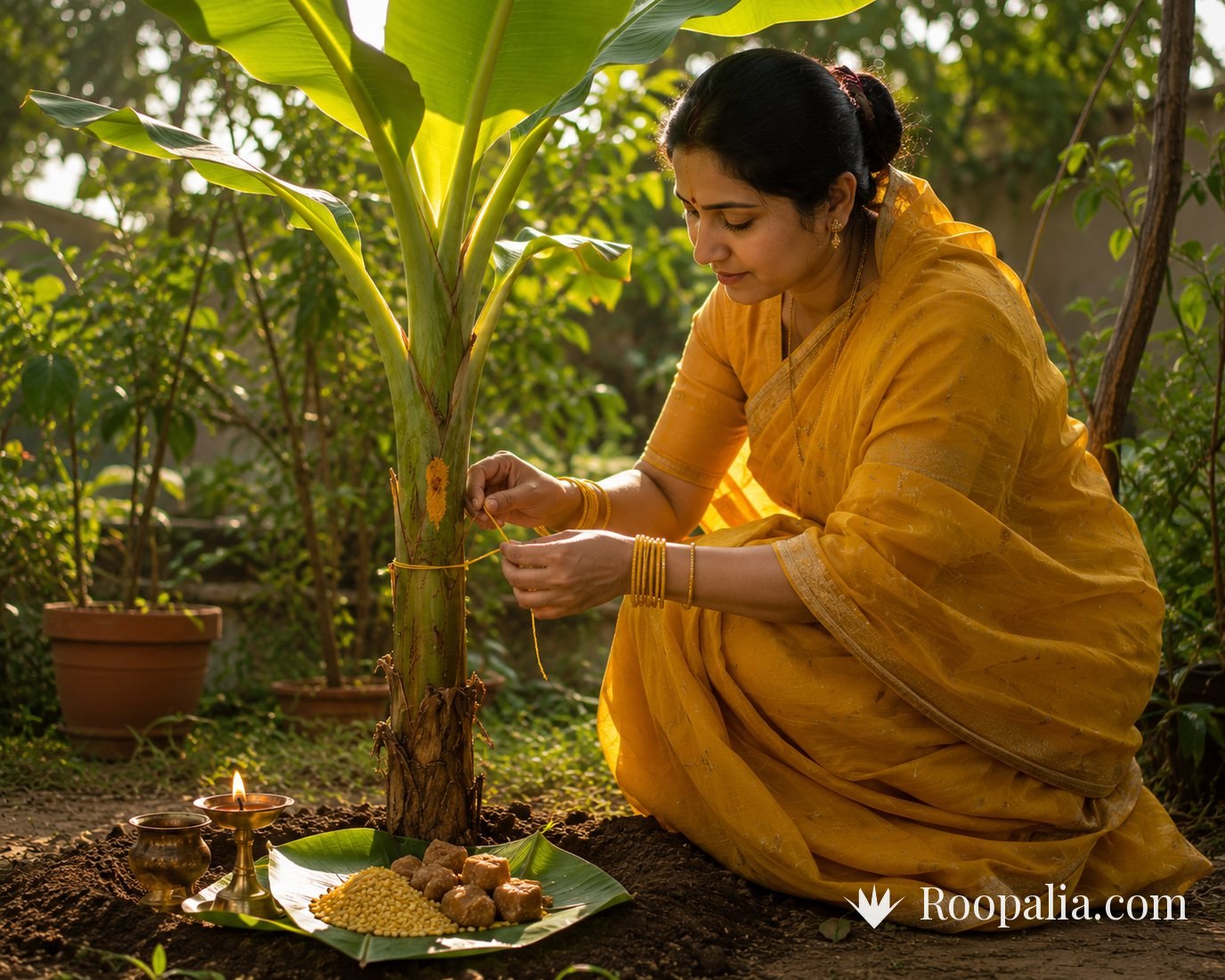
- The banana plant, if you have one. Turmeric water at the root, a turmeric mark on the trunk, a yellow thread, chana dal and jaggery at the base.
- Lamp and mantra. Light a ghee lamp and chant Om Brim Brihaspataye Namah.
- Katha, seated in one place.
- Aarti and prasad, and give something to someone in need.
Puja samagri list
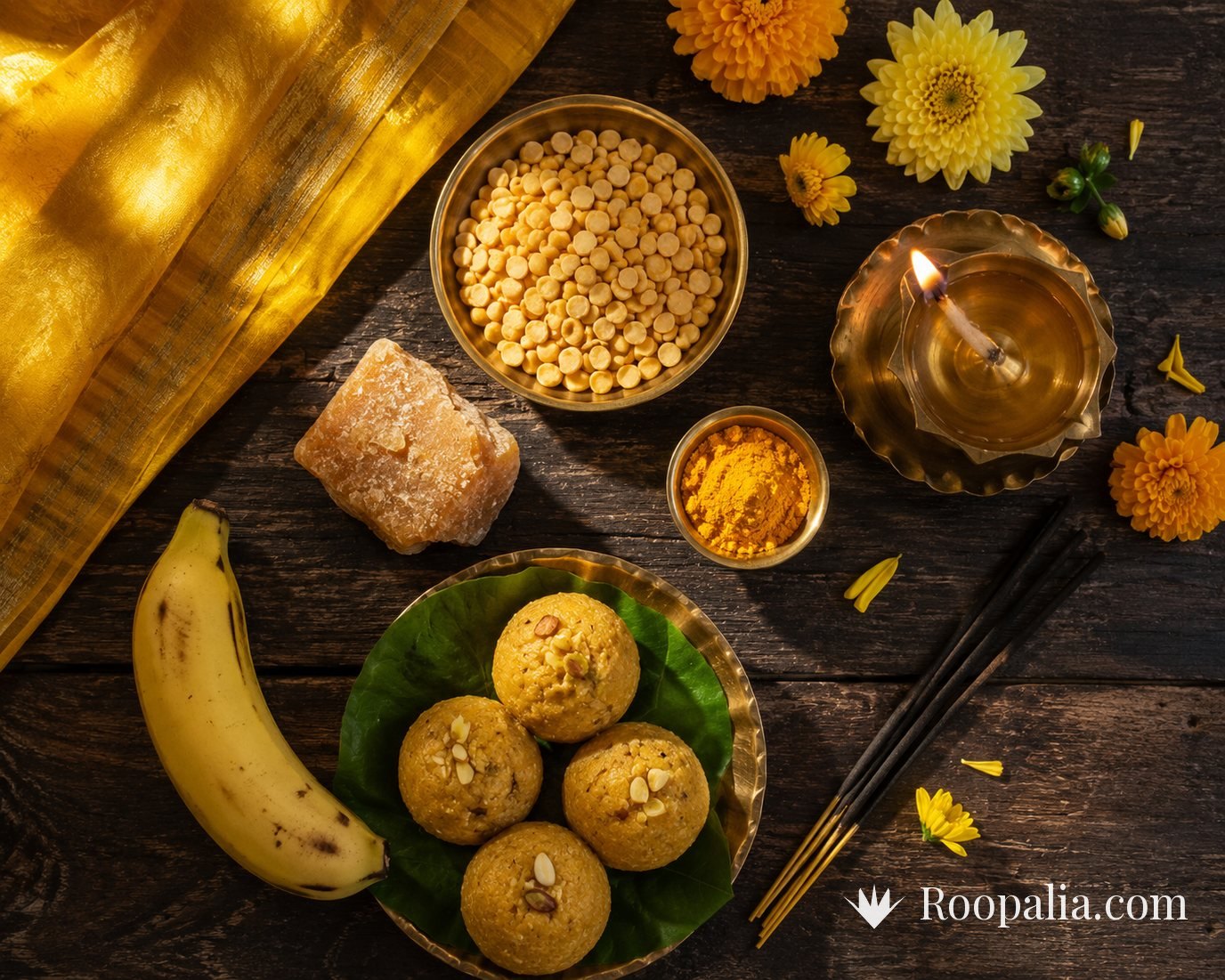
Short of something? In the katha the merchant worshipped with four coins he found at a prison door. A lamp, a little turmeric, chana dal and jaggery make a complete puja.
The Thursday vrat katha, in short
A generous merchant's miserly wife asks a sadhu, Brihaspati in disguise, how to be rid of her wealth. He tells her to plaster the house, wash her hair with yellow clay and send the clothes to the washerman on Thursdays, and within three Thursdays the wealth is gone. The merchant leaves to cut wood in another land. The wife and her maid learn the Thursday vrat from her sister and prosper again; the merchant keeps it too, forgets it once, is jailed over the queen's missing necklace, keeps it again and is freed. He comes home to find his wife and the maid have built wells and rest-houses for the town.
The full story in English is in Brihaspati Vrat Katha in English, or listen to it here:
Which mantra to chant on Thursday
Pick one and chant it 108 times; you do not need all three.
- Beej mantra: ॐ बृं बृहस्पतये नमः, Om Brim Brihaspataye Namah (the most widely used)
- Guru graha mantra: Om Graam Greem Graum Sah Gurave Namah
- The Brihaspati verse of the Navagraha Stotra: Devanam cha rishinam cha gurum kanchana-sannibham, buddhi-bhutam trilokesham tam namami Brihaspatim (I bow to Brihaspati, guru of the gods and sages, golden in radiance, the embodiment of wisdom, lord of the three worlds).
For Vishnu, Om Namo Bhagavate Vasudevaya. Counting on your fingers is fine if you have no mala.
Thursday fast udyapan vidhi
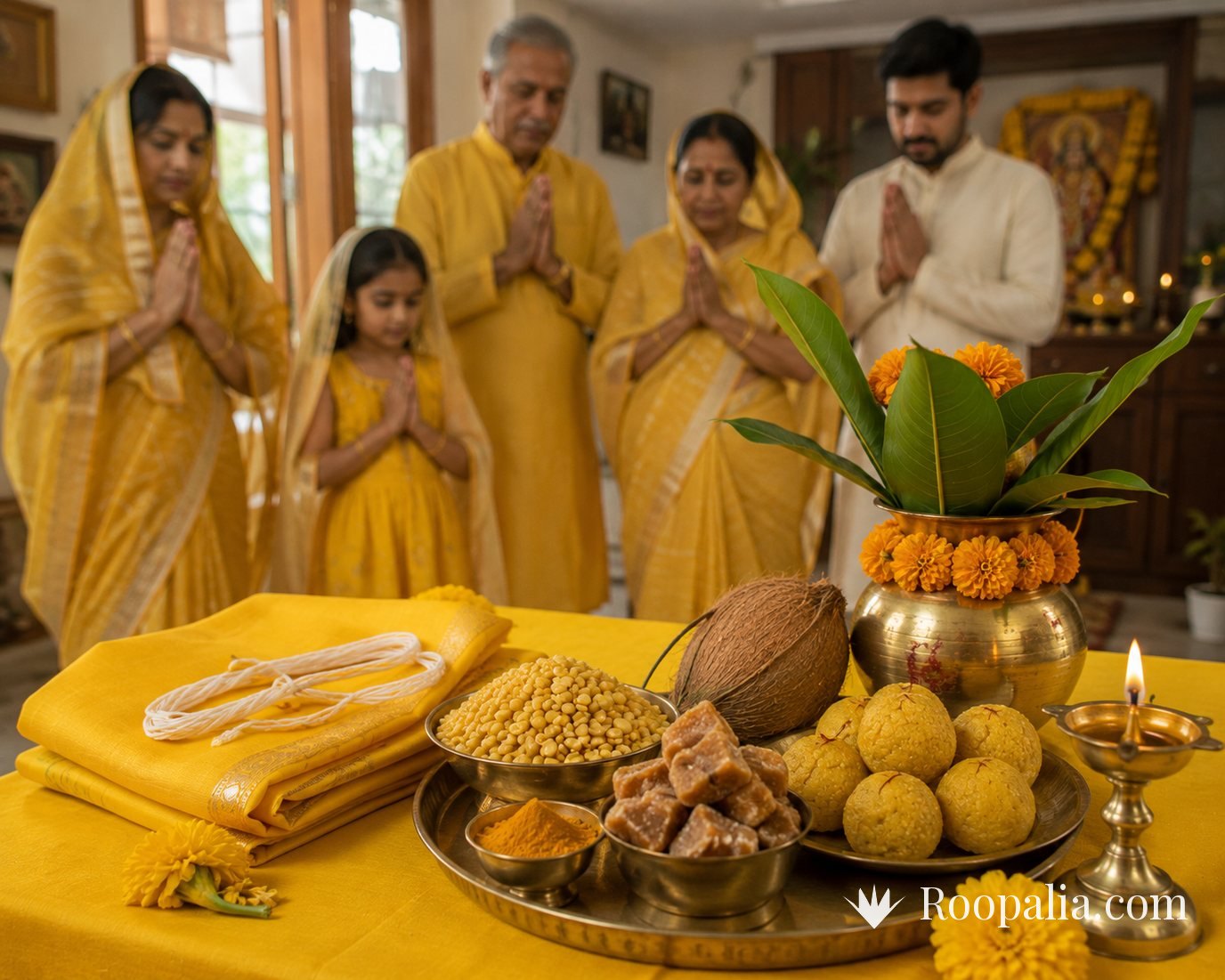
The udyapan formally completes the vow: on the 17th Thursday if you vowed 16.
- Bathe early, wear yellow, and sprinkle Gangajal (or clean water) over the puja space.
- Spread a yellow cloth on a low stool, place Vishnu's image on it, and set a kalash with mango leaves and a coconut beside it.
- Do the usual Thursday puja, mantra and katha.
- After the katha, fold your hands and say that the Thursdays of your vow are complete.
- Offer the samagri and give it to a priest or someone in need; feed a few people if you can.
Is there a separate udyapan mantra? I did not find one that is required. Most families chant the same Om Brim Brihaspataye Namah 108 times; if there is a havan, the priest adds svaha at the end of it for each offering. Follow your family priest.
Samagri commonly used (amounts vary by family): 1.25 kg chana dal, 250 g jaggery, 1.25 kg besan laddus, 1.25 m yellow cloth, a dhoti and janeu, 250 g ghee, raisins, turmeric, camphor, incense, yellow flowers, a lamp, a kalash, mango leaves, betel nut and a coconut.
Keeping the Thursday fast outside India
- No banana plant? Do the puja before an image of Vishnu, or place the yellow offerings before any healthy potted plant. The puja is to the deity, not the tree.
- Follow your local day and sunset, not India's clock.
- Far north (Scandinavia, northern Canada), winter sunset can come mid-afternoon; many families simply do the evening puja and meal after midday.
- Smoke alarm objects to the ghee lamp? A tealight or an electric diya is accepted in many homes.
- A working Thursday: morning puja before the house wakes, a salt-free snack in your bag, katha in the evening.
- Health first. Pregnant, breastfeeding, diabetic or on regular medication? Speak to your doctor before a salt-free single-meal fast; a fruit fast, or just the puja and katha, keeps the spirit of it.
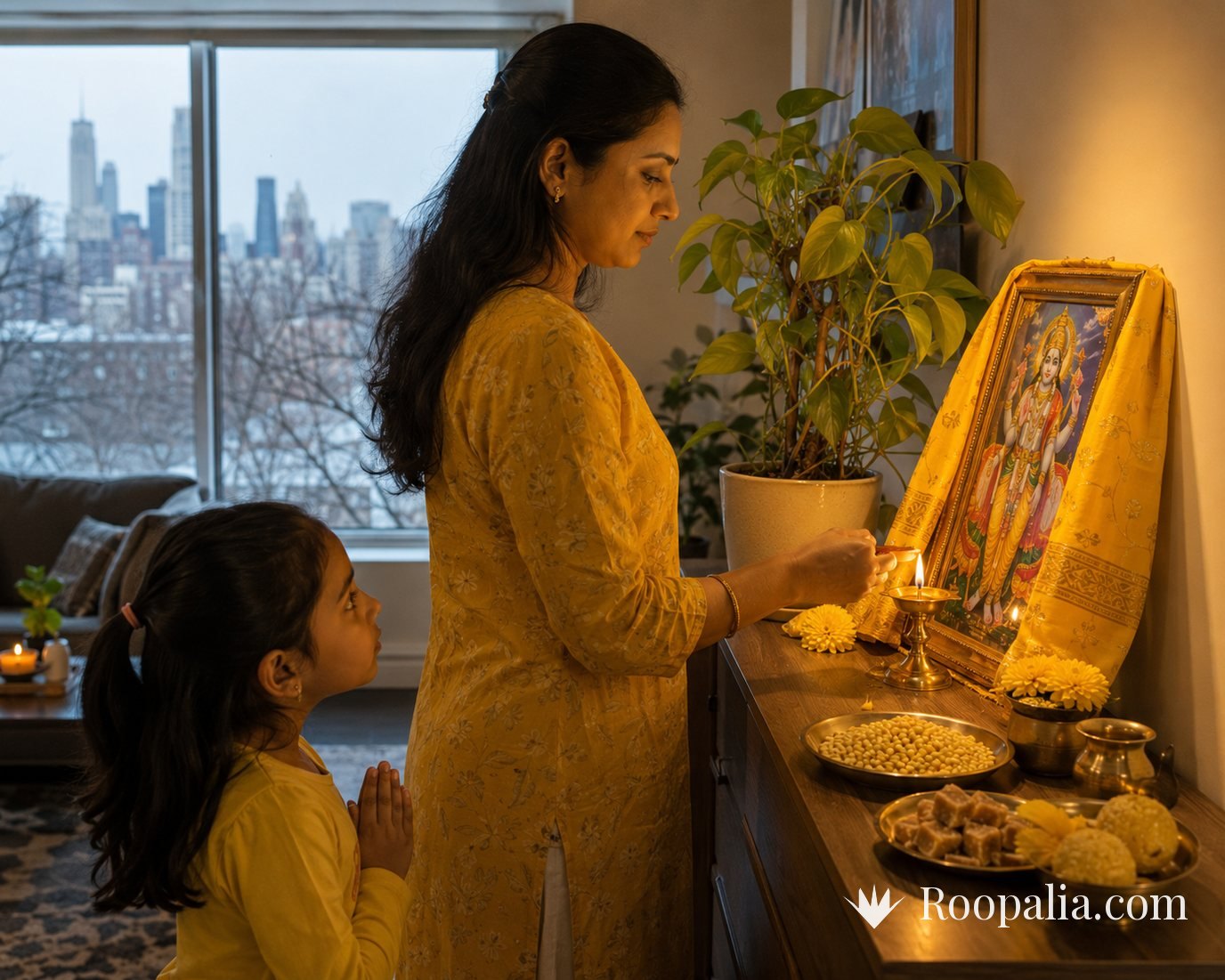
In the katha, the wife had everything and would not give, and it all left; the merchant had four coins and used them for the puja, and it all came back. The yellow clothes and the chana dal are signs. The fast itself is about opening a closed hand.
Frequently asked questions
What are the rules of the Thursday fast?
How many Thursday fasts should be kept?
What can I eat during the Thursday fast?
What time should the Thursday fast be broken?
When should I start the Thursday fast?
How is the Thursday fast udyapan done?
Sources: vidhi and rules as followed in common practice; the katha as narrated in Roopalia's video (Durva Reports channel); more on one-meal fasts in our article on what to eat during a Hindu fast. Customs differ by region and family, so follow your elders first. This article does not ask anyone to fast; in illness, pregnancy or on regular medicine, ask your doctor first. The images in this article are AI-generated illustrations to explain the topic.