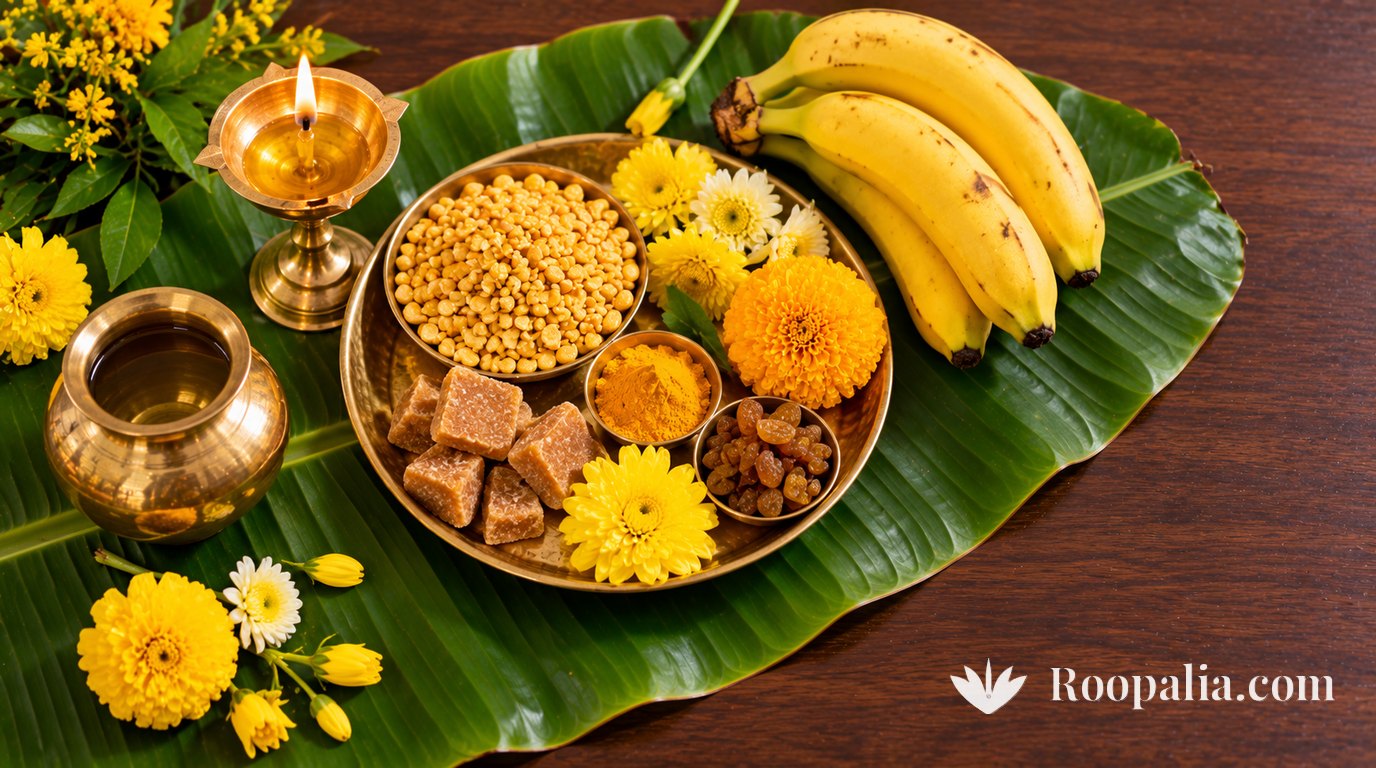
Ask ten Hindu families which god they pray to on Thursday and you will hear two names: Brihaspati and Vishnu. Both answers are right, and the Thursday vrat katha is the reason why.
It is also a strange story. In it, the god does not punish a greedy queen. He gives her exactly what she asks for — a way to get rid of all her wealth — and it takes only three Thursdays.
What happens after that is why the story is still read in kitchens from Jaipur to Toronto every Thursday.
🙏 This page is about the katha. The step-by-step puja, samagri, rules, mantra and udyapan are in Guruvar Vrat — vidhi, rules and udyapan. The full katha, told at length in Hindi, is in the Hindi version of this article.
Which god do Hindus worship on Thursday?
Thursday belongs to Brihaspati, the guru of the gods, and Vishnu is worshipped on it. The day’s Hindu name, Brihaspativara, comes from Brihaspati, who is described as the son of the sage Angiras and the teacher of the devas, and who in later texts became identified with the planet Jupiter (courtesy: Wikipedia, Brihaspati). That is also why the day is called Guruvar — the teacher’s day.
Vishnu enters through the vrat katha itself, which tells the listener to worship Vishnu at the root of a banana plant, and closes with a cry to both: “Bolo Brihaspati Dev ki jai. Bhagwan Vishnu ki jai.” (courtesy: bhaktibharat.com).
Is Brihaspati in the Vedas?
Yes. A whole hymn of the Rig Veda, Book 4, Hymn 50, is addressed to him:
“Bṛhaspati, when first he had his being from mighty splendour in supremest heaven…”
— Rig Veda 4.50.4, tr. Ralph T. H. Griffith (courtesy: sacred-texts.com)Does any Purana connect Brihaspati with Thursday?
Yes — one that I could open and check. The Skanda Purana’s Prabhasa Khanda, chapter 47, describes the Brihaspatishvara linga, which it says was installed by the preceptor of the devas, who “has attained the status of a planet.” Verse 7 then names a specific day for its worship: the fourteenth lunar day of the bright fortnight when it falls on a Thursday (tr. G. V. Tagare, courtesy: wisdomlib.org). That is a pilgrimage text, not a vrat katha — but it is a clear Puranic link between the guru and his day.
The Thursday vrat katha in English — the short version
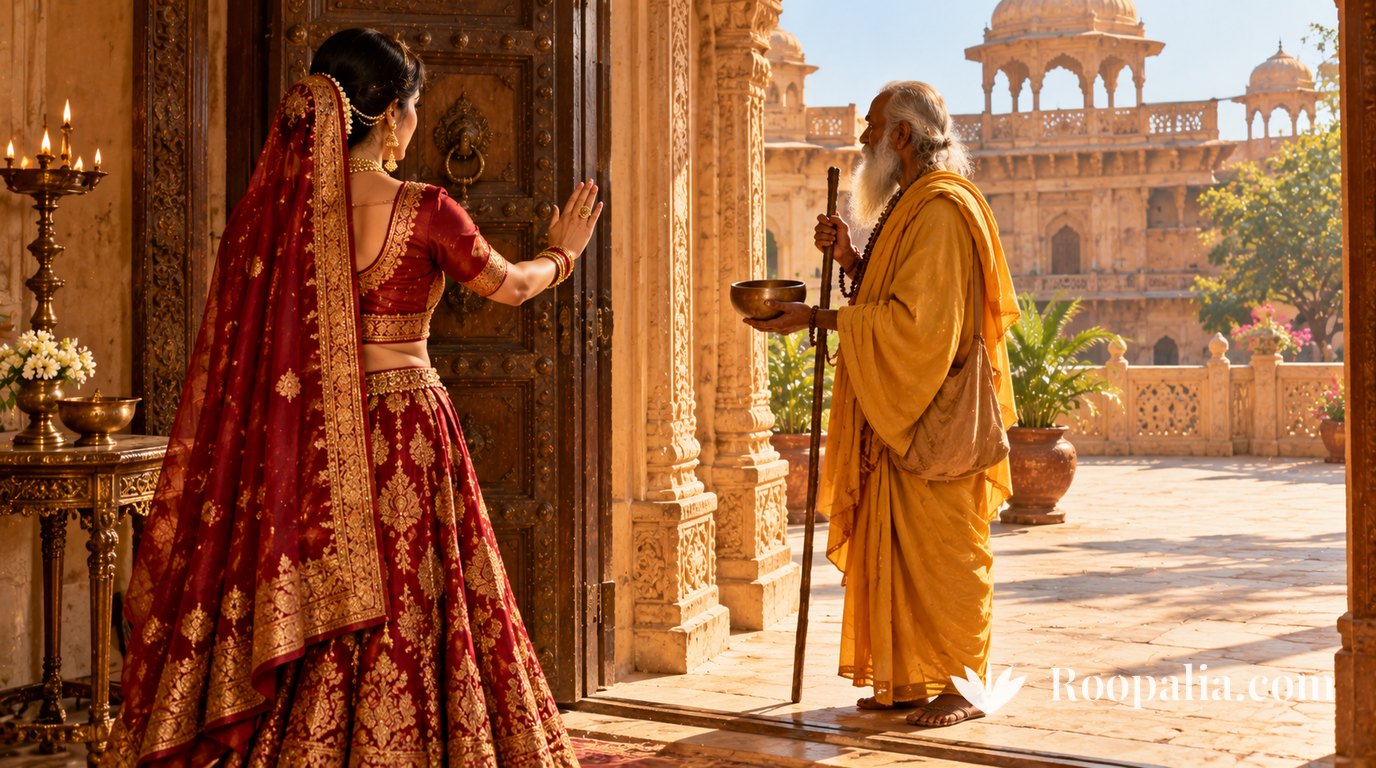
The queen who wanted less. A generous king kept the Thursday fast and gave freely; his queen gave nothing and tried to stop him. One day, while the king was out hunting, Brihaspati came to the palace gate disguised as a sage. The sage told her that everyone wants wealth and children, and that if she had more than enough she should feed the hungry. She asked him instead for a way to make all the wealth disappear. He told her: on Thursdays, plaster the house, wash your hair with yellow clay, and wash clothes over a furnace fire. Within three Thursdays the treasury was empty.
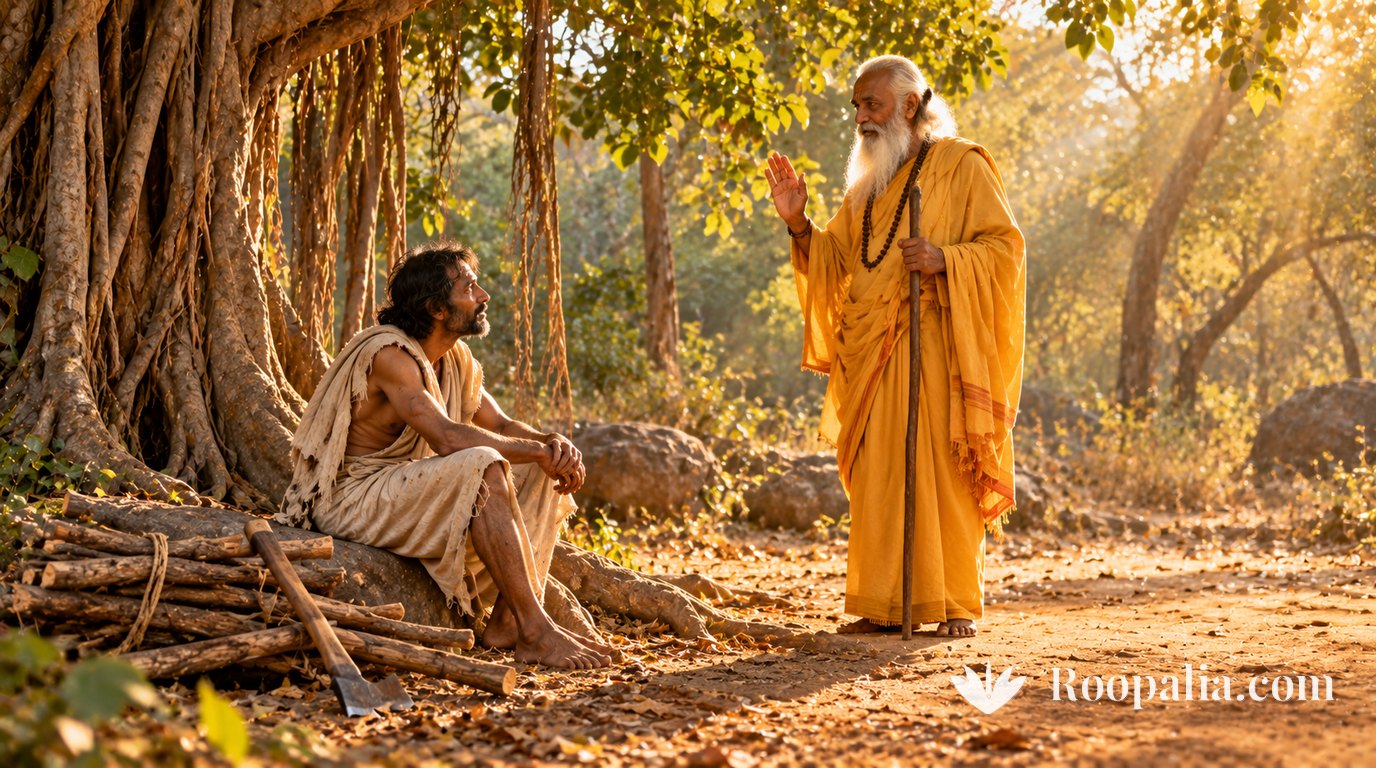
The king in the forest. Unable to do menial work in his own kingdom, the king went to another land and lived by cutting and selling firewood. The same sage appeared to him and told him to keep the Thursday vrat and hear the katha, promising him double his daily earnings. The king did the puja with two paise worth of chana and raisins — all he could afford.

The maid and the sister. Back home, the starving queen sent her maid to her rich sister. The sister was in the middle of the Thursday katha and did not answer — because, as she later explained, “while the katha is going on, one neither gets up nor speaks”. She then came to the queen herself and gave her the method: worship Vishnu at the root of a banana plant with chana dal and raisins, light a lamp, hear the katha and eat yellow food. The queen and the maid searched the house and found a pot full of grain; they kept the vrat, and the wealth returned.
Then comes the part most retellings rush past. The money came back, and the queen grew lazy again. It is the maid — not a priest, not the king — who tells her: you lost it all because you hoarded it; feed the hungry, and spend wealth on good works. When the king finally came home, he found gardens, wells, temples and rest-houses built in his city.
And there is a second Thursday story — smaller, gentler, and the one children remember.
The second story: the girl and the golden winnowing basket
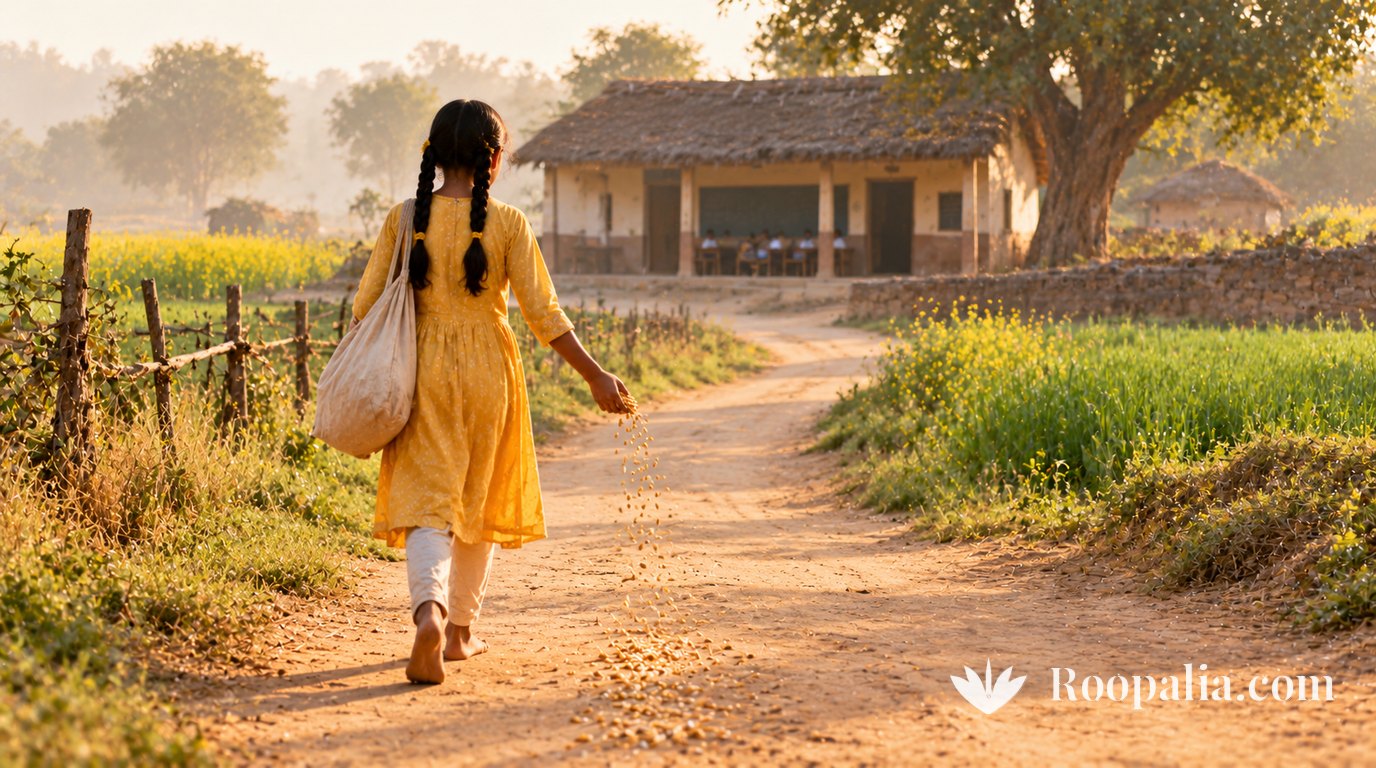
A poor, childless Brahmin had a wife who would neither bathe nor pray. In time a daughter was born to them, and the girl grew up to worship Vishnu and keep the Thursday fast. On her way to school she scattered a fistful of barley; on her way back the grains had turned to gold, and she gathered them up.
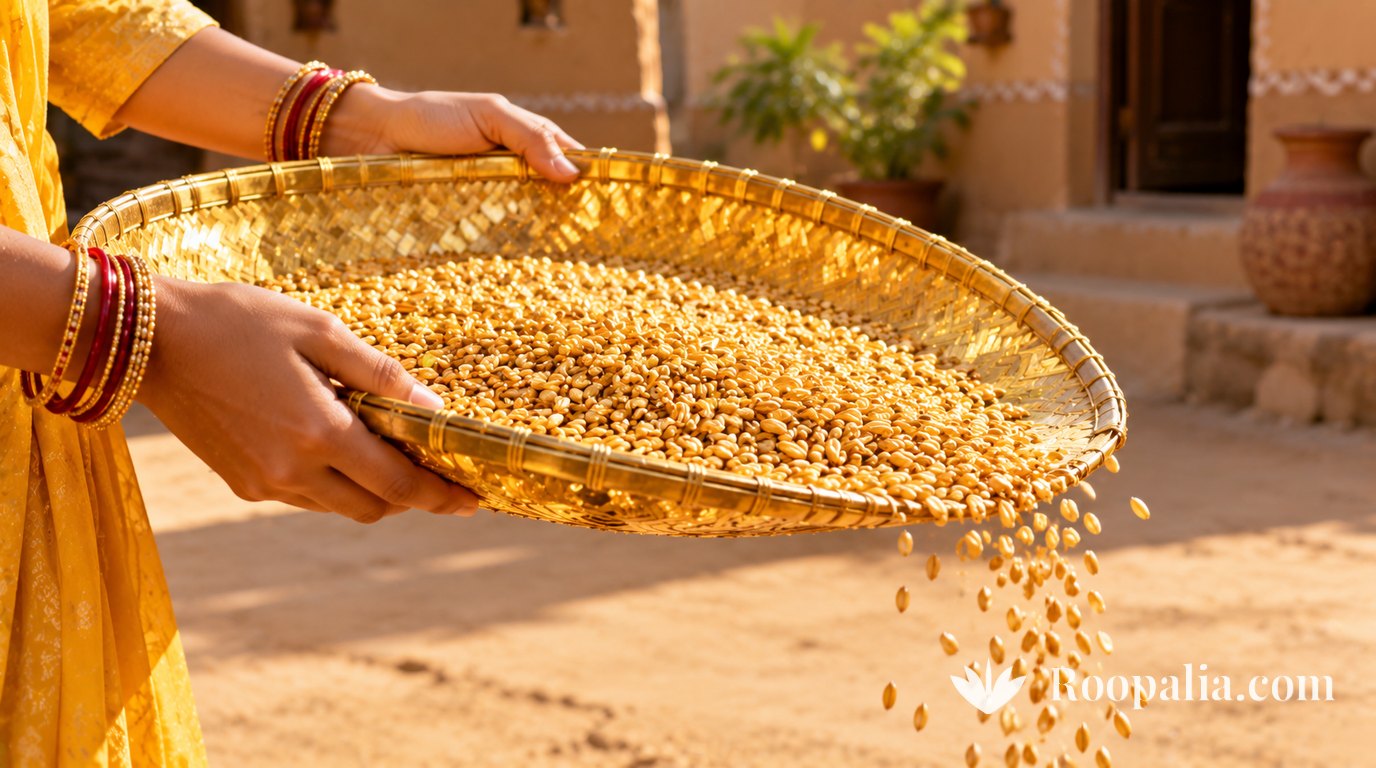
“Golden barley deserves a golden winnowing basket,” her father said. She prayed on the next Thursday and found a golden soop. A prince saw her cleaning grain in it, and she married him. When her parents fell back into poverty, she helped them, and persuaded her mother to bathe, pray and keep the Thursday fast — after which, the story says, they prospered and were blessed with sons (summary, courtesy: bhaktibharat.com).
Both stories have the same shape. In each house there is a woman who has turned away from giving and prayer, and another woman — a maid, a daughter — who brings her back. The guru of Thursday is a god, but in his own stories the guru’s work is done by the least powerful person in the house.
Why is the banana tree worshipped on Thursday?
Because the katha says so — the sister’s instructions are to worship Vishnu at the root of a banana plant. Beyond the katha, I could not find a scriptural reason.
I did find something adjacent. A Sanskrit manuscript titled Kadalīvratakathā (Devanagari, catalogued as c. 1700–1850, from the Bhaviṣyottara Purāṇa) describes a puja performed when planting a banana tree, as a dialogue between Krishna and Yudhishthira (courtesy: IIC, Samhita). But its catalogue description does not mention Thursday, Brihaspati or Vishnu. So the banana tree has a ritual history of its own; its tie to Thursday, as far as I could find, lives in the katha.
Is Margashirsha Guruvar the same vrat?
No — it is a different tradition, and its goddess is Lakshmi.
- Odisha, Manabasa Gurubara: Lakshmi is worshipped on every Thursday of Margashirsha, homes are decorated with jhoti chita rice-paste designs, and the story comes from the 15th-century Odia poet Balarama Dasa’s Lakshmi Purana, in which Lakshmi visits the home of Shriya, a devotee treated as an outcaste (courtesy: Wikipedia, Manabasa Gurubara).
- Maharashtra, Margashirsha Guruvar: a Mahalakshmi vrat on the Thursdays of the month, with the Mahalakshmi Vrat Katha read aloud (courtesy: LatestLY).
So if you are searching for the “aghan” or “Margashirsha Guruvar katha”, you want Lakshmi’s story, not the king and queen above.
How to read the Thursday katha at home
- After the puja, seated in one place. The story’s own rule is not to get up or speak until it is finished.
- Prasad of chana dal with jaggery or raisins — the king managed with two paise worth, so a small offering is enough.
- Close with the jaikara — “Bolo Brihaspati Dev ki jai, Bhagwan Vishnu ki jai” — then aarti and prasad.
- Share the prasad, and feed someone if you can. The entire second half of the story is about this.
Why no aarti lyrics here? I could not check the Brihaspati aarti against a reliable printed source, and the lines differ from site to site. Read it from your family’s booklet or your temple’s.
Keeping Thursday outside India

- No banana tree? The point of the katha is the worship of Vishnu, not the tree. Many families offer a banana leaf or the fruit instead; that is family custom, and I did not find a text that rules on it.
- Chana dal and jaggery are stocked by almost every Indian grocery store; ordinary raisins stand in for munakka.
- Thursday is your local Thursday. India’s Thursday may still be your Wednesday night. For tithi-based fasts this gets more complicated — see why your festival date differs from India.
- Alone? Read the story aloud from this page or the Hindi one, and put the phone on silent — that is the katha’s one firm rule.
👨👩👧 Telling it to children born outside India
Start with the golden winnowing basket — it is short, visual and easy to picture. Then ask them one question: “Who helped the mother change?” The answer is the daughter, and in the longer story it is the maid. That is the lesson to leave them with: the person who teaches is not always the oldest or the richest in the room. If they ask whether it really happened, you have an honest answer — it is a story families have told for a long time, and Brihaspati himself is far older: he is in the Rig Veda.
More ideas for that conversation are in how to explain Hinduism to a child.
What I found, and what I did not
| Question | Result |
|---|---|
| The full king, queen and maid katha | Found — on devotional portals (bhaktibharat.com, shubhpanchang.com) |
| That katha in a Purana | Not found — no page I read names a Purana |
| Versions differ | Found — the queen’s sister in one, the king’s sister in another; “seven Thursdays” promised in one, three in another |
| Brihaspati in the Vedas | Found — Rig Veda 4.50 |
| Thursday in a Purana | Found — Skanda Purana, Prabhasa Khanda 47.7 |
| A scriptural reason for banana-tree worship on Thursday | Not found — the katha is the source |
| A scriptural ban on washing hair on Thursday | Not found — only in the katha |
| Margashirsha Guruvar | Found — a separate Lakshmi vrat (Odisha, Maharashtra) |
“Not found” does not mean “does not exist”. It is the honest result of my search, not a final verdict on Sanskrit literature.
A guru’s day, taught by a maid
Brihaspati is in the Rig Veda; his Thursday is in the Skanda Purana. The queen, the maid and the golden basket are in neither — they come from homes, not books. Perhaps that is why the story has lasted. On the guru’s own day, the teaching is done by a servant and a little girl, and what they teach is not to fast harder but to open your hand.
Which god should be worshipped on Thursday in Hinduism?
What is the Brihaspati (Thursday) vrat katha in English?
What is the second Thursday vrat story, about the golden winnowing basket?
Is the Thursday vrat katha found in any Purana?
Why do Hindus worship the banana tree on Thursday?
How should the Thursday vrat katha be read at home?
Why do some families not wash hair or clothes on Thursday?
Is Margashirsha (Aghan) Guruvar the same as the Thursday vrat?
Sources and cautions: the katha text was checked on the devotional portals bhaktibharat.com (both stories, the method and the jaikara) and shubhpanchang.com (variants). Texts: Rig Veda 4.50, tr. Ralph T. H. Griffith (courtesy: sacred-texts.com); Skanda Purana, Prabhasa Khanda, chapter 47, tr. G. V. Tagare (courtesy: wisdomlib.org). Brihaspati, Manabasa Gurubara and the Lakshmi Purana: Wikipedia; Maharashtra’s Margashirsha Guruvar: LatestLY; the Kadalīvratakathā manuscript: IIC’s Samhita collection. Three things should be said plainly. First, we did not find the king, queen and maid story in any Purana, nor a scriptural rule outside the katha on banana-tree worship or washing hair on Thursday; that is the result of our search, not a final verdict. Second, the Brihaspati aarti could not be checked against a reliable printed source, so its lyrics are not printed. Third, this article does not ask anyone to fast; with diabetes, blood-pressure problems, pregnancy or any illness, ask your doctor first.