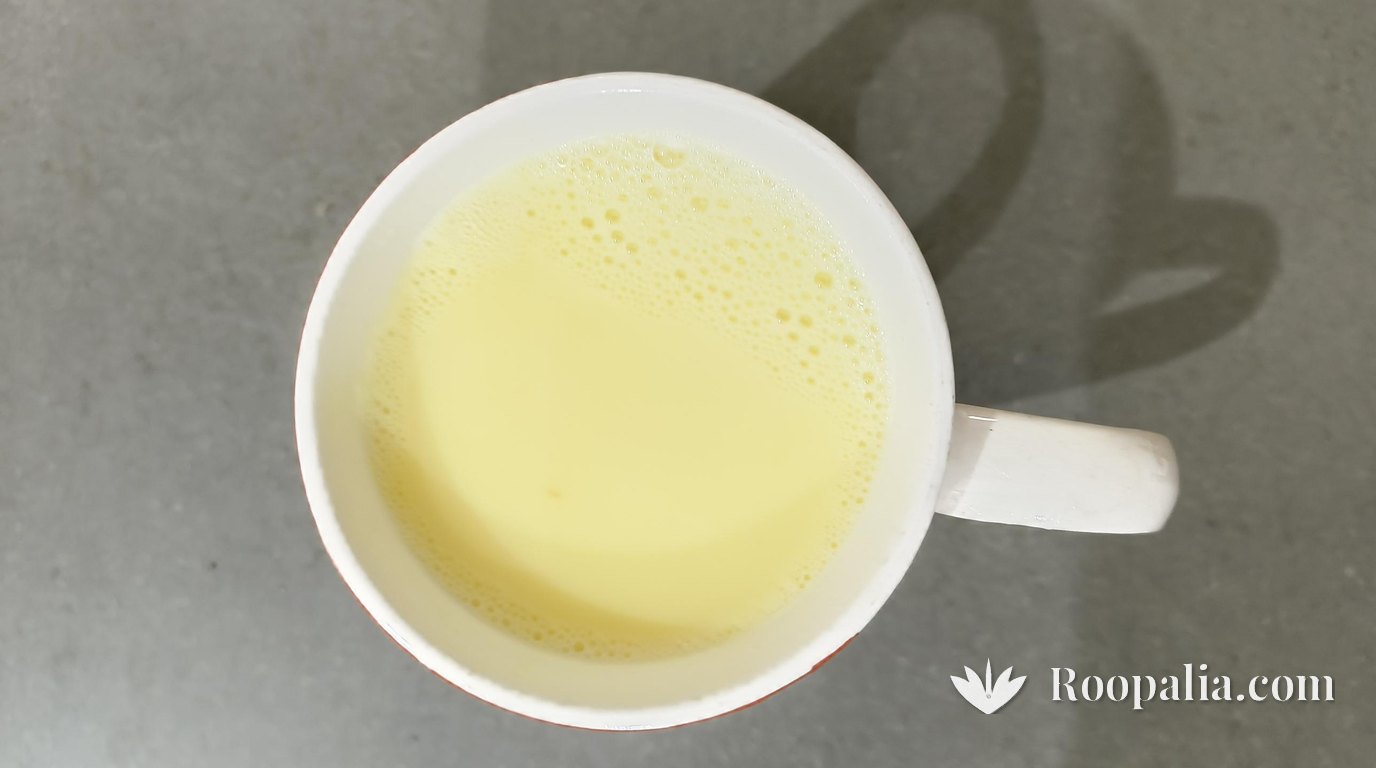
Golden milk vs Indian haldi doodh: what's the difference?
The name changed on its way abroad, and so did the drink. Side by side:
Look at the colour in our photos. Milk made with fresh turmeric comes out pale yellow, not the glowing gold you see on Instagram. That matters, and I will come back to it in the section on buying turmeric.
Golden milk recipe, the way Indian homes make it
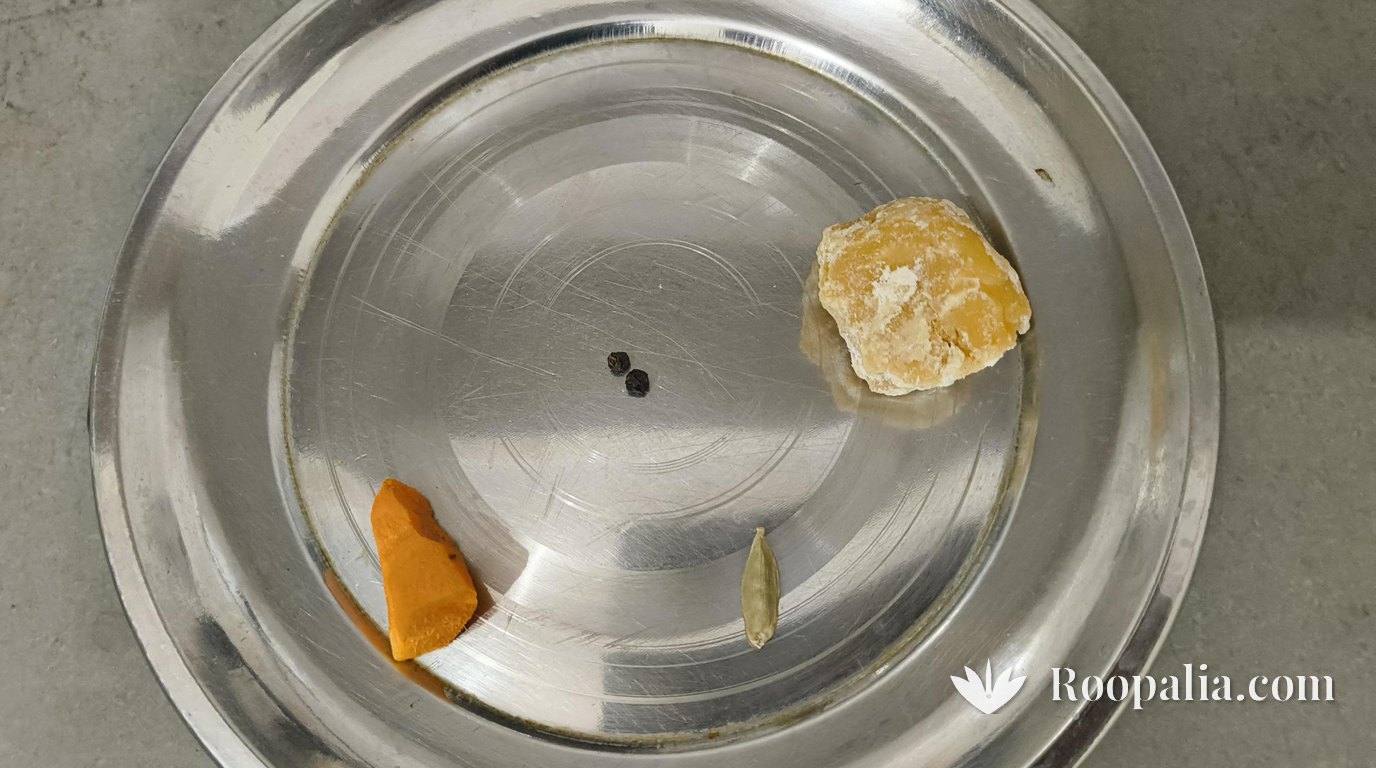
For one cup: 1 cup (about 200 ml) milk, a 1-inch piece of fresh turmeric (or ¼ teaspoon ground turmeric), 2 black peppercorns lightly crushed, 1 green cardamom pod, and a small piece of jaggery or any sweetener.
- Warm the milk in a small pan on low heat.
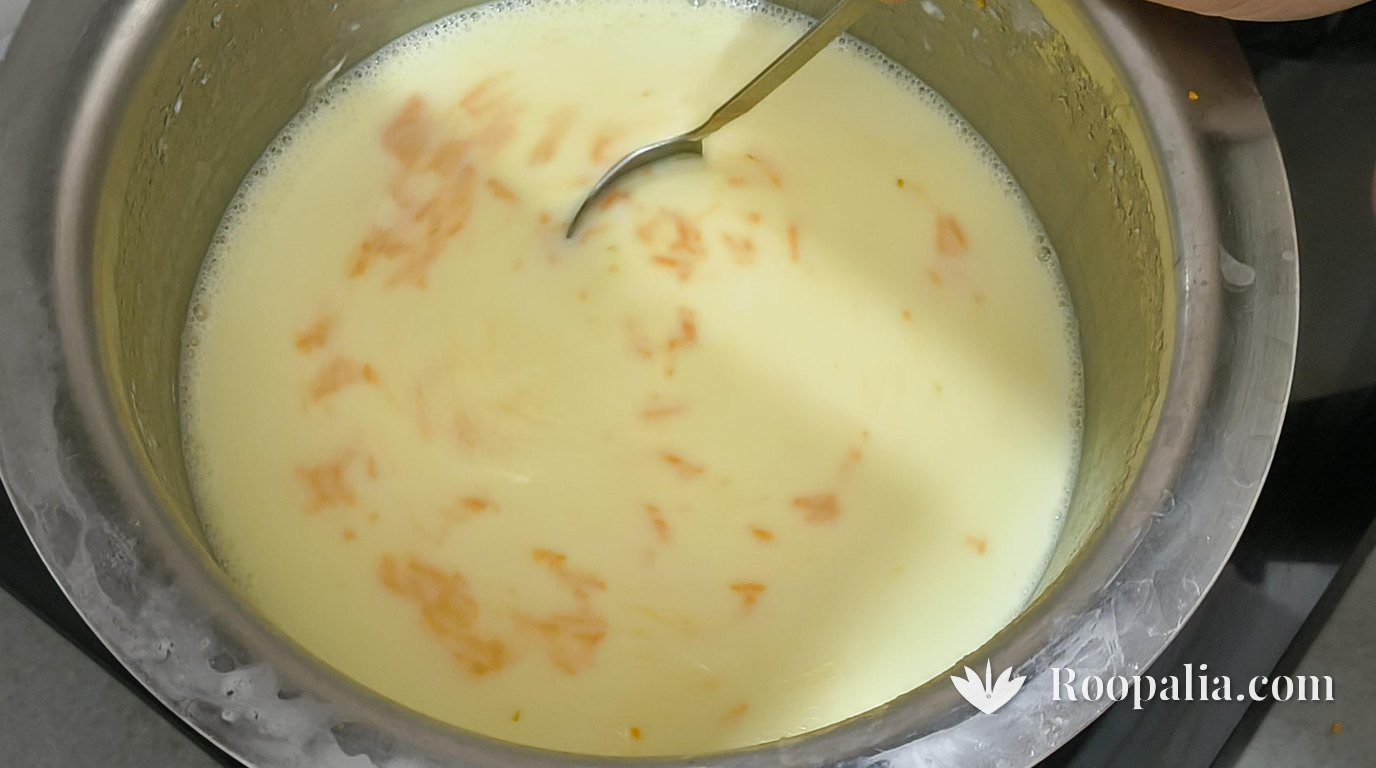
- Grate the fresh turmeric straight into the milk. It stains fingers and graters yellow, so keep soap handy.
- Add the crushed pepper and cardamom.
- Bring it to a boil, then let it simmer gently for 4–5 minutes, stirring, so the raw taste of the turmeric goes.
- Turn off the heat and stir in the jaggery. Many Indian cooks add jaggery off the heat because it can sometimes split boiling milk.
- Strain into a mug and drink it warm.
Making it outside India
- Fresh turmeric is sold in many Indian and Asian grocery stores, especially in winter. It keeps for a couple of weeks in the fridge and can be frozen whole and grated straight from frozen.
- Plant milk works. Oat and soy milk hold up to simmering; almond milk can turn thin. If you use coconut milk, dilute it.
- No jaggery? Use brown sugar or honey; add honey only once the milk has cooled to warm.
- Ground turmeric needs to simmer for at least 3–4 minutes. Stirring it into hot milk without cooking leaves a raw, chalky taste.
Why black pepper goes in
Curcumin, the main active compound in turmeric, is poorly absorbed by the body. In a well-known 1998 study, healthy volunteers given 2 g of curcumin with 20 mg of piperine (the active compound in black pepper) showed about a 2000% increase in curcumin's bioavailability (Shoba et al., Planta Medica 1998, courtesy: PubMed). Two honest caveats: it was a small study, and it used capsules, not milk. A cup of golden milk holds far less curcumin than that. Still, our grandmothers' habit of dropping two peppercorns into the pan points in the right direction.
So does golden milk do what the labels on supplement jars promise? The evidence is thinner than the marketing.
What is golden milk good for?
The US government's National Center for Complementary and Integrative Health puts it plainly: we don't know enough to definitively conclude that turmeric or curcumin is beneficial for any health purpose. Early research on knee osteoarthritis, fatty liver disease and mouth sores (oral mucositis) looks promising, but better-quality studies are needed (courtesy: NCCIH).
- Comfort at bedtime: a warm, mildly spiced drink before sleep is relaxing. That is real, and it is most of what most people feel.
- Sore throat and colds: warm liquids soothe a sore throat. There is no good evidence that turmeric milk shortens a cold.
- Joints: curcumin is studied for inflammation, but the doses studied are far higher than a cup of milk provides.
- Turmeric milk benefits for women: claims about periods, hormones or glowing skin are common online, but I could not find solid evidence for them. Turmeric's place in Indian beauty routines is as a paste on the skin (ubtan, the haldi ceremony before weddings), not as a drink.
Buying turmeric safely outside India
That bright gold colour is sometimes not natural. Stanford University researchers found that some turmeric processors in Bangladesh added lead chromate, an industrial yellow pigment, to make turmeric look brighter. They did not find direct evidence of contaminated turmeric outside Bangladesh, but they noted that more than 15 turmeric brands, including some sold in the US, have been recalled since 2011 for excessive lead (courtesy: Stanford University).
- Prefer fresh turmeric root or whole dried fingers that you grind yourself.
- Be wary of loose, unlabelled powder and of turmeric with an unusually vivid, almost fluorescent colour.
- Buy from shops that list the packer and origin on the label.
Who should avoid golden milk?
Turmeric in food amounts is considered safe for most people. Check with your doctor first if any of these apply:
- Gallstones or bile duct problems, since turmeric increases bile flow.
- You take blood thinners (warfarin, aspirin, clopidogrel) or have surgery coming up.
- You take diabetes medication; turmeric may lower blood sugar further.
- You have iron deficiency and take a lot of turmeric.
- Pregnancy: turmeric as a spice is fine; NCCIH notes that turmeric supplements during pregnancy may be unsafe.
- Lactose intolerance or milk allergy: use a plant milk.
Supplements are a different matter from a cup of milk. Liver damage has been reported in some people taking high-absorption turmeric or curcumin products; stop and see a doctor if you notice fatigue, nausea, poor appetite, dark urine or yellowing skin.
Is golden milk "Ayurvedic"?
The drink is a household tradition rather than a recipe from a classical text. What the texts do record is turmeric as a skin application. In the Charaka Samhita (Sutrasthana, chapter 3), turmeric appears in the first group of powders for skin diseases, which are to be mixed with mustard oil and applied externally (tr. Shree Gulabkunverba Ayurvedic Society, courtesy: wisdomlib.org). So if a jar of golden milk mix says "ancient Ayurvedic recipe", treat that as marketing.
Make it the way Indian homes do: real milk or a good plant milk, fresh turmeric if you can find it, two peppercorns, a little jaggery, and drink it warm on a cold night. Enjoy it as what it is, a comforting family drink, and leave the medical promises to medicine.
Frequently asked questions
What is golden milk?
How do you make golden milk at home?
What is golden milk good for?
Why add black pepper to turmeric milk?
Who should not drink turmeric milk?
Sources: research and safety: NCCIH (National Center for Complementary and Integrative Health, USA) and NIH LiverTox; black pepper and curcumin: Shoba et al., Planta Medica 1998 (courtesy: PubMed); turmeric as an external application: Charaka Samhita, Sutrasthana 3, tr. Shree Gulabkunverba Ayurvedic Society (courtesy: wisdomlib.org); lead in turmeric: Stanford University. General information for educational purposes; please see a doctor for any illness. All images in this article are real photographs, credited 'Photo: Dhanpat Singh'.