Search for “why do Indian women wear toe rings” and the first answers are confident: a nerve from the second toe runs straight to the uterus, silver “absorbs energy from the earth”, the ring presses an acupressure point that keeps periods regular. Then a grandmother adds her own rule: never wear gold on your feet — gold is Lakshmi.
Some of this is lovely tradition. Some of it has no source at all. This guide separates the two: what a bichiya actually means, which toe it goes on, who can wear one, why it is silver, and what the Ramayana really says about Sita’s jewellery.
One finding surprised me. A popular story says Sita dropped her toe rings so Rama could find her. In the Ramayana translation I checked, Lakshmana recognised something else — and the reason he gives is one of the most touching lines in the epic. It is further down.
Is there a scientific reason for wearing toe rings?
Short answer: no scientific study supports the popular health claims. The claims you will see most often are that the second toe has a nerve connected to the uterus and heart, that the ring works as acupressure to regulate periods or help conception, and that silver “conducts” earth energy into the body.
I looked for studies behind these claims and found none. Wikipedia’s Toe ring article mentions the Ayurvedic associations and then states plainly that no scientific studies have verified these claims (courtesy: Wikipedia, Toe ring). A nerve running from the second toe to the uterus does not match standard anatomy either.
The honest version: wear a bichiya because it is beautiful, because it carries your family’s tradition, and because you like it. For period pain, fertility questions or swollen feet, see a doctor — not a jeweller.
So what does a bichiya actually mean?
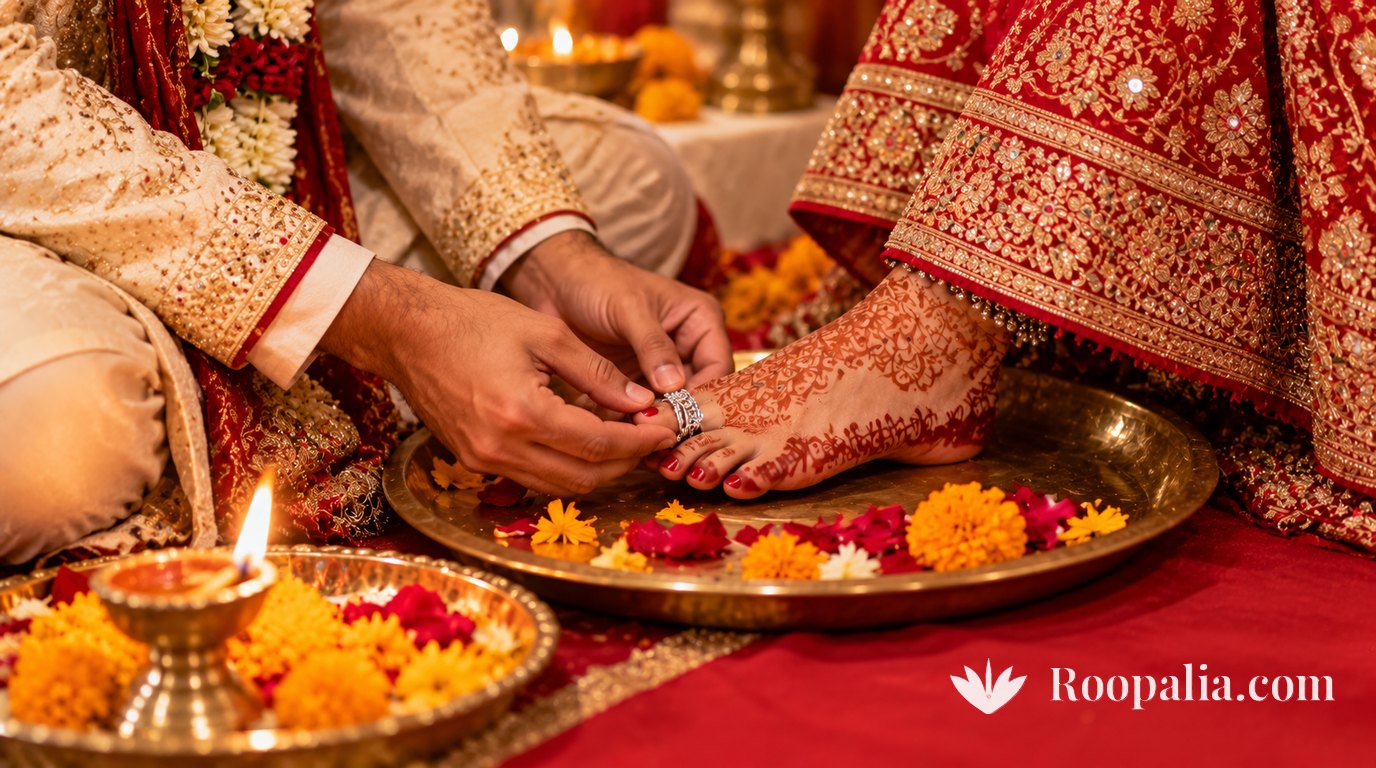
In much of India, the bichiya (toe ring) is a sign that a woman is married — part of the same family of symbols as sindoor, the mangalsutra and bangles. In many Indian communities the husband places the toe rings on the second toe of both of his wife’s feet during the wedding ceremony (courtesy: Wikipedia, Toe ring). Some lists of solah shringar also count the bichiya and the payal — the adornment that completes a bride from head to toe.
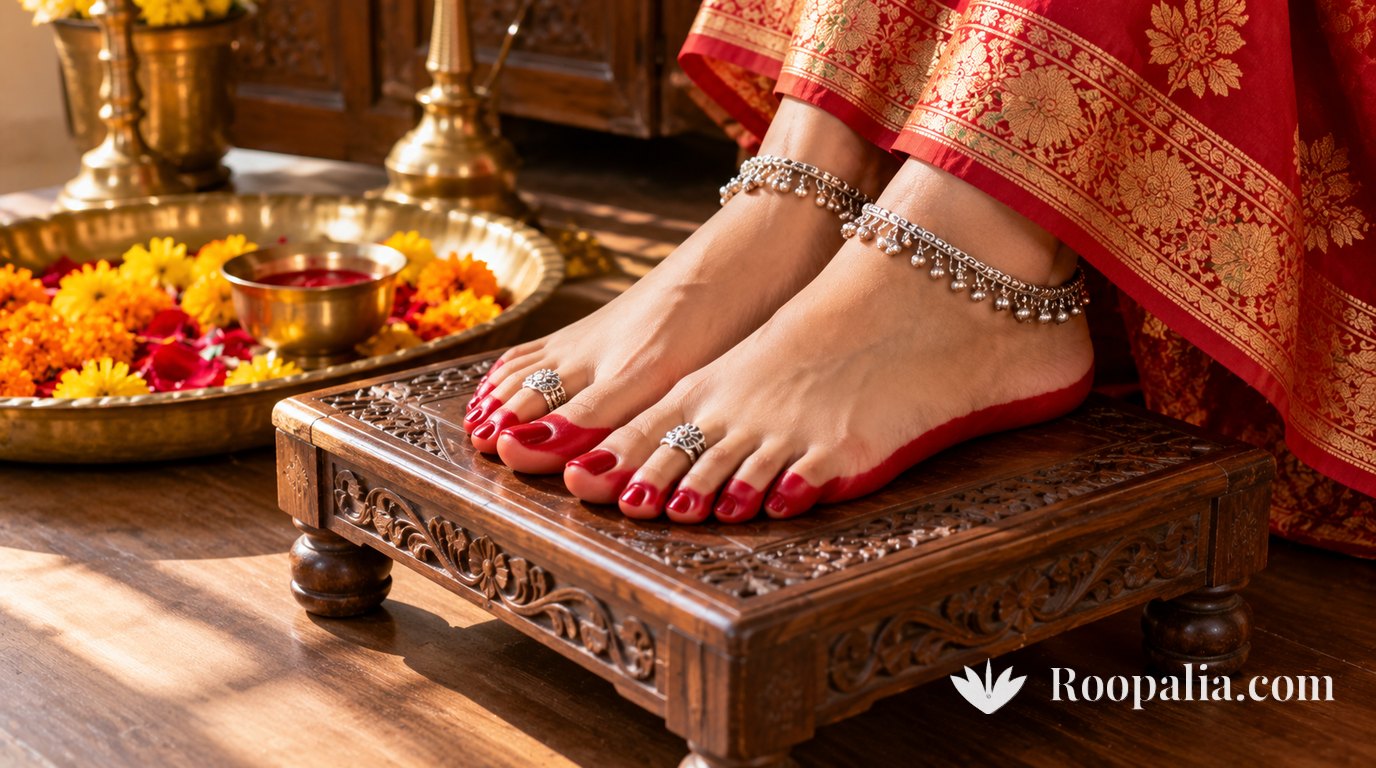
The meaning is social and cultural, not medical. And it is not exclusively female: in Tamil Nadu men also wear toe rings, usually in simpler designs (courtesy: Wikipedia, Toe ring).
Can unmarried women wear toe rings?
Across most of North India the bichiya is read as a marriage sign, so unmarried girls usually do not wear one there. I did not find any scriptural rule forbidding it. In Western countries toe rings are simply fashion jewellery with no fixed meaning (courtesy: Wikipedia, Toe ring). So the choice comes down to family custom and personal taste — just know that within an Indian community, people may assume a woman wearing a bichiya is married.
Anklets are different. Girls wear payal from childhood; the anklet has never been a married-only ornament.
Which toe is the toe ring worn on — and how many?
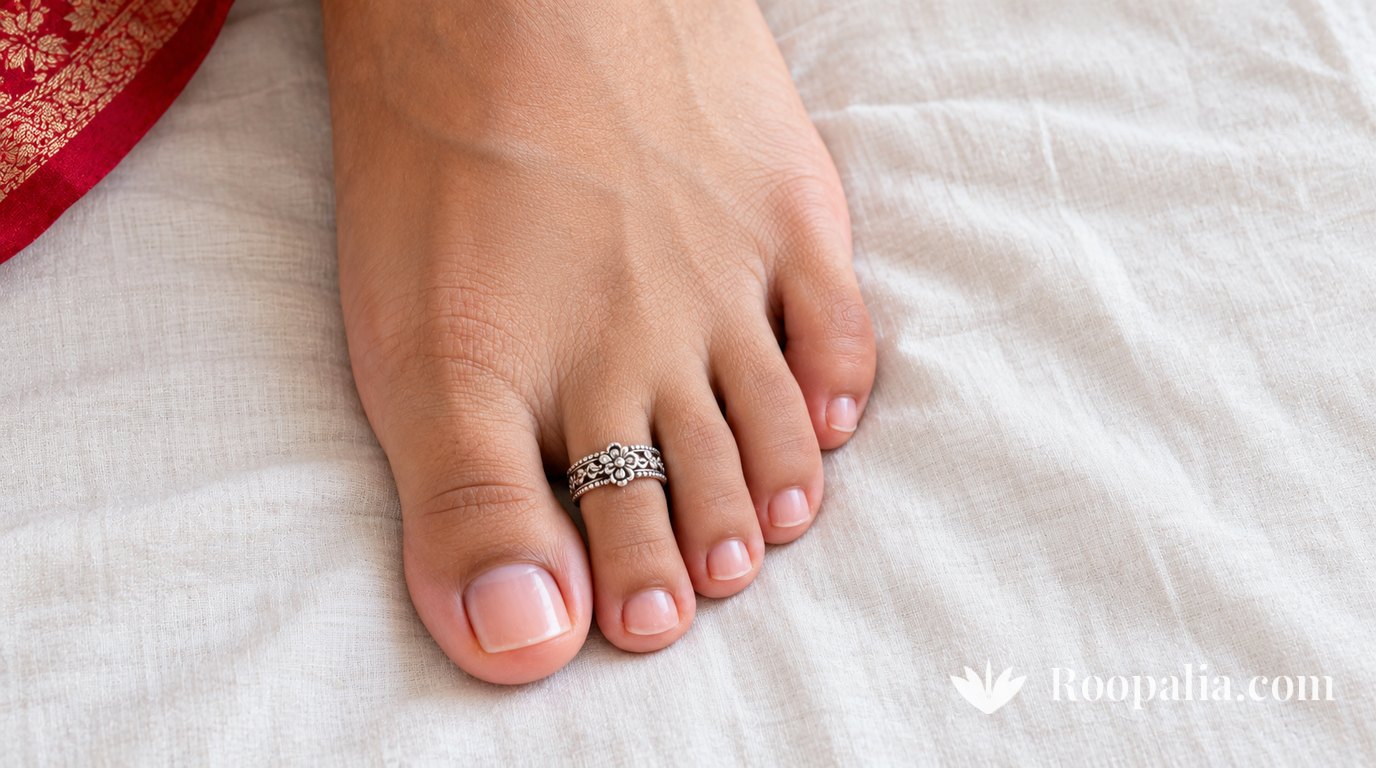
The toe ring goes on the second toe of each foot — the one next to the big toe, usually the longest. In India they are worn as a matched pair, unlike in the West where people often wear a single ring or an unmatched pair (courtesy: Wikipedia, Toe ring).
- More than one per foot: many families add rings on the third and fourth toes as well. This is regional and family custom.
- The big toe: not the usual place today. Wikipedia notes that in the nineteenth century some people wore mirror rings on the big toe.
- Fit: most bichiyas are open-ended and can be gently squeezed to size. If the toe looks pale, bluish or marked, loosen it.
Can you take off your bichiya after marriage?
Many families treat the bichiya as a sign of a living husband and keep it on every day. Still, I found no text that attaches sin or bad luck to removing it. Take it off when common sense says so:
- Hospital procedures, surgery or an MRI scan — follow the hospital’s instruction to remove metal jewellery.
- Swelling, a cut, itching or discolouration around the toe — loosen or remove it, and see a doctor if it does not settle.
- Swollen feet in pregnancy — loosening or removing it for a while is sensible.
- Sport, the gym or long runs in closed shoes.
And if a bichiya breaks or gets lost? I found no text calling it a bad omen. Silver is soft; daily walking and water wear it thin until it opens or slips off. Many families place a new pair before the home shrine before wearing it — a family custom, not a requirement.
Why silver and not gold on the feet?
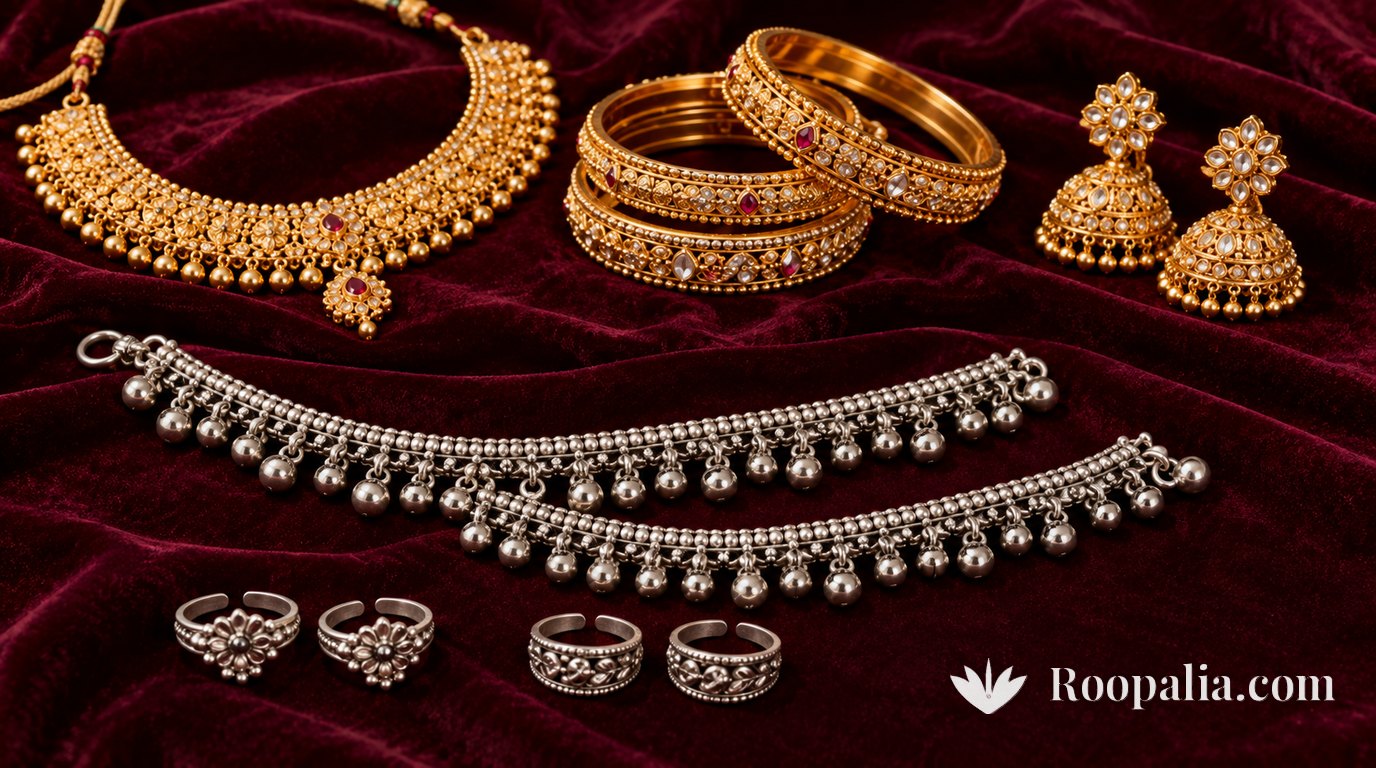
Toe rings and anklets are usually silver because gold is considered too respected to wear below the waist — the custom recorded on Wikipedia, which also notes that the rule is not followed very strictly and that gold and diamond toe rings are common (courtesy: Wikipedia, Toe ring).
| What people say | What I found |
|---|---|
| Gold is too sacred for below the waist | Recorded as custom (Wikipedia, Toe ring) — “not followed very strictly” |
| Gold on the feet insults Goddess Lakshmi | The feeling is understandable, but no Purana or Smriti verse found |
| Gold is “hot”, silver is “cool”, so silver suits the feet | No Ayurvedic verse found; repeated online without a source |
| Gold on the feet angers the planets or drains wealth | Folk astrology; not found in any text |
None of this makes the custom wrong. Not touching something precious with your feet is a gesture of respect — the same instinct that stops us from stepping over a book. It is a family tradition to keep if you love it, not a fear to live with.
Now the Ramayana — and the line that makes the anklet more than an ornament.
Anklets in the Ramayana: what Lakshmana recognised
As Ravana carried Sita away, she tied some of her ornaments in her upper garment and let them fall. Later Sugriva showed the bundle to Rama, who asked Lakshmana whether he recognised them. Lakshmana’s reply:
“I do not recognise these armlets, nor these earrings. But I do recognise these anklets — because I bowed at her feet every day.”
— Valmiki Ramayana, Kishkindha Kanda, sarga 6, verse 22 (nāhaṃ jānāmi keyūre nāhaṃ jānāmi kuṇḍale / nūpure tv abhijānāmi nityaṃ pādābhivandanāt), tr. Desiraju Hanumanta Rao (valmikiramayan.net) — wording paraphrased
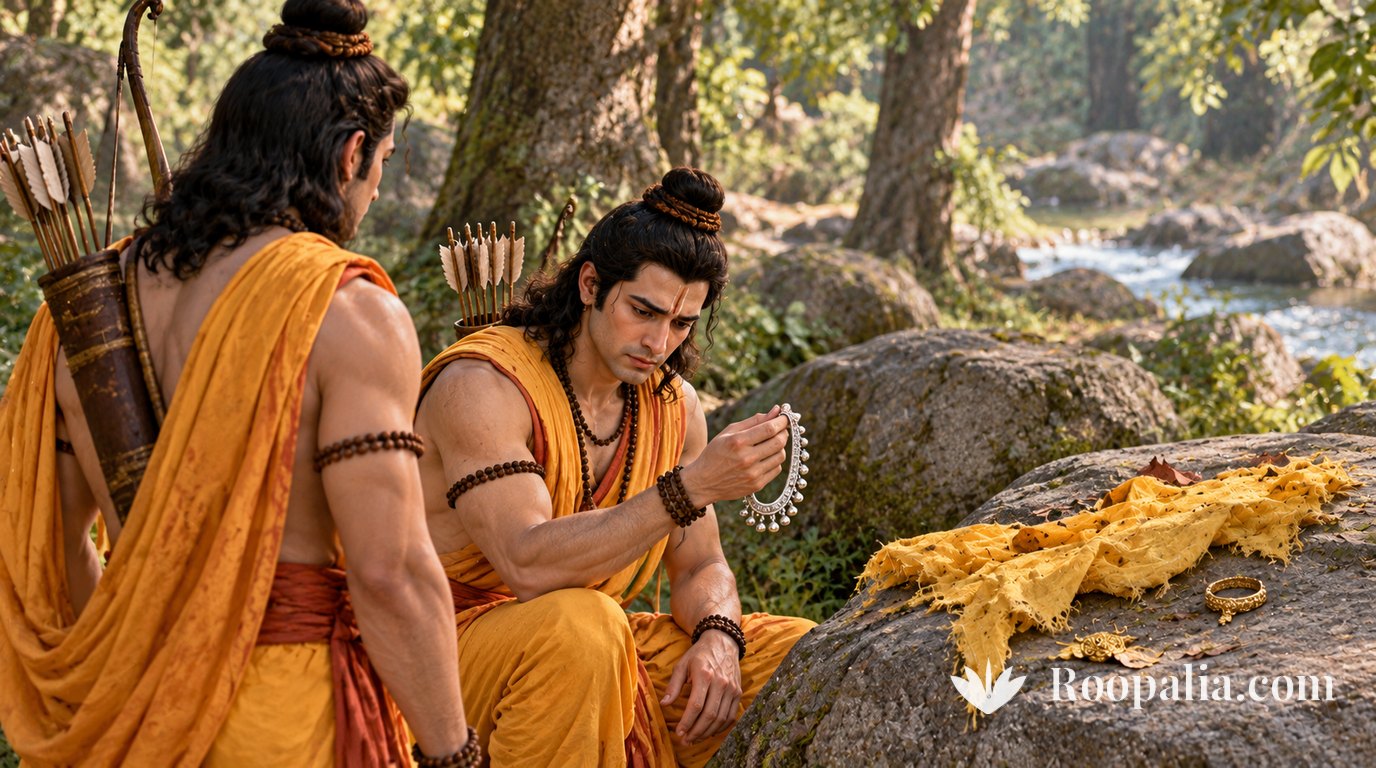
Lakshmana had never looked at his sister-in-law’s face ornaments; his gaze stayed at her feet. It is one of the finest illustrations of charan sparsh, the custom of touching elders’ feet.
Two honest caveats. First, the same translation page notes that this verse is absent from some old manuscripts and from the Baroda critical edition, so scholars disagree about it. Second, Wikipedia’s Toe ring article says Sita dropped her toe ring; in the translation of this sarga that I checked, the ornament named is the nūpura — the anklet — and no toe ring is mentioned. That is the result of my search, not a final verdict; other versions of the Ramayana may tell it differently.
Why do Indian women wear anklets (payal)?
The payal is one of India’s oldest ornaments. Describing the famous “dancing girl” figurine from Mohenjo-daro, the archaeologist John Marshall noted her armlets, bangles and anklets (courtesy: Wikipedia, Anklet). The Tamil epic Silappatikaram is named after one: its title means “the story of the anklet” (silambu). Kovalan is executed in Madurai after being falsely accused of stealing the queen’s anklet, and his wife Kannagi proves his innocence by producing her own matching anklet in court (courtesy: Wikipedia, Silappatikaram). The epic is usually dated to around the fifth century CE.
- Adornment — alta and payal together are a fixture of Indian painting and folk song.
- Sound — small bells are attached so that the wearer makes a pleasing sound while walking; dancers of Bharatanatyam, Kathak, Kuchipudi and Odissi tie ghungroo at their ankles (courtesy: Wikipedia, Anklet).
- Presence in the home — in large old houses, the chime told the family who was crossing the courtyard. That is lived experience, not scripture.
- Heirloom — heavy silver anklets pass down generations; Rajasthani women wear the heaviest type (courtesy: Wikipedia, Anklet).
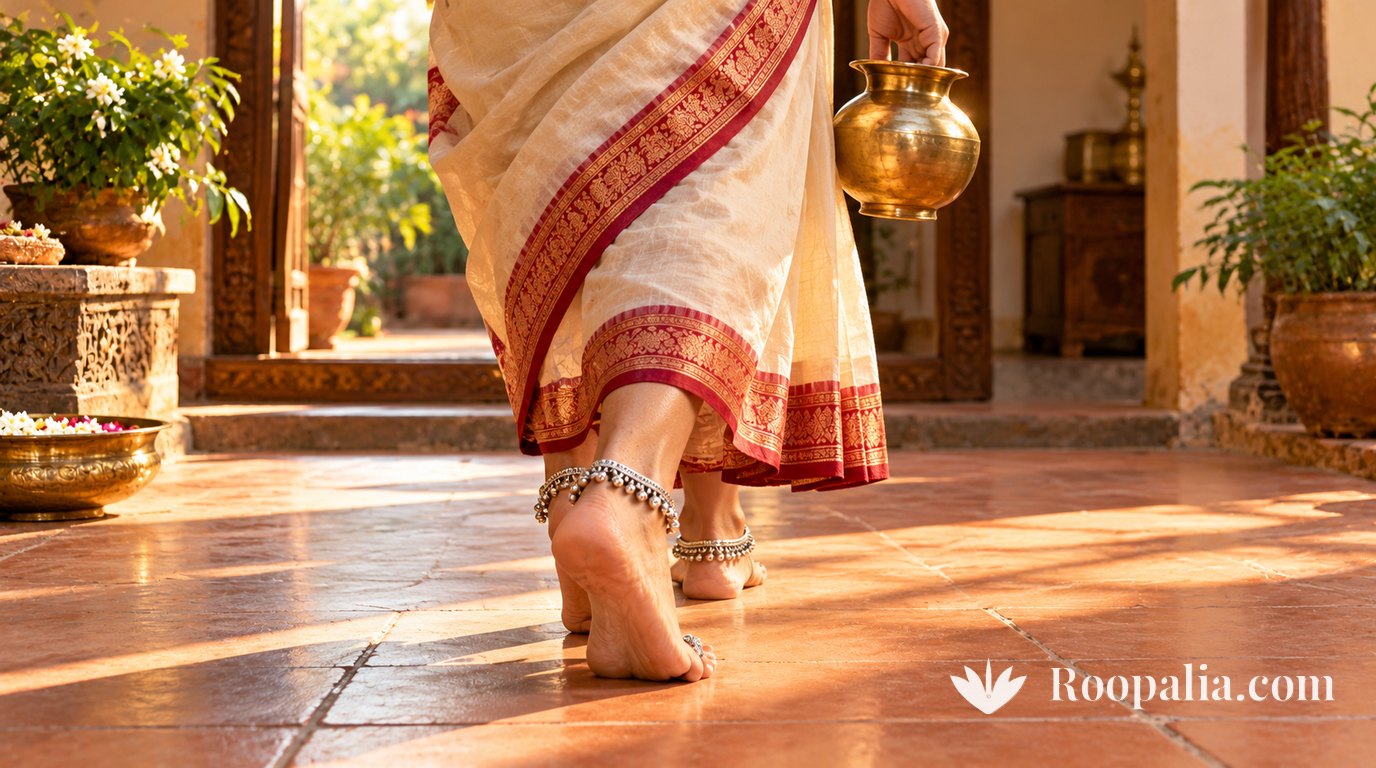
Names of toe rings and anklets across India
| Language | Toe ring |
|---|---|
| Hindi | bichiya, bichhua |
| Marathi | jodavi |
| Telugu | mettelu |
| Tamil | metti |
| Kannada | kaalungura |
| Malayalam | minji |
| Bengali | angot |
For the anklet: payal or pazeb in Hindi, jhanjar in Punjabi, nupur in Bengali, and golusu or pattilu in the south (courtesy: Wikipedia, Toe ring and Anklet).
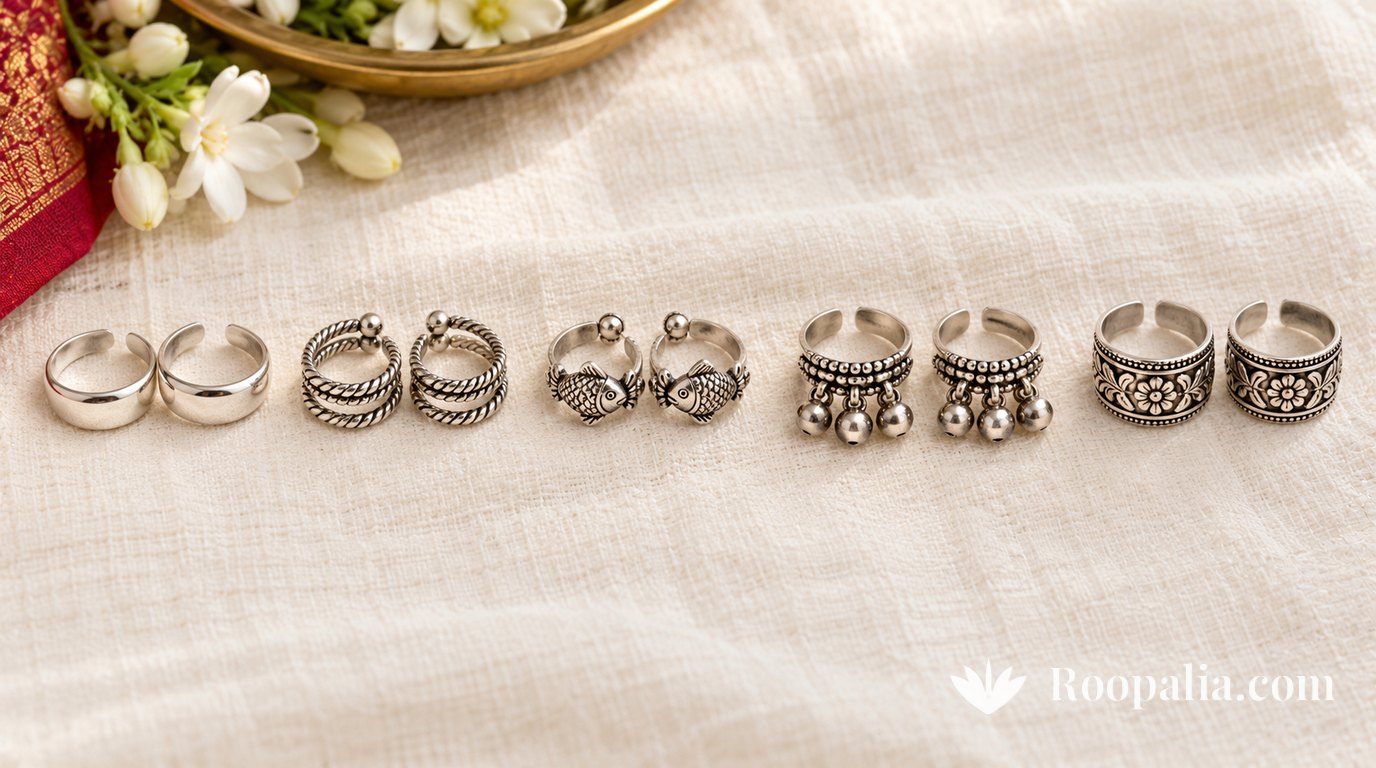
Wearing a bichiya and payal outside India
- Closed shoes and winter socks: chunky or belled toe rings press all day. Keep a thin, plain, smooth-edged pair for daily wear and save the ornate ones for festivals.
- The office: belled anklets are loud in a quiet office; a fine chain without bells, or toe rings alone, is easier.
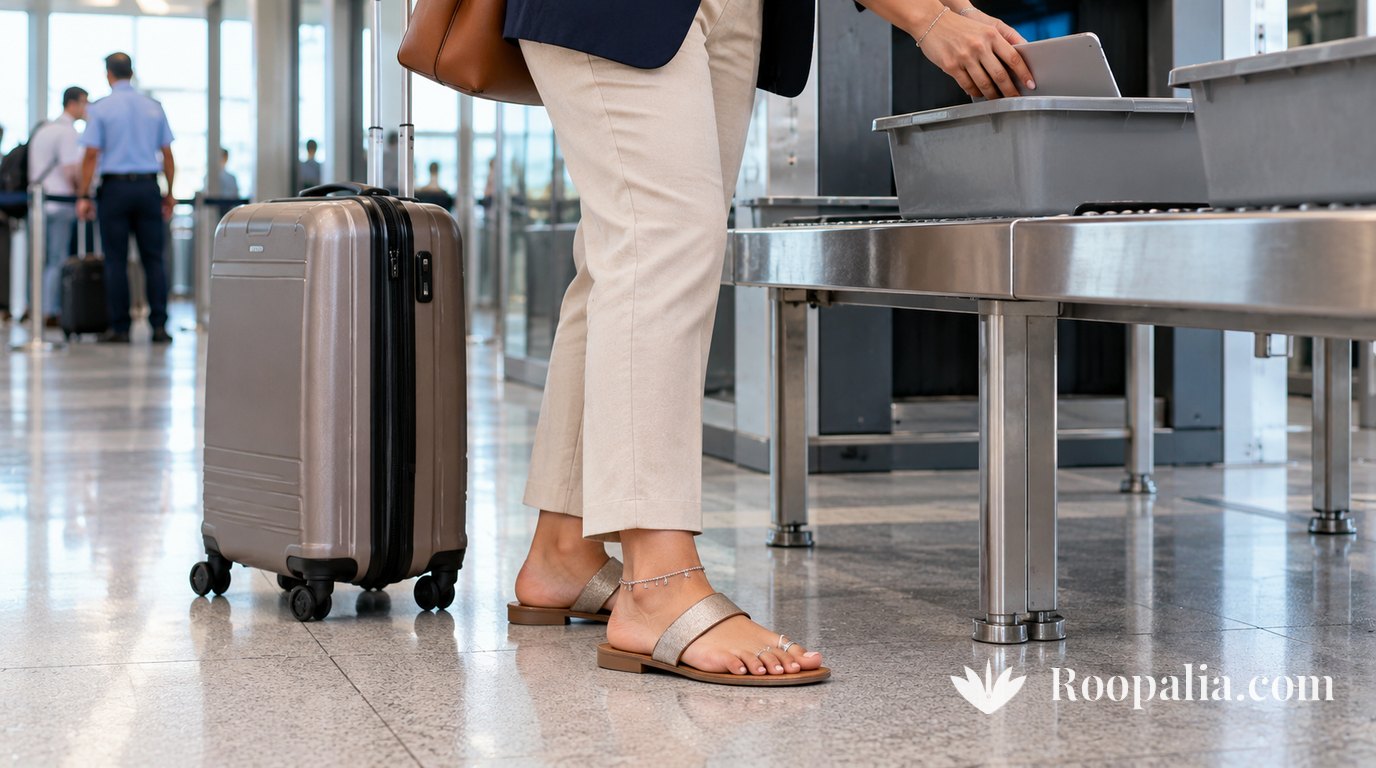
- Airport security: small silver toe rings rarely cause trouble; heavy anklets may draw a question — just say it is jewellery.
- Swimming pools: chlorinated water tarnishes silver quickly; take them off before you swim.
- No need to feel self-conscious: toe rings are ordinary fashion jewellery in Western countries (courtesy: Wikipedia, Toe ring).
Why silver toe rings turn black — and simple care
Silver darkens through contact with sulphur in air and sweat. It is chemistry, not the “evil eye”.
- Soak for a few minutes in warm water with mild soap; clean with a soft brush.
- Dry thoroughly — damp silver tarnishes faster.
- Store anklets you do not wear daily in a closed pouch.
- Keep perfume, lotion and household cleaners away from them.
- Replace a toe ring whose edge has worn sharp — it can cut the toe.
What I found and what I did not
| Claim | Result |
|---|---|
| Lakshmana recognised Sita’s anklets (nūpura) | Found — Valmiki Ramayana, Kishkindha 6.22 (absent from some recensions) |
| Sita dropped her toe rings | Not found in the translation of that sarga |
| Second toe, worn in pairs, usually silver | Found — Wikipedia, Toe ring |
| Husband places the rings at the wedding | Found — in many communities (Wikipedia, Toe ring) |
| No gold below the waist | Found as custom, “not followed very strictly” |
| Gold on the feet insults Lakshmi | Not found in any text |
| Nerve to the uterus / acupressure benefit | No scientific study found |
| Anklets are thousands of years old | Found — Mohenjo-daro figurine, Silappatikaram |
The bottom line: the bichiya is a marriage sign worn in pairs on the second toe, usually in silver because gold is kept above the waist out of respect — a custom, not a scriptural command. The health claims have no study behind them. The payal is India’s oldest ornament, and the Ramayana gives it its most moving moment. Wear both for love, tradition and beauty — not out of fear.
Frequently asked questions
Is there a scientific reason for wearing toe rings?
Why do married Indian women wear toe rings?
Which toe is the toe ring worn on?
Can unmarried girls wear toe rings?
Why are toe rings and anklets made of silver, not gold?
Can you remove your toe rings after marriage?
What does the Ramayana say about Sita’s anklets?
Why do silver toe rings and anklets turn black?
Sources and cautions: sources consulted — Valmiki Ramayana, Kishkindha Kanda, sarga 6, verse 22 (tr. Desiraju Hanumanta Rao, valmikiramayan.net — not a mainstream reference site, so no link is given); toe ring names, the second toe, the silver and gold custom, the wedding rite and the absence of scientific studies: Wikipedia (Toe ring); anklet names, Rajasthan, Mohenjo-daro and bells: Wikipedia (Anklet); Silappatikaram: Wikipedia. Three things should be said plainly. First, a verse saying gold on the feet insults Lakshmi, an Ayurvedic verse calling gold “hot” and silver “cool”, any text calling a lost toe ring a bad omen, and the story of Sita dropping her toe rings were not found; that is the result of a search, not a final verdict. Second, every family and region has its own custom; follow your elders. Third, this article is not medical advice; with swelling, a wound or discolouration around the toe, see a doctor. No brand or shop is recommended.