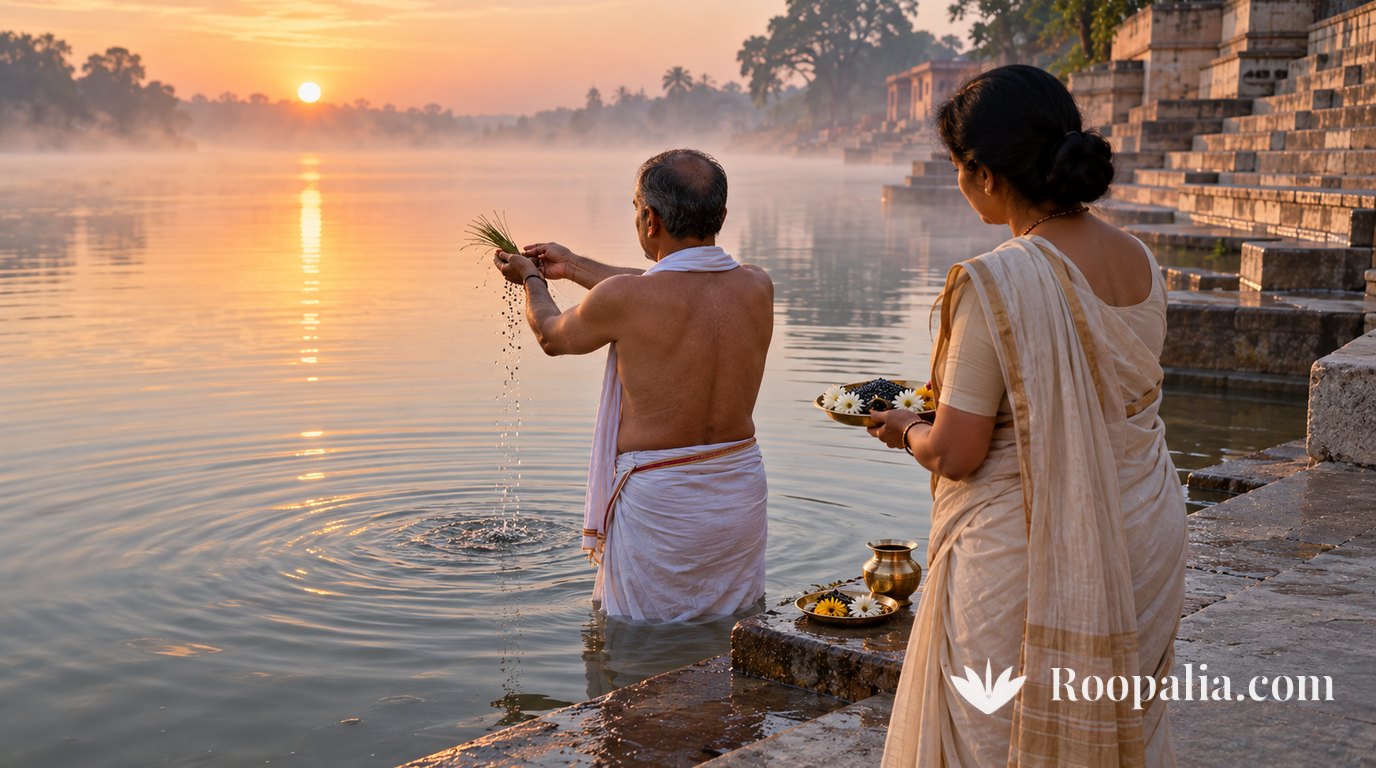
Every month the same message lands in family WhatsApp groups: “Tomorrow is Amavasya — don’t wash your hair, don’t cut your nails, don’t start anything new.” If you grew up with these rules, you probably follow some of them without knowing why. If you live in London or New Jersey and your mother calls to remind you, you may wonder which of them actually come from scripture.
So I went looking. The texts turned out to say less about hair and nails than the forwards claim — and something quite specific about trees that the forwards never mention.
Is Amavasya auspicious or inauspicious?
In the texts, Amavasya is not an inauspicious day — it is the monthly day of the ancestors. The word combines amā (together) and vasya (to dwell): the day the Sun and Moon “dwell together” and the Moon is invisible (courtesy: Wikipedia, Amavasya).
“…shall offer, month by month, on the new-moon day, the funeral sacrifice…”
— Manusmriti 3.122, tr. G. Bühler (courtesy: sacred-texts.com)
The next verse names this monthly offering to the ancestors Anvaharya (3.123), and 3.127 calls it the famous rite for the dead performed on the new-moon day. The same text tells householders to visit the images of the gods and make offerings on such parva days (4.150, 4.153). And the biggest celebration in the Hindu year, Diwali, falls on an Amavasya night.
Avoiding Amavasya for weddings, housewarmings or new ventures comes from muhurta and astrology, not from these chapters. And the fear that a child born on Amavasya is unlucky has no basis in anything I checked.
What not to do on Amavasya — text vs. custom
| Rule | Basis | Where |
|---|---|---|
| Cutting a branch or plucking a leaf | ✅ In the text | Vishnu Purana, ch. 12 |
| Sexual relations (stay chaste) | ✅ In the text | Manusmriti 4.128 |
| Beginning or teaching Veda recitation | ✅ In the text | Manusmriti 4.113–114 |
| Meat, alcohol, heavy food | Custom | Widely followed |
| Washing hair | Custom — not found in the texts | — |
| Cutting hair or nails, shaving | Custom — not found in the texts | — |
| Starting new ventures, buying property | Astrology / muhurta | Check a panchang |
Can we wash hair on Amavasya?
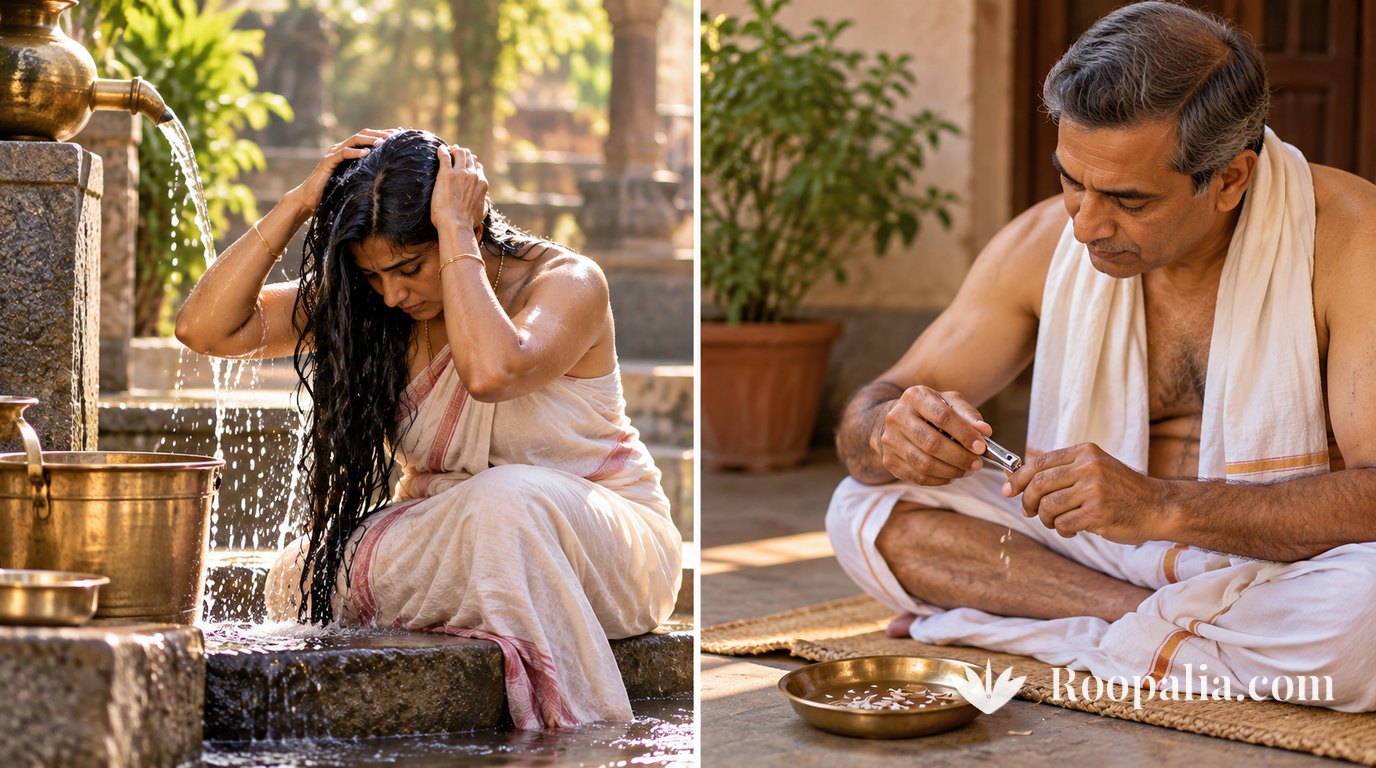
The texts I checked do not forbid it. The Amavasya rules in Manusmriti chapter 4 are about Veda study and chastity, not hair or oil. The “don’t wash your hair” rule is a household custom, often explained as “Lakshmi flows away” or “the ancestors are displeased”. Follow it if your family does — but hygiene and health come first: a bath after periods, sweat, itching or a doctor’s advice outweighs any custom. Many families keep the bath (needed before tarpan anyway) and simply skip shampoo. I found no separate rule for girls.
Can we cut nails on Amavasya?
Also a custom rather than a text. Manusmriti 4.69 does talk about hair and nails, but it ties them to no lunar day. The habit of not cutting hair or nails on Amavasya comes from its link with shraddha, the rite for ancestors — the same restraint is kept during Pitru Paksha. Practical answer: if you keep the custom, trim them the day before. If a nail is broken or catching, cut it; I found no sin or penalty attached to it anywhere.
The rule that is in the text: leave the trees alone
This is the surprising one. The Vishnu Purana (chapter 12, tr. H. H. Wilson, courtesy: sacred-texts.com) says that on the day of conjunction the Moon is immersed in the waters and then enters the branches and shoots of trees, and that anyone who cuts a branch or casts down even a leaf at that time is guilty of a sin as grave as killing a Brahmin. The same passage says the ancestors drink the Moon’s last nectar that day and stay satisfied for the whole month — the textual root of Amavasya as the ancestors’ day.
That is why many homes pluck tulsi or bael leaves for worship the day before — see our guide on tulsi rules.
If Amavasya is the ancestors’ day, what exactly are you supposed to do for them? Less than you might think — and it can all be done in a kitchen.
What to do on Amavasya for ancestors (pitra dosh)
- Remember them. A bath, a few quiet minutes and their names — father, grandfather, great-grandfather, and the mother’s side. If you don’t know the names, “for all my ancestors” is enough.
- Tarpan with sesame water (below), if your family tradition has you do it.
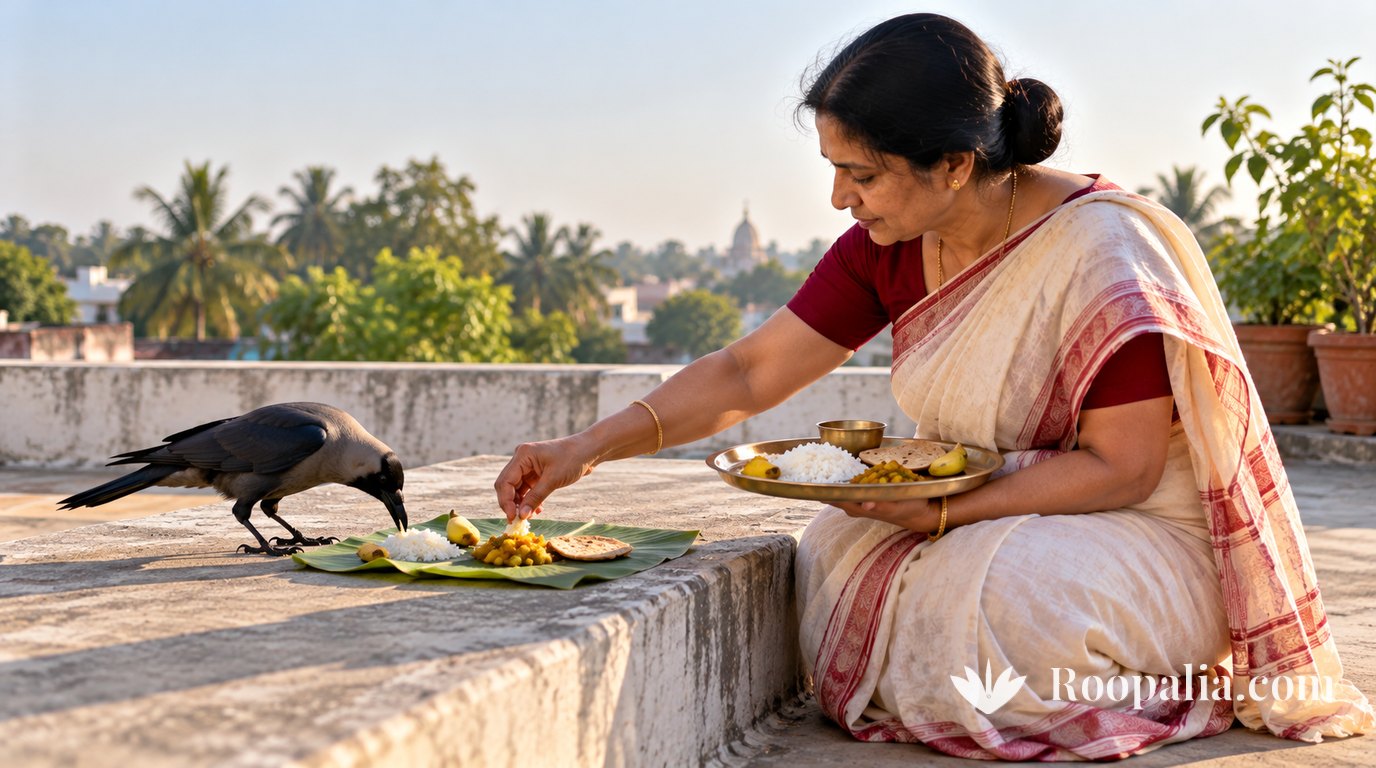
- Set aside a portion of food for a crow, a cow or a hungry person. Offering food to crows during shraddha is still a living practice (courtesy: Wikipedia, Śrāddha).
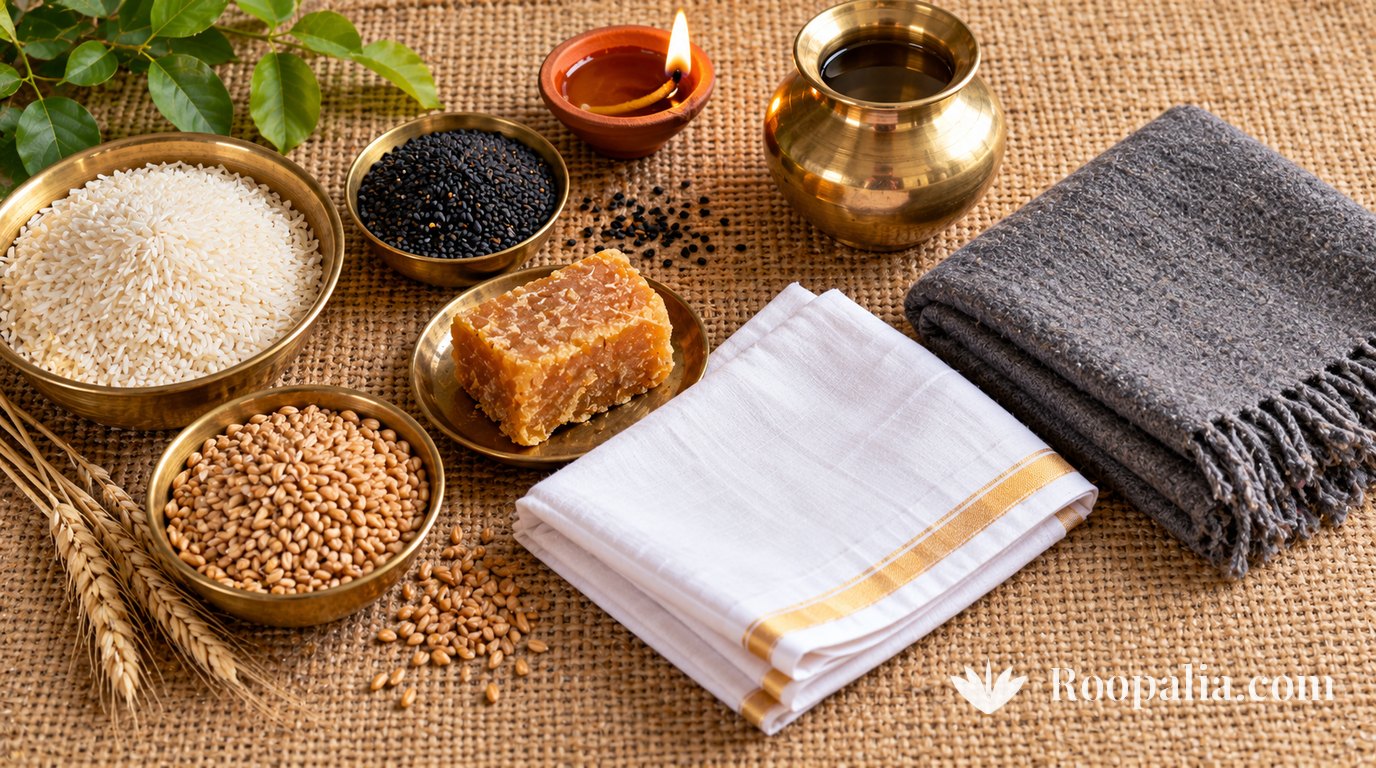
- Give — black sesame, rice or wheat, jaggery, a white cloth, or a blanket in winter. Something the receiver actually needs is the best gift.
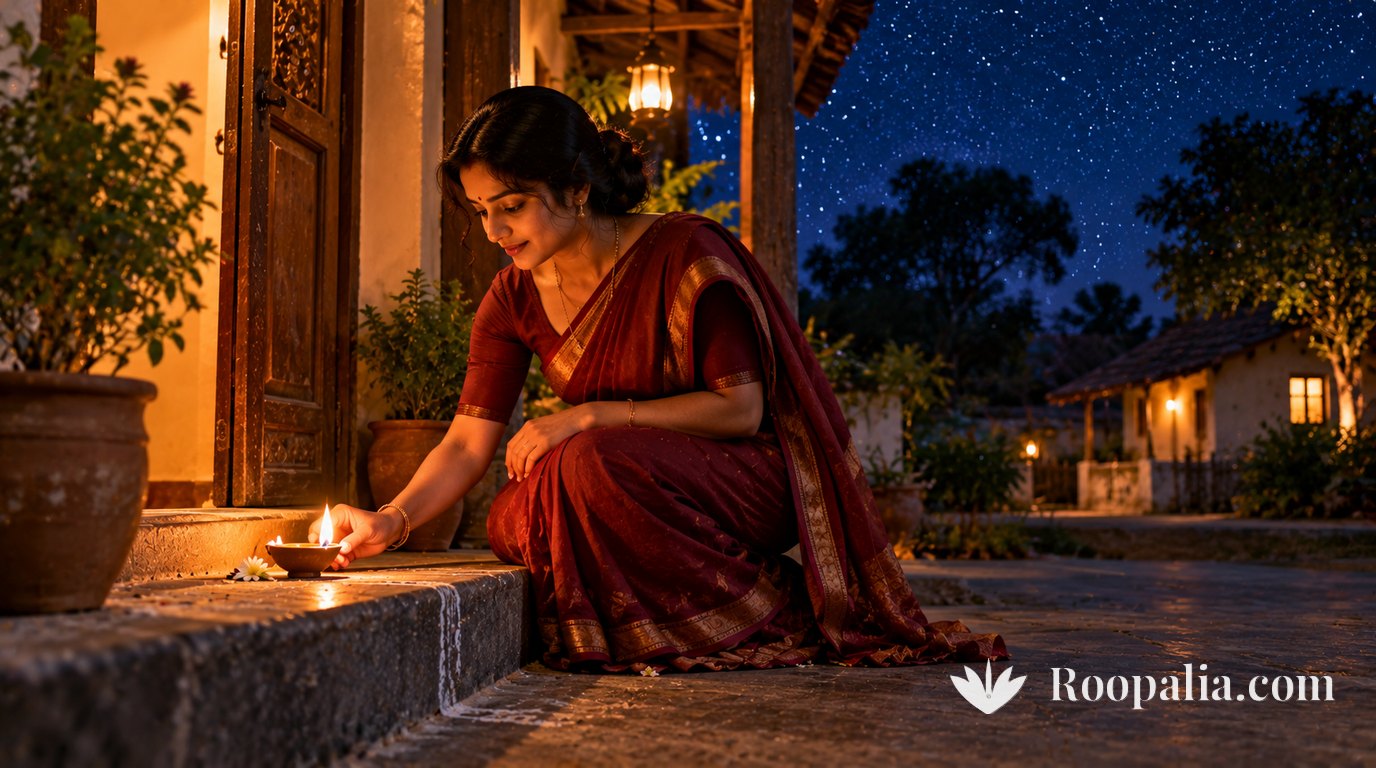
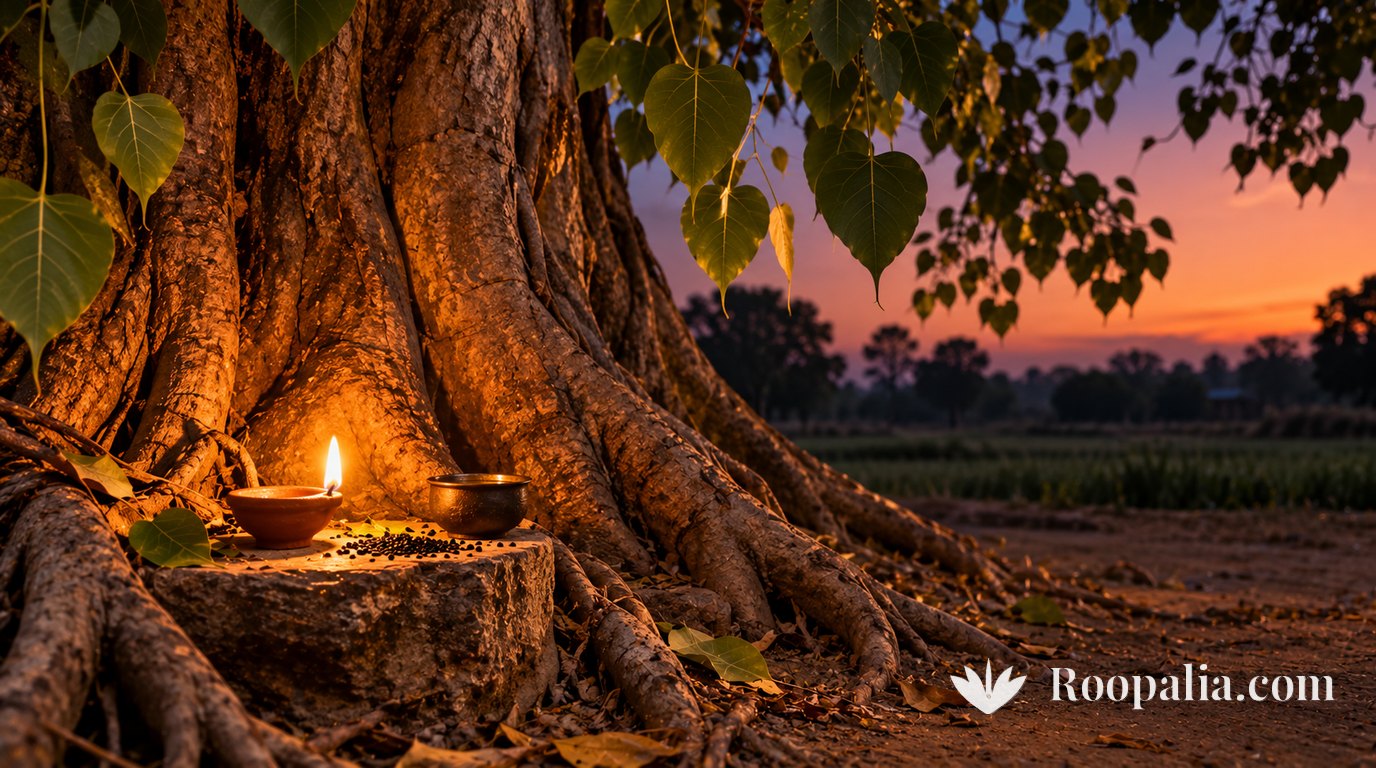
- Light a lamp at the threshold in the evening, or under a peepal tree.
How to do Amavasya tarpan at home
Tarpana means “satisfying” — offering water with black sesame to the ancestors. Wikipedia’s Tarpana article lists Amavasya, sankranti, eclipses and Pitru Paksha as its occasions, and describes the method:
- Bathe and put clean water mixed with black sesame in a plate or basin.
- Wear a ring of kusha grass on the ring finger of the right hand (or hold a blade of kusha).
- If you wear the sacred thread, move it to the right shoulder — the position used for rites to the ancestors.
- Take sesame water in your joined palms and let it flow out over the part of the hand between the thumb and index finger (the pitru tirtha), saying each ancestor’s name.
- Fold your hands, ask for their blessing, and pour the water at the root of a plant (not tulsi).
Traditionally, sesame tarpan is done by those whose father is no longer living. If your parents are alive, a lamp, a gift and a portion of food are the usual Amavasya offerings. Whether women perform tarpan varies by family — follow your own.
What to do on Amavasya night
Before electricity, Amavasya was the darkest night of the month. Families still mark it with a lamp at the main door (often facing south, the direction associated with the ancestors), a lamp under the peepal, and quiet chanting. Claims that “negative energies are strongest” that night are folk belief; I found nothing like it in the texts I checked. Avoiding lonely places on a moonless night was simply sensible.
Shani, Somvati, Mauni, Mahalaya — which Amavasya is which?
| Name | When | Custom |
|---|---|---|
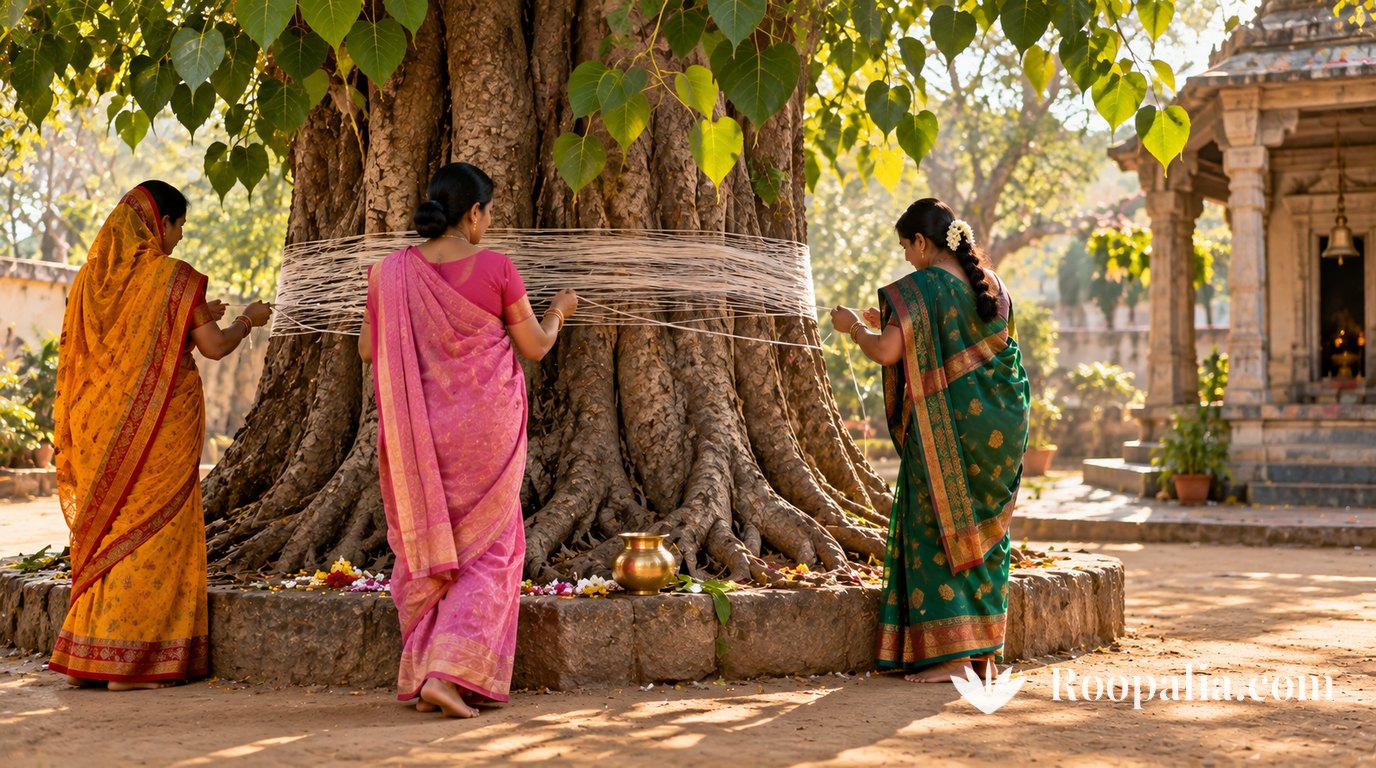
| Somvati Amavasya | Falls on a Monday | Women wind raw white thread round a peepal and circle it; fast for husband’s well-being (Wikipedia notes married women pray to Shiva). |
| Shani Amavasya | Falls on a Saturday | Mustard-oil lamp under a peepal, gifts of black sesame. Shani Jayanti is kept on the Jyeshtha Amavasya (Wikipedia). |
| Mauni Amavasya | Magha month | Silence (mauna) and an early holy dip (courtesy: Wikipedia, Mauni Amavasya). |
| Mahalaya / Sarva Pitru Amavasya | Last day of Pitru Paksha | Shraddha for all ancestors, including those whose date is not known. |
| Diwali Amavasya | Kartik (Ashvin in the amanta calendar) | Lakshmi puja — an Amavasya of pure celebration. |
For a Somvati Amavasya, many families combine the day with their Monday fast; for Shani Amavasya, with the Saturday fast.

Keeping Amavasya outside India

- Use your own city’s date. Amavasya in North America often falls a day earlier than in India — see why your festival date differs from India.
- No river? Do tarpan at home in a basin and pour the water into garden soil afterwards.
- No crows? Put the ancestors’ portion in a bird feeder, or donate a meal to a food bank — the intention is the same.
- Lamps in apartments: on the balcony, away from smoke alarms; use a glass holder if it is windy.
- No temple nearby? See puja at home without a temple.
How to find when Amavasya is
Rather than dates that go stale, here is the method that works every month:
- Look for the last day of the Krishna Paksha (waning fortnight) in a panchang — roughly fifteen days after the full moon.
- Tithis are counted from sunrise. When Amavasya begins mid-day and ends the next mid-day, fasting and bathing usually follow the day on which it is current at sunrise, while rites for ancestors look at the afternoon.
- Set the panchang app to your own city, not Delhi.
What the texts say — and what they don’t
| Point | Found? | Where |
|---|---|---|
| Monthly rite for ancestors on Amavasya | ✅ Found | Manusmriti 3.122, 3.123, 3.127 |
| Ancestors satisfied for a month by the Moon’s nectar | ✅ Found | Vishnu Purana, ch. 12 |
| Do not cut branches or pluck leaves | ✅ Found | Vishnu Purana, ch. 12 |
| Stay chaste | ✅ Found | Manusmriti 4.128 |
| No Veda recitation | ✅ Found | Manusmriti 4.113–114 |
| No hair washing | ❌ Not found | Custom |
| No cutting hair or nails | ❌ Not found | Custom |
| “Negative energies” at night | ❌ Not found | Folk belief |
| Birth on Amavasya is unlucky | ❌ Not found | — |
“Not found” is the result of this search, not proof that something does not exist anywhere in the vast Dharmashastra and Purana literature.
Bottom line: Amavasya is the ancestors’ day, not a day of fear. Remember them, set aside food, give something, light a lamp — that is its heart. The texts clearly ask you to leave trees and leaves alone and to keep restraint. The hair and nail rules are family custom: keep them with respect if you wish, but never at the cost of health or hygiene.
Frequently asked questions
What should not be done on Amavasya?
Is Amavasya auspicious or inauspicious?
Can we wash hair on Amavasya?
Can we cut nails on Amavasya?
What to do on Amavasya for ancestors?
How do you do Amavasya tarpan at home?
What is the difference between Somvati and Shani Amavasya?
What does Amavasya mean?
Sources and cautions: sources consulted — Manusmriti 3.122, 3.123, 3.127, 4.69, 4.113–114, 4.128, 4.150, 4.153 (tr. G. Bühler) and Vishnu Purana, chapter 12 (tr. H. H. Wilson), both courtesy: sacred-texts.com; meaning of the word, Somvati Amavasya, Shani Jayanti and fasting: Wikipedia (Amavasya); tarpan method: Wikipedia (Tarpana); crows: Wikipedia (Śrāddha); Mauni Amavasya: Wikipedia. Three things should be said plainly. First, a ban on washing hair, on cutting hair or nails, “negative energies” at night and the idea that birth on Amavasya is unlucky were not found in these texts; that is the result of a search, not a final verdict. Second, every family and region has its own custom; follow your elders and your local panchang. Third, this article does not encourage anyone to fast and is not medical advice; with any illness, pregnancy or regular medication, consult a doctor first. No brand or shop is recommended.