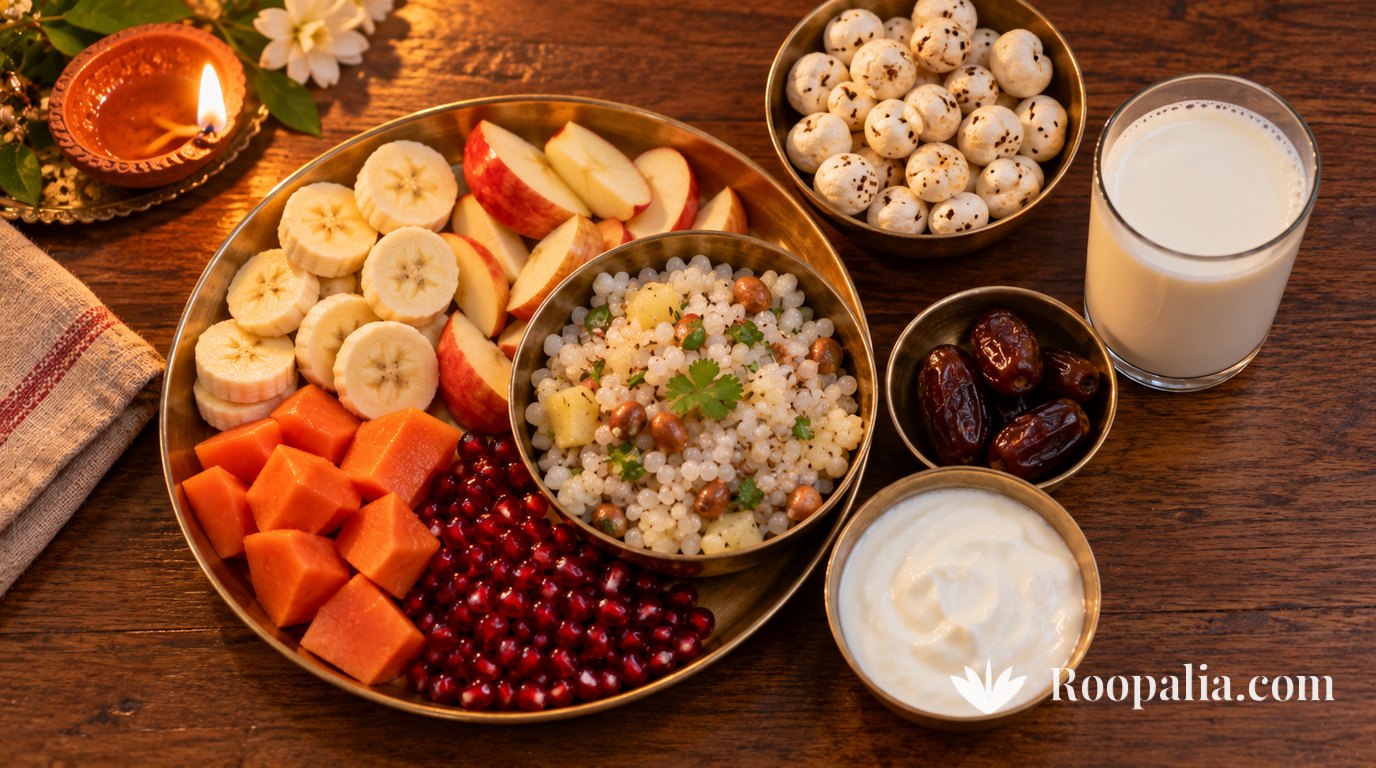
Search “what to eat in pradosh vrat” and you get confident lists: fruit only, no salt, sabudana yes, rice no. Search “pradosh kaal time” and you get three different windows — 45 minutes either side of sunset, an hour and a half either side, or simply “after sunset”. If you are keeping the fast for the first time, or keeping it in Toronto or Leeds where the sun sets at 9 pm in June, that confusion is real.
So I went to the source. The Pradosh fast has a clear textual home — two chapters of the Skanda Purana — and they answer some of these questions very precisely. One of them, though, they do not answer at all, and it is the one most people search for.
Pradosh Vrat rules in brief
- It falls on the trayodashi (13th lunar day) of both fortnights — about 24 times a year.
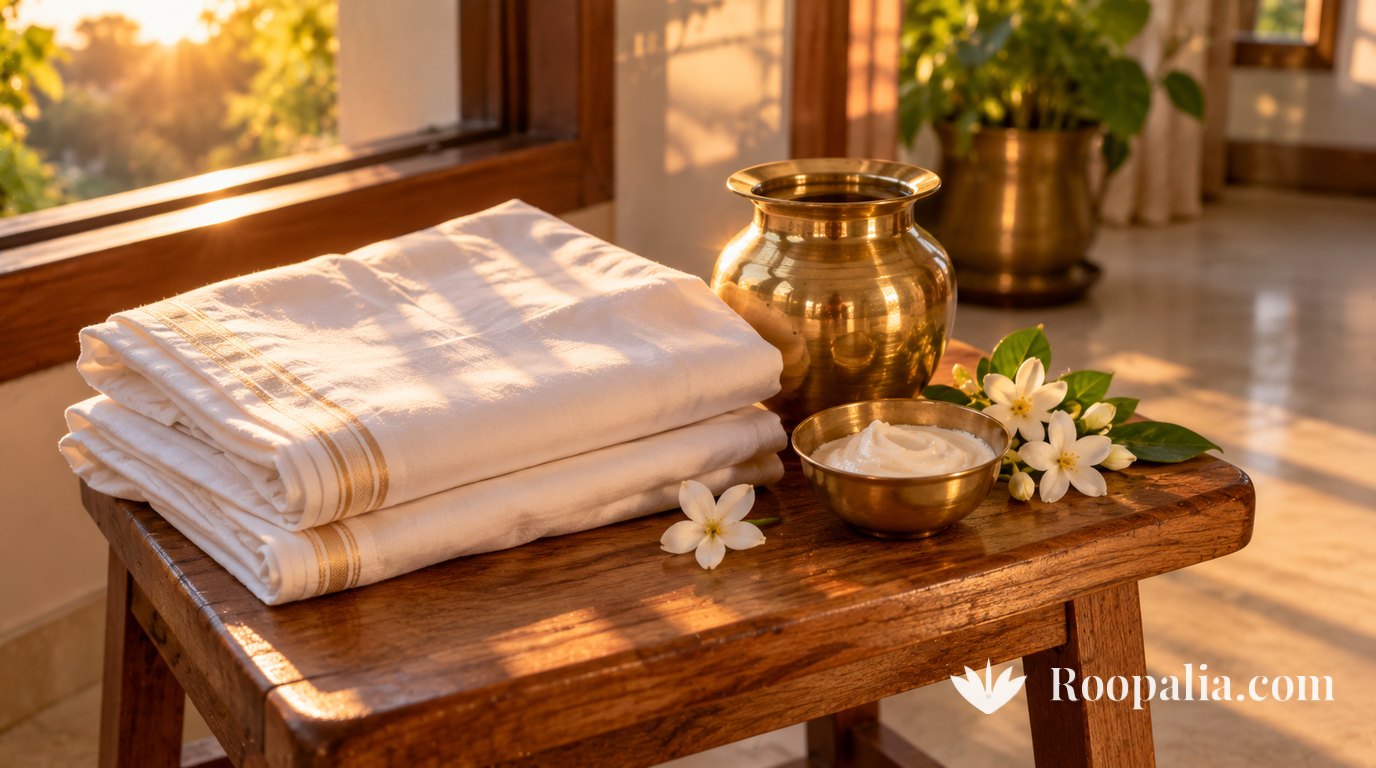
- Fast through the day; bathe about 72 minutes before sunset; wear white; stay calm and speak little.
- Worship Shiva at dusk — water and panchamrit abhishek, bael leaves, white flowers, a lamp, a milk-pudding offering, the story.
- Eat only after the puja is complete.
- If you cannot afford or manage the full puja, the text itself says a single flower offered with devotion is enough.
What can we eat in Pradosh Vrat?
The honest answer first: the Skanda Purana chapters on Pradosha do not say what the person fasting should eat. Chapter 7 says only that one should fast on the thirteenth tithi of either fortnight. The food it describes — milk pudding with ghee, sweets — is the offering to Shiva, not a menu for the devotee.
What the text does make clear is the order of things. In the Pradosha story in chapter 6, the fault that brought a king to ruin was that he abandoned the evening worship half-way and “took food at night” without completing it (verse 6.67). That is the root of the one food rule almost every family follows: no meal until the pradosh puja is done.
Beyond that, Pradosh is kept in three ways:
| Type of fast | What it means |
|---|---|
| Nirjala | No food or water all day. Hindi Wikipedia calls this the best form; it is also the hardest and not safe for everyone. |
| Nakta (one meal) | No grain during the day; one simple, sattvic meal at night after the puja. Hindi Wikipedia puts the meal at least 72 minutes after sunset. |
| Phalahar | Fruit, milk and fasting foods during the day; a light meal or more phalahar after the puja. The most common form in households. |
In most homes, fasting foods mean fruit, milk, curd, paneer, makhana, peanuts, dates, sabudana, and kuttu or singhara flour, while onion, garlic, meat, eggs and alcohol stay out. None of this list comes from the Pradosha chapters; it is household custom, and it varies. A fuller guide to fasting foods and salt is in what to eat during a Hindu fast.
Can I eat one meal? What doesn’t break the fast?
Yes — the nakta form is exactly that: one meal, after the puja. In a phalahar fast, water, fruit and milk do not break the fast; that is the fast. In a nirjala fast even water is skipped. Do not stop prescribed medicine for a vrat — I found no rule that treats medicine as breaking a fast, and your health comes first.
What to eat on Som Pradosh or Shani Pradosh?
The same as any Pradosh. I found no separate food rule for a Monday or Saturday Pradosh in any text. Many people combine Som Pradosh with their usual Monday fast customs, but the Pradosh part is unchanged.
What is Lord Shiva’s favourite food?
People ask this to decide the bhog. In the Pradosha worship, the offering (naivedya) named in the Skanda Purana is milk pudding (kheer) with ghee, side dishes and sweets (verses 7.52–53). Families also add fruit and panchamrit — that is custom.
But the line that follows that list is the real answer:
“If the devotee is physically incapable or if he is poor, he should worship only as per his monetary capacity. The Lord of Gaurī becomes satisfied even with a mere flower given with ardent devotion.”
— Skanda Purana, Brahmottara-khanda 7.56, tr. G. V. Tagare (courtesy: wisdomlib.org)
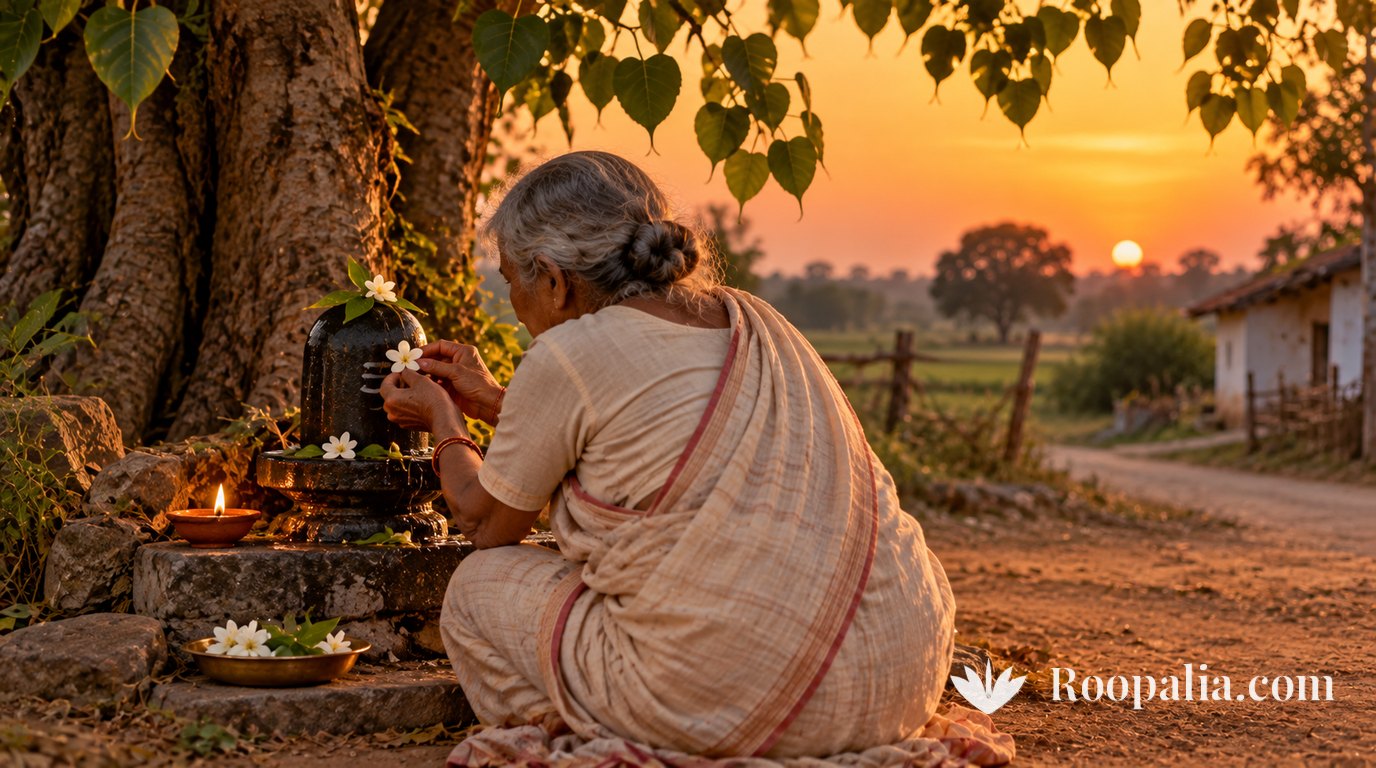
Now the timing question — and why three websites give you three different answers.
Pradosh kaal timing: how long before and after sunset?
Pradosh kaal is the dusk around your own local sunset, not a fixed clock time. The Skanda Purana defines it simply: “The dusk on the thirteenth lunar day is called Pradoṣa” (6.5, tr. G. V. Tagare, courtesy: wisdomlib.org). The word itself is pra (before) + dosha (darkness) — the time just before night (courtesy: Wikipedia, Pradosha).
| Source | Window |
|---|---|
| Skanda Purana 6.5 | “The dusk” of the 13th tithi — no minutes given. |
| Skanda Purana 7.2 | Bathe three ghatis before sunset. A ghati is about 24 minutes (courtesy: Wikipedia, Hindu units of time), so roughly 72 minutes before sunset. |
| Wikipedia (Pradosha) | 1.5 hours before to 1.5 hours after sunset, citing the Encyclopaedia of Hinduism. |
| Many panchangs and sites | About 45 minutes before to 45 minutes after sunset. |
| Hindi Wikipedia | After sunset and before night falls; meal at least 72 minutes after sunset. |
Every version has sunset in the middle. So the safe plan is: main puja within 45 minutes either side of your sunset, with the bath done before it. Worked example for a 6:00 pm sunset:
- Bath: by 4:48 pm (sunset minus 72 minutes)
- Main puja: 5:15–6:45 pm (sunset ± 45 minutes)
- Wider window: 4:30–7:30 pm (sunset ± 90 minutes)
- Meal, if keeping nakta: after about 7:12 pm
How to do Pradosh Vrat at home
Chapter 7 of the Brahmottara-khanda gives the full procedure (Skanda Purana 7, tr. G. V. Tagare, courtesy: wisdomlib.org). A home version:
- Morning: bathe and make a quiet resolve (sankalp) to keep the fast, and decide which form you will keep.
- Day: fast — “On either half of a lunar month, on the thirteenth Tithi, one should observe fast” (7.2).
- About 72 minutes before sunset: bathe again (7.2).
- Wear white, stay calm, and keep speech restrained (7.3).
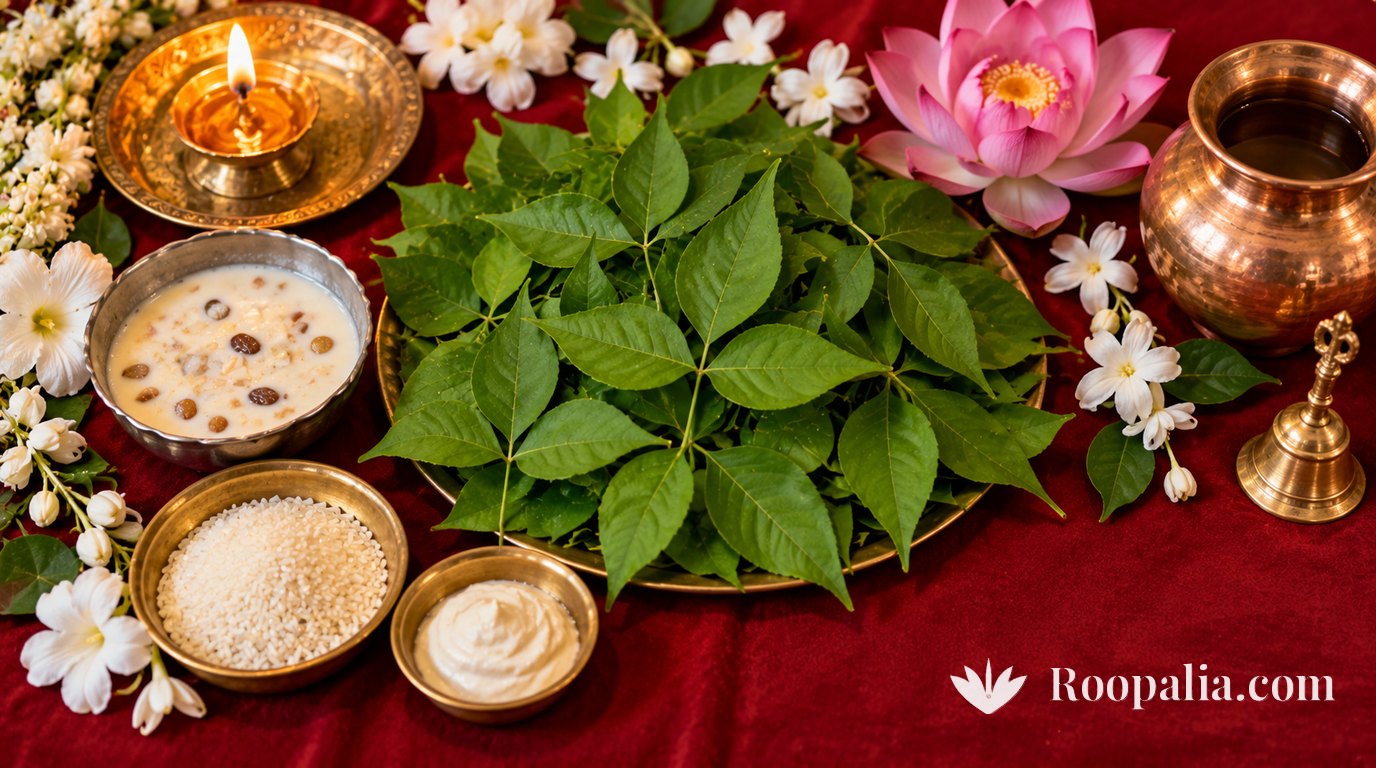
- Abhishek: water and panchamrit (milk, curd, ghee, honey, sugar) over the Shivling (7.45).
- Offer bael (bilva) leaves, white flowers, a lotus if you can find one, sandalwood and rice.
- Lamp and incense (7.55). Hindi Wikipedia mentions ghee lamps — at least one, or 32, 100 or 1000.
- Naivedya: kheer or a sweet (7.52–53).
- Chant “Om Namah Shivaya” and read or listen to the Pradosh story (below).
- Aarti and charity: 7.71 asks the devotee to feed Brahmins and give gifts; today that can be feeding someone in need.
- Then eat.
I have not printed the words of the Shiva aarti here, because I could not check the popular texts against a reliable printed source. Sing it the way your family does.
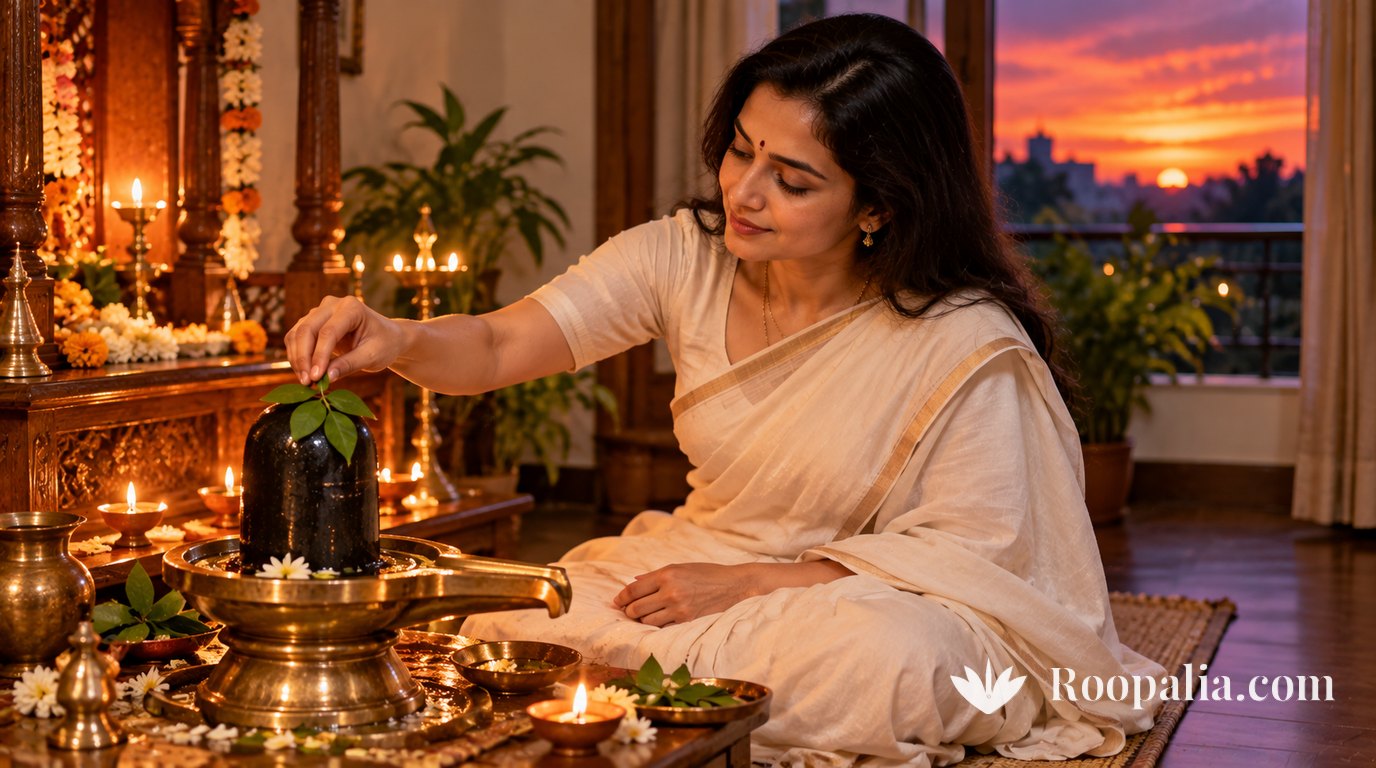
Can you offer water to the Shivling in the evening?
On Pradosh, yes. Some households avoid offering water after sunset on ordinary days, but the Pradosh puja is an evening puja by definition, and verse 7.45 of the Skanda Purana places the bathing of the Lord with holy water and panchamrit inside that very worship. In many South Indian Shiva temples, Nandi, Shiva’s bull, is also bathed and worshipped at pradosham, and a festival image of Shiva and Parvati on Nandi is taken around the temple (courtesy: Wikipedia).
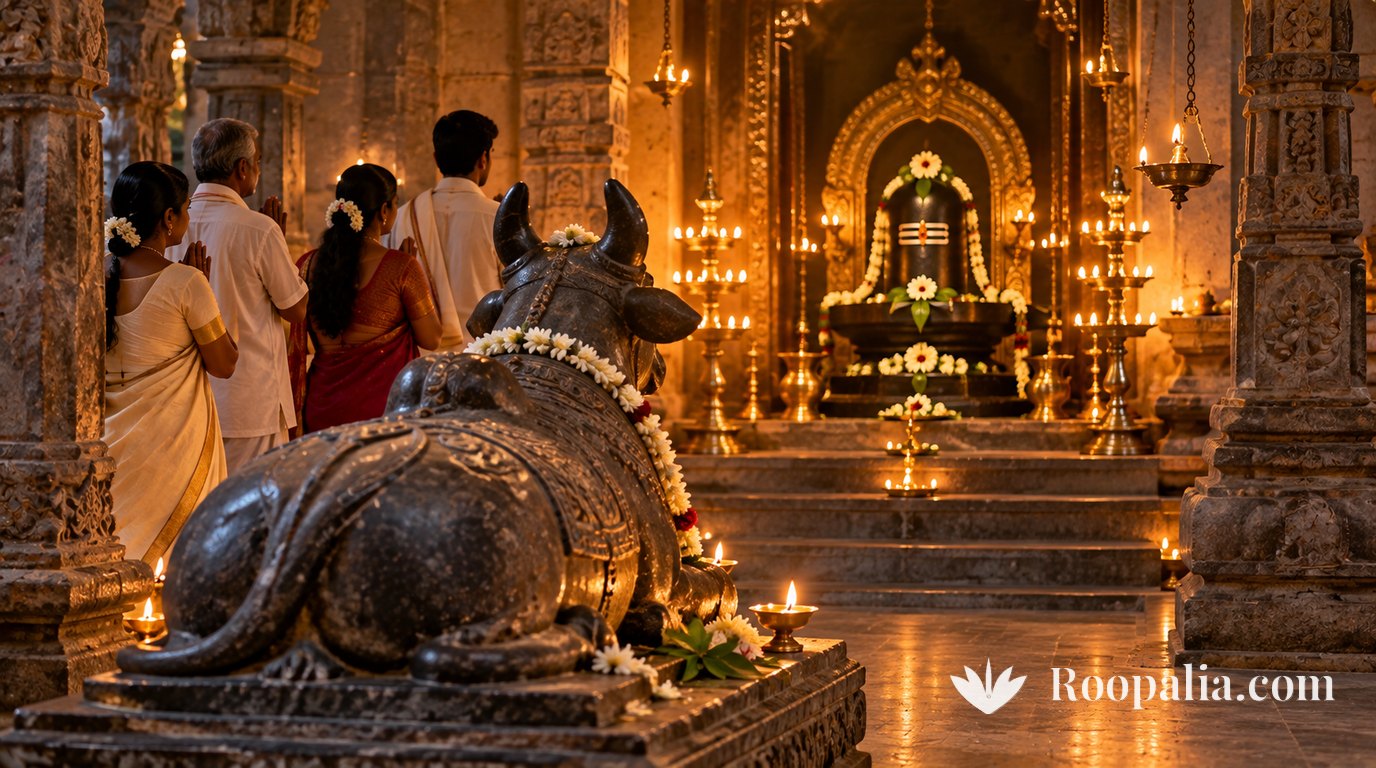
Som Pradosh, Shani Pradosh and the other weekday names
Pradosh is fixed by the tithi, not the weekday, and it takes the name of whichever day it falls on: Som Pradosh on a Monday and Shani Pradosh on a Saturday are the best known (courtesy: Wikipedia), with Bhaum (Tuesday), Budh, Guru, Shukra and Ravi Pradosh for the rest. Hindi Wikipedia lists a traditional benefit for each — health for Sunday, wishes fulfilled for Monday, children for Saturday and so on. I did not find any weekday named in Skanda Purana chapters 6 and 7, so treat these as tradition rather than scripture. The story attached to Budh Pradosh is told in our Wednesday fast story.
Keeping Pradosh outside India

- Use your own city’s date. Since Pradosh is “the dusk on the thirteenth lunar day”, what matters is whether trayodashi is running at your sunset. India and North America can differ by a day — the reason is explained in why your festival date differs from India. Set your panchang app to your city, not Delhi.
- Late summer sunsets. In the UK, Canada or northern Europe the sun can set near 9 pm in June and July, which pushes a nakta meal past 10 pm. If that is hard on your body, choose phalahar instead.
- Winter workdays. When the sun sets at 4:30 pm and you are still at your desk, do a short puja as soon as you are home while it is still dusk — “as per capacity” (7.56) applies.
- No bael leaves? White flowers, water and rice are enough. For setting up worship without a temple nearby, see puja at home without a temple.
- Apartment lamps: keep the diya away from the smoke alarm and never leave it burning unattended.
When to start Pradosh Vrat, how many to keep, and udyapan
Starting: chapter 7 prescribes the fast on both trayodashis and sets no starting month; in the story, the boys began as soon as the sage taught them. Many families like to begin on a Shukla Paksha Pradosh, or in Shravan or Kartik — that is custom.
How many: numbers such as 11 or 26 Pradosh are widely quoted, but I did not find a basis for any number in these chapters. The “four months” and “a year” in the story are its timeline, not a rule. Settle the number with your elders or priest.
Udyapan: the word does not appear in chapter 7. Families close the vow on the last Pradosh with a fuller puja, a havan, the story, and food and gifts for Brahmins or people in need — which echoes verse 7.71.
And finally, the story that is read at every Pradosh puja — which also explains why “eat only after the puja” matters so much.
The story behind Pradosh Vrat
King Satyaratha (chapter 6). Satyaratha, a righteous king of Vidarbha, was killed when the Shalva kings, led by Durmarshana, attacked his kingdom. His pregnant queen fled west in grief and gave birth beside a lake; when she went into the water to drink, a crocodile seized her. A poor widowed Brahmin woman named Uma, passing with her own small son, found the crying newborn. Shiva appeared there in the guise of a mendicant, and Uma took the child home and raised him with her son in the village of Ekachakra.
Years later the sage Shandilya explained the past: in a former life the king had been worshipping Shiva at Pradosha when a commotion broke out in the city. He left the worship half-way, ordered his enemy beheaded, and “took food at night” without completing his observance. His son did the same — ate and went to sleep without the Pradosha worship (6.67–68).
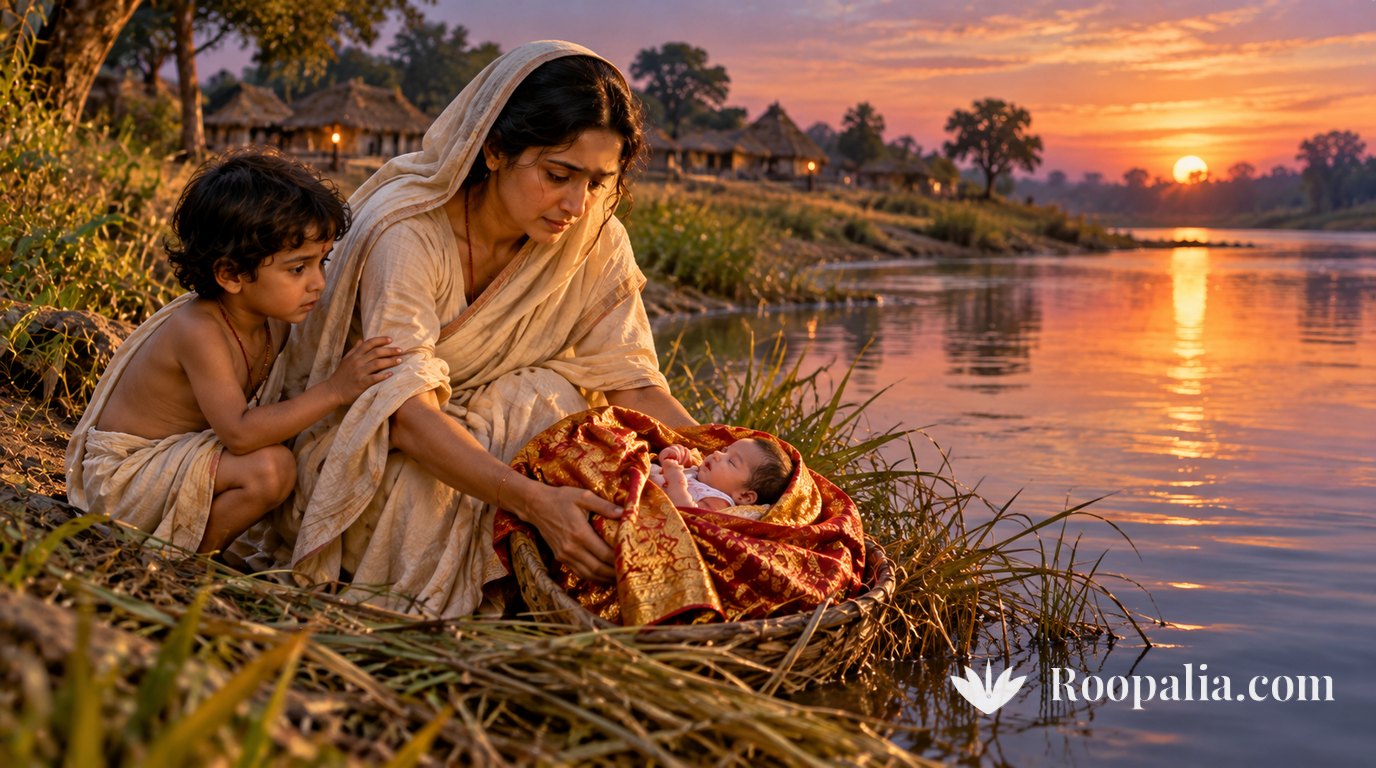
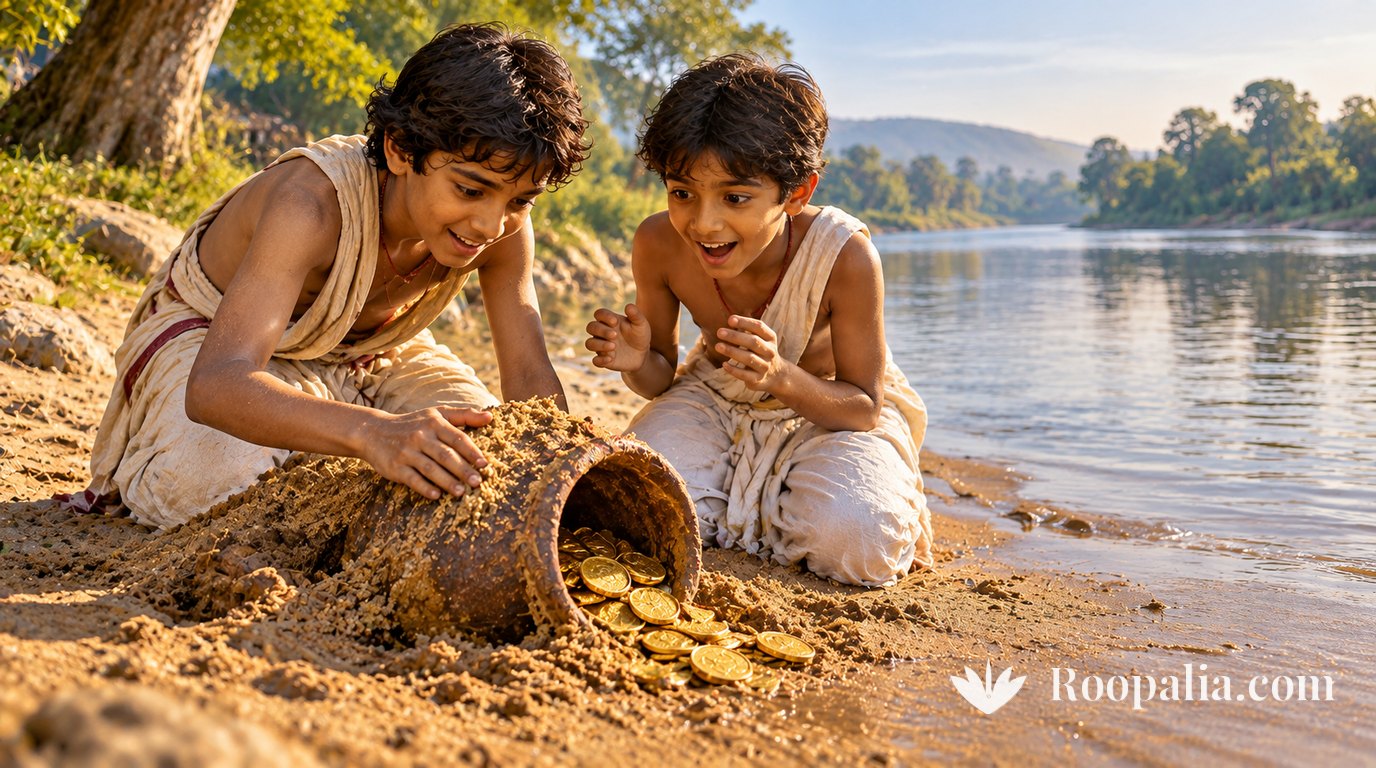
Dharmagupta and Amshumati (chapter 7). Uma had named her own son Shuchivrata and the prince Dharmagupta. The sage taught both boys the Pradosha worship and promised results “within a year”. After four months of worship (7.85), Shuchivrata found a pot of treasure on a riverbank. Their mother told them to share it; Dharmagupta refused — “let him alone enjoy what has been obtained through his own merit.”
Later Dharmagupta met Amshumati, daughter of the Gandharva Dravika. Her father said Shiva himself had told him to help the prince; he gave Amshumati in marriage and lent a Gandharva army. Dharmagupta returned to his city, defeated his enemies and was crowned by the ministers and Brahmins (7.155–157). The chapter closes by saying that whoever hears or tells this account “will never be tormented by poverty in the course of hundreds of births” (7.162–164).
Chapter 6 also gives the most beautiful reason for the timing: at Pradosha, Shiva dances on Kailasa before Gauri — Saraswati on the lute, Indra on the flute, Brahma on cymbals, Vishnu on the mridanga, Lakshmi overseeing the music (6.76–77) — which is why the text says worshipping Shiva then pleases every deity (6.79).
What the text says, and what is tradition
| Point | Found? | Where |
|---|---|---|
| Pradosha = dusk of the 13th tithi | ✅ Found | Skanda, Brahmottara 6.5 |
| Fast on both trayodashis; bathe three ghatis before sunset | ✅ Found | 7.2 |
| White clothes, restrained speech | ✅ Found | 7.3 |
| Water and panchamrit abhishek; kheer naivedya | ✅ Found | 7.45–55 |
| “A mere flower” is enough | ✅ Found | 7.56 |
| Eating at night without completing the puja is a fault | ✅ Found (in the story) | 6.67 |
| Exact minutes of pradosh kaal | ❌ Not found | Later custom and panchangs |
| What the devotee should eat | ❌ Not found | Household custom |
| Weekday-specific benefits | ❌ Not in these chapters | Tradition (Hindi Wikipedia) |
| 11 or 26 Pradosh; udyapan procedure | ❌ Not found | Tradition |
“Not found” is the result of this search, not proof that something does not exist anywhere in the vast Purana literature.
Bottom line: Pradosh Vrat is Shiva’s dusk fast on every trayodashi. The text is firm on four things — fast by day, bathe before sunset, wear white and stay calm, and eat only after the puja. Count pradosh kaal from your own sunset; 45 minutes either side is common to every version. What you eat is family custom and your own health’s call. And if all you have is one flower, that is enough.
Frequently asked questions
What can we eat in Pradosh Vrat?
What is the pradosh kaal time?
How do you do Pradosh Vrat at home?
Can we offer water to the Shivling during pradosh kaal?
What is Lord Shiva’s favourite food for bhog?
When should I start Pradosh Vrat in 2026, and how many should I keep?
What is the story of Pradosh Vrat?
How is Pradosh Vrat udyapan done?
Sources and cautions: sources consulted — Skanda Purana, Brahma-khanda (Brahmottara-khanda) chapters 6 and 7 (tr. G. V. Tagare, courtesy: wisdomlib.org); timing views, etymology and Nandi worship: Wikipedia (Pradosha); food rules, lamps and weekday beliefs: Hindi Wikipedia (Pradosh Vrat); length of a ghati: Wikipedia (Hindu units of time). Three things should be said plainly. First, the devotee’s food, the exact minutes of pradosh kaal, weekday-specific benefits, a fixed number such as 11 or 26 Pradosh, and an udyapan procedure were not found in these chapters; that is the result of a search, not a final verdict. The words of the Shiva aarti are not printed because they could not be checked against a reliable printed source. Second, every family has its own custom; follow your elders and your local panchang. Third, this article does not encourage anyone to fast and is not medical advice; with diabetes, pregnancy, any illness or regular medication, consult a doctor first. No brand or shop is recommended.