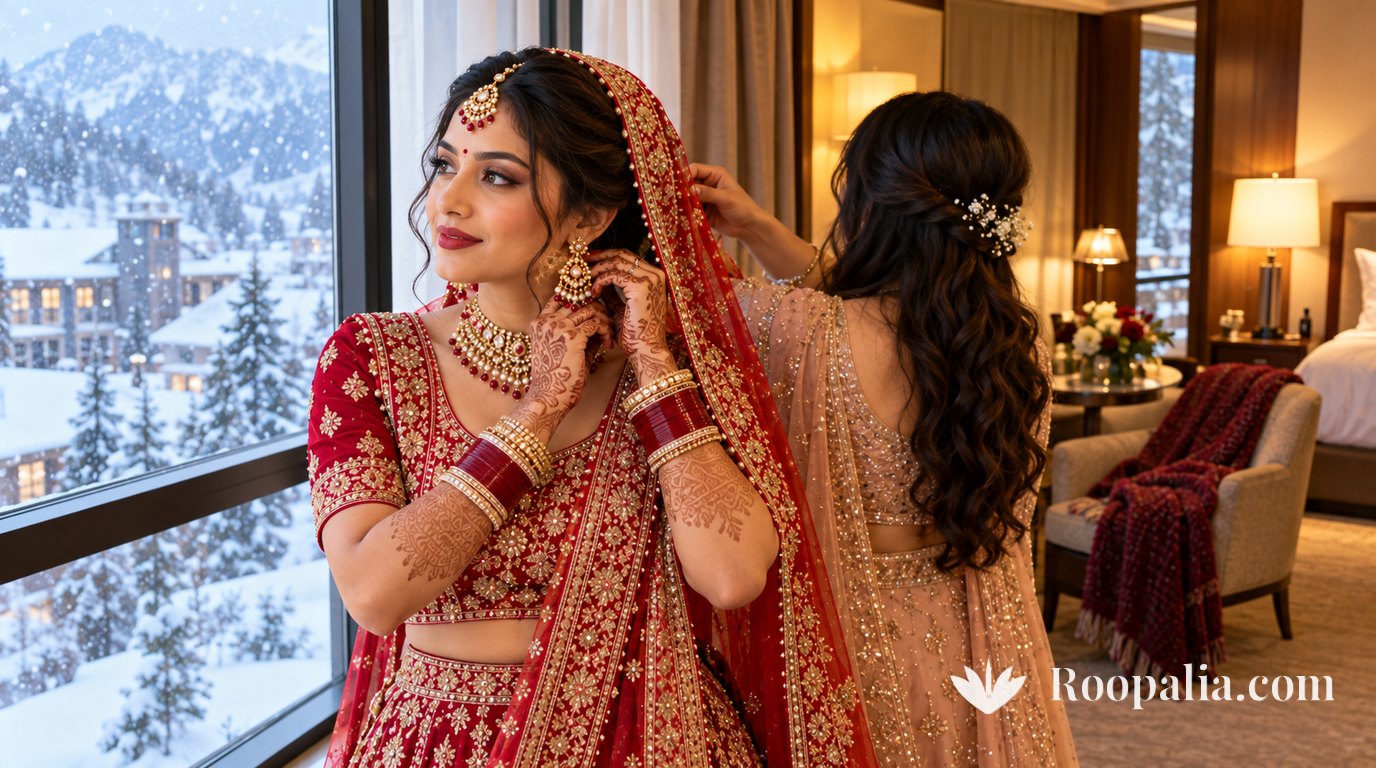
The snow had been falling since dawn, and the hotel suite smelled of hairspray and marigolds. The bride stood at the window fastening a jhumka while her cousin pinned the dupatta; downstairs, two hundred guests were gathering in a banquet hall lit for a corporate dinner, not a pheras ceremony. Her makeup had been planned for that hall weeks earlier — at the trial.
That is the part of Indian bridal makeup that search results rarely start with. Type “Indian bridal makeup” and you get photo galleries and image sites. Type “bridal makeup trial” and you get the questions that actually decide how the day goes.
So this guide starts there: the trial, then the four ceremony looks, then skin tone, and then something I found on a U.S. government page that every bride buying kajal or surma should read before her wedding.
The short version: traditional Indian bridal makeup means long-wear, camera-ready makeup built in thin layers — defined, kohl-lined eyes, a red or maroon lip, and a base matched to the bride’s own skin — finished with bindi, maang tikka, nath and sindoor. Book the trial one to three months before the wedding (The Knot), plan a different look for haldi, mehndi, pheras and reception, and use only eye products made for the eyes: the U.S. FDA warns that traditional kohl, kajal and surma often contain high levels of lead.
The bridal makeup trial: what to expect
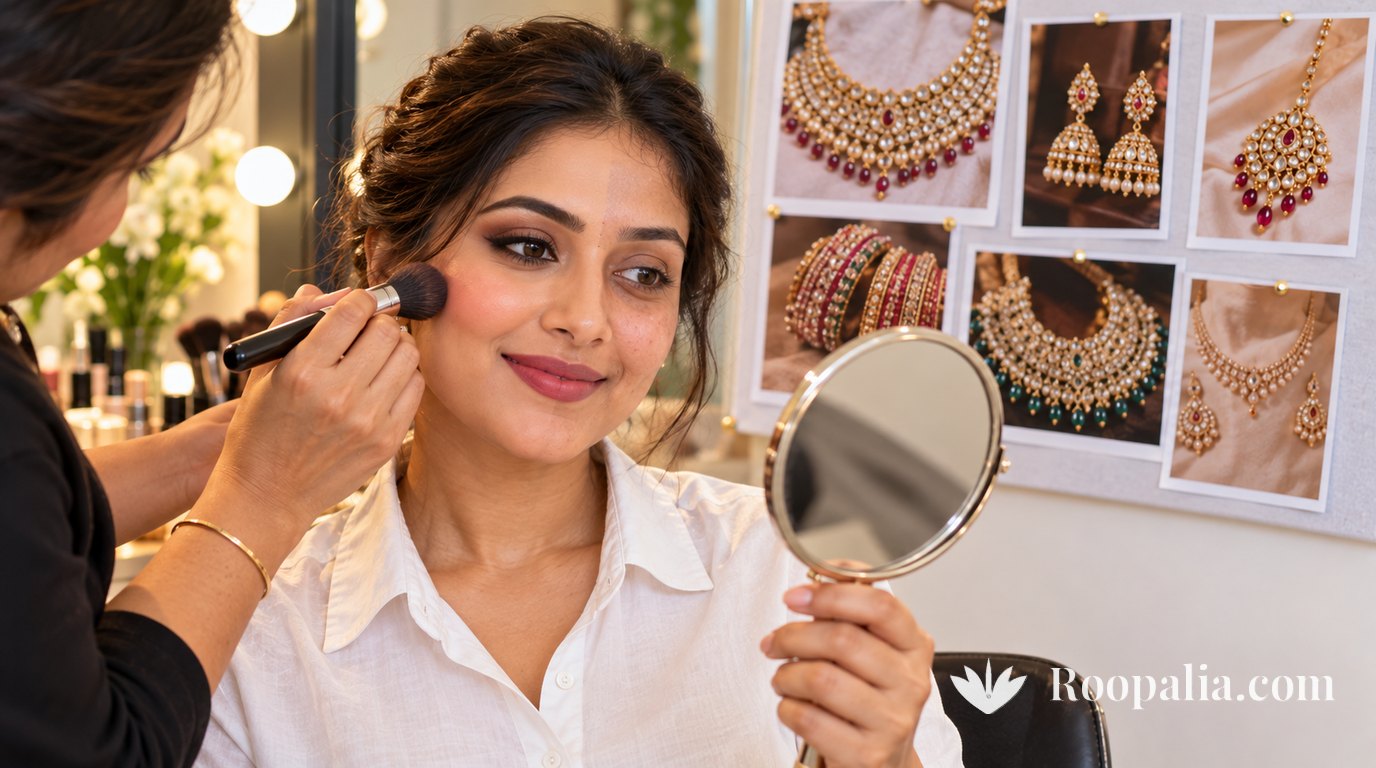
A trial is a full practice run of the wedding look, so you and the artist can test products on your skin and agree on the face before the day.
When to get a bridal makeup trial
I found two answers. The Knot (writer Jessica Booth) recommends one to three months before the wedding — close enough to reflect the season and final hair, early enough to book a second trial. Google’s AI Overview, citing an Indian beauty-services company, gives four to eight weeks. Either way, leave room for a second attempt.
How long is a bridal makeup trial?
The Knot says one to three hours depending on whether hair is included; the AI Overview figure is 60–120 minutes. Indian looks with lashes, draping and jewellery placement sit at the longer end.
What to wear and bring
- A white or light-coloured, button-front top, so nothing is pulled over a finished face (The Knot).
- Photos of the lehenga or saree, dupatta and jewellery, and of looks you like.
- Your own lashes or products if you want them used.
- Clean, moisturised skin. The Knot suggests scheduling facials, laser treatments or tanning about a week before the trial so skin has recovered.
Questions worth asking the artist
- What exactly is in the package — trial, hair, draping, lashes, touch-ups, number of looks?
- Do you have photos of Indian brides with my skin tone?
- Are your brushes and pencils cleaned between clients? (The American Academy of Dermatology advises cleaning brushes every week and never sharing them.)
- Which kajal and lash adhesive do you use, and can I see the ingredient lists?
After the trial, photograph yourself in daylight and with flash. A face that looks right under bathroom bulbs can look flat on camera.
The trial usually covers the wedding-day face. But a bride is made up four times, and the haldi look is almost the opposite of the pheras look.
One bride, four looks: haldi, mehndi, pheras and reception
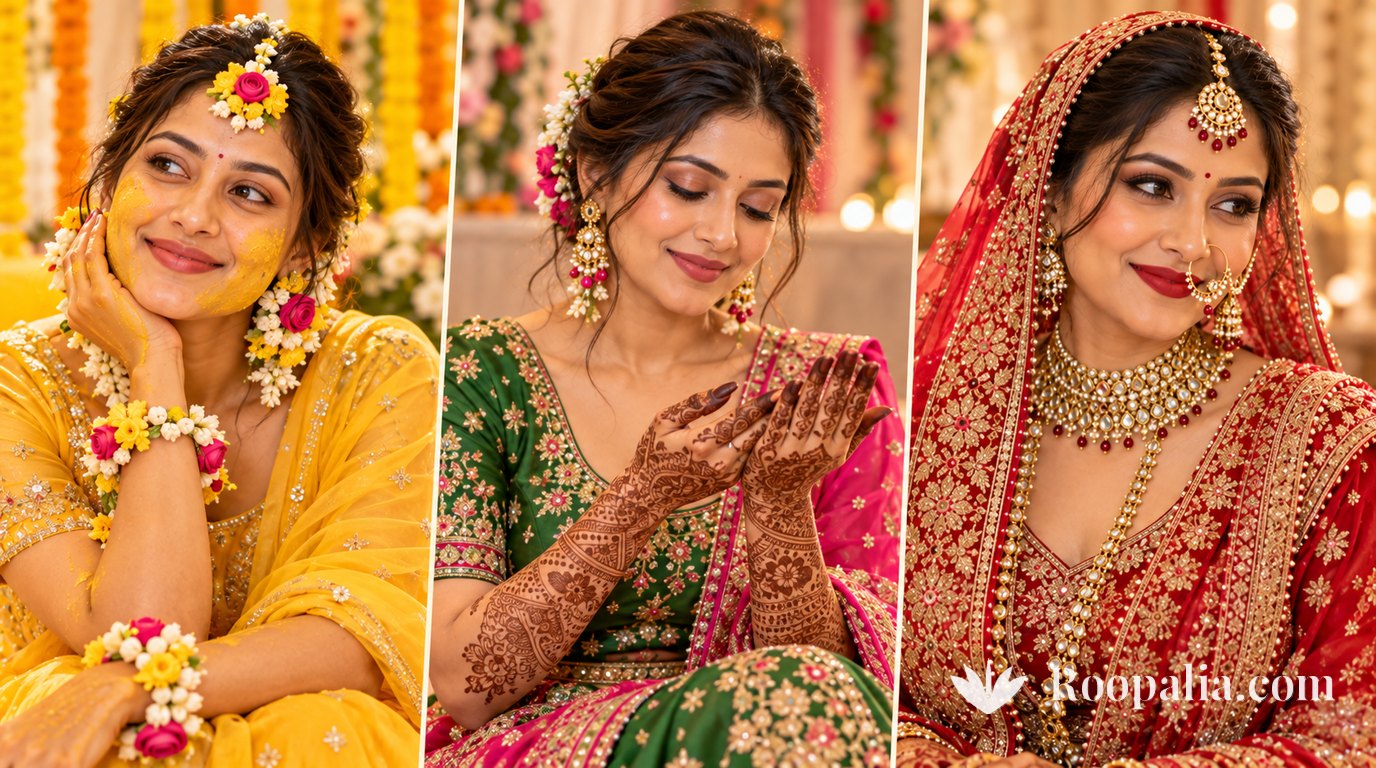
| Ceremony | The look | Why |
|---|---|---|
| Haldi | Almost bare — moisturiser, waterproof mascara, tinted lip | The face is about to be covered in turmeric paste |
| Mehndi | Fresh and dewy, colourful eyes | Daylight, hours of sitting, hands out of action |
| Pheras / wedding | Full traditional: defined eyes, kajal, red or maroon lip | Most photographs, heat from the sacred fire, longest wear |
| Reception | Soft glam: shimmer eyes, nude or rose lip | Evening lighting, often a more modern outfit |
For the haldi paste itself, see what ubtan is and how to patch test it; for henna timing, how long to leave henna on; and for why mehndi comes before the wedding at all, this piece.
What is traditional Indian bridal makeup?
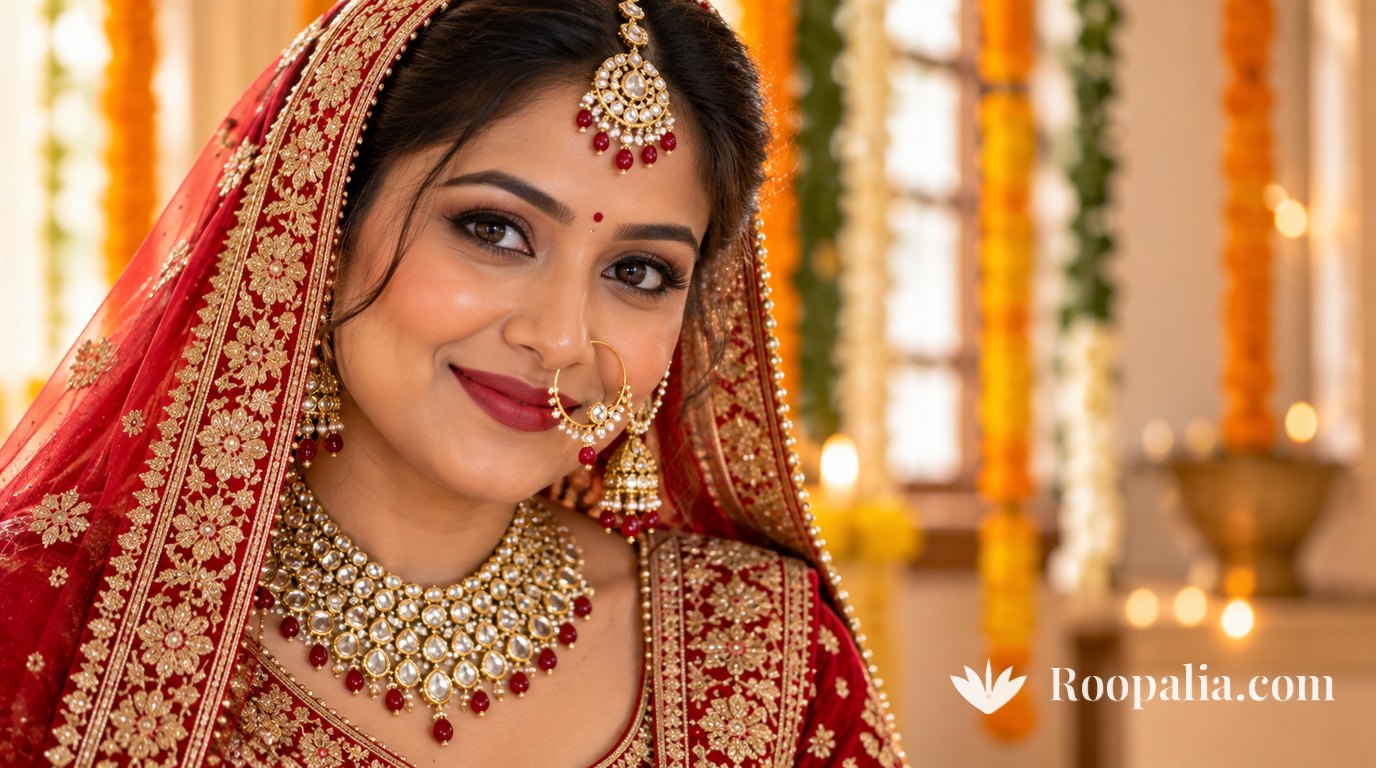
The classic look balances a heavy outfit and heavy jewellery: defined eyes lined with kajal, warm gold or copper eyeshadow, a red or maroon lip, a base that looks like skin rather than a mask, and the adornments — bindi, maang tikka, nath and later sindoor. Kajal and sindoor are among the sixteen adornments; the full list is in our solah shringar guide.
The order artists usually work in: skin prep → primer → colour correction → foundation and concealer → setting powder → brows → eyes → blush and highlight → lips → setting spray, then the jewellery.
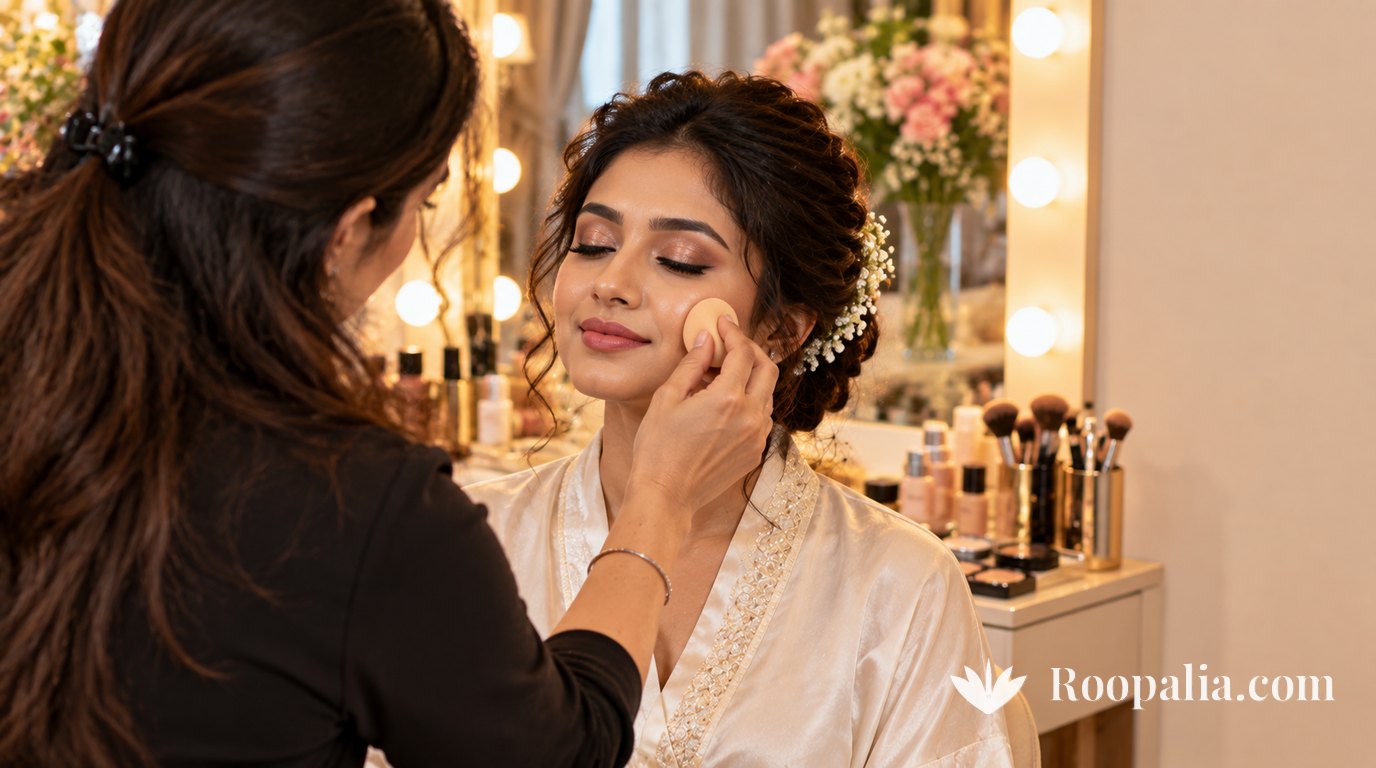
HD vs airbrush vs traditional makeup
- Traditional: applied with brushes, sponges and fingers.
- Airbrush: according to Wikipedia, makeup sprayed onto the skin by an airbrush machine, used in Hollywood films by the 1930s and valued for a sheer, even finish. Silicone-based airbrush formulas need a specific remover.
- “HD”: a beauty-industry term for finely milled products designed not to look heavy on high-definition cameras. I found no regulatory or scientific definition of it.
Which is better is a question for your skin and your artist’s skill, not the label. Ask to see each on your face at the trial.
Bridal makeup for brown and dark skin
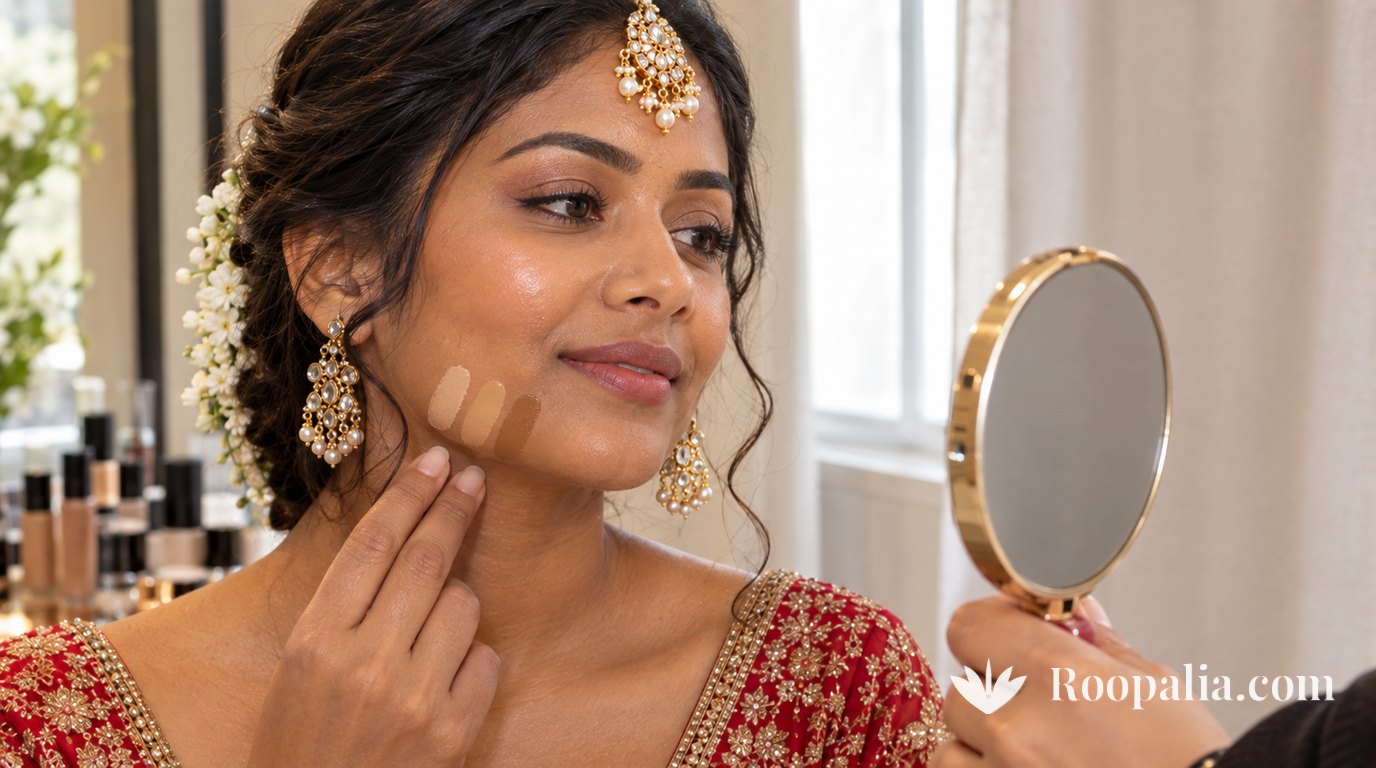
- Match, don’t lighten. Swatch shades on the jawline in daylight. A foundation lighter than your skin turns grey in flash photos and separates the face from the neck.
- Correct before you conceal. Peach or orange correctors under the eyes work better on deeper skin than a light concealer.
- Warm metallics — gold, copper, bronze — and lips in maroon, brick or berry usually suit a red outfit beautifully.
- Oily skin: look for “oil-free” or “non-comedogenic” labels. The American Academy of Dermatology notes some cosmetics can trigger acne cosmetica, and advises removing all makeup, including eye makeup, before bed.
- Portfolio check: make sure your artist has done brides with your skin tone before.
Now the kajal. This is the section I would want a sister to read before her wedding.
Kajal vs kohl — and the lead warning
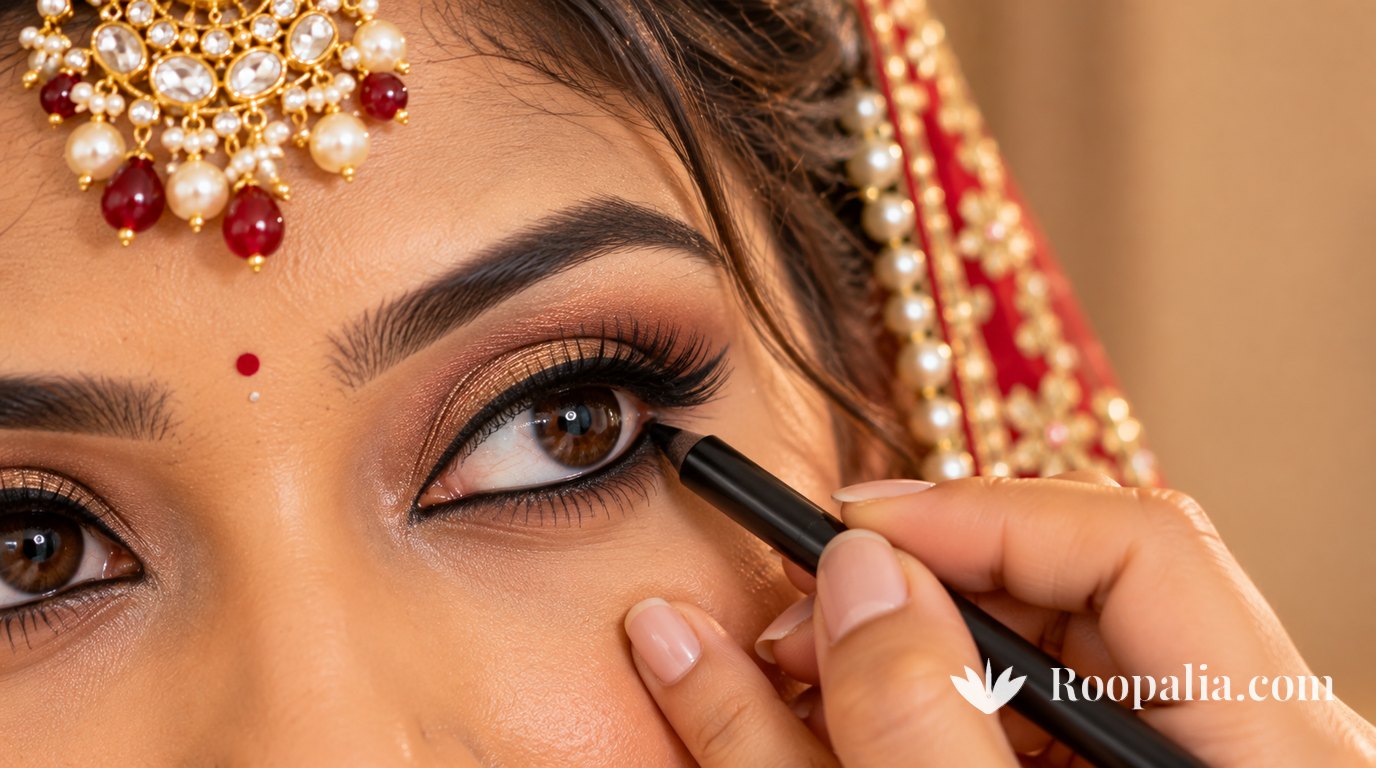
In everyday use, “kajal” and “kohl” are often used interchangeably; brand pages tend to describe kajal as softer and kohl as firmer. The more important distinction is between a cosmetic eyeliner made and labelled for eye use, and traditional loose kohl, kajal or surma. The U.S. Food and Drug Administration is unusually blunt about the second:
“Kohl, kajal, al-kahal, surma, tiro, tozali, or kwalli … often contain high levels of lead.”
— U.S. FDA, Beware of Lead Poisoning (courtesy: FDA)- The main ingredient is often lead sulfide. In one case linked to lead poisoning in an infant, the product was 82.6% lead.
- Lead can cause anaemia, kidney problems and neurological damage in children.
- In the U.S. these traditional products are illegal colour additives and are subject to an import alert.
- FDA’s eye-cosmetics advice: keep kohl away from children, don’t share eye makeup, don’t use old containers (manufacturers usually suggest discarding mascara two to four months after purchase), check the ingredients of lash adhesives, and stop any product that irritates.
Lipstick, by contrast, is not a worry: FDA’s testing found over 99% of lip and skin cosmetics on the U.S. market below its recommended 10 ppm lead limit.
Sindoor, and what the Charaka Samhita says about kajal
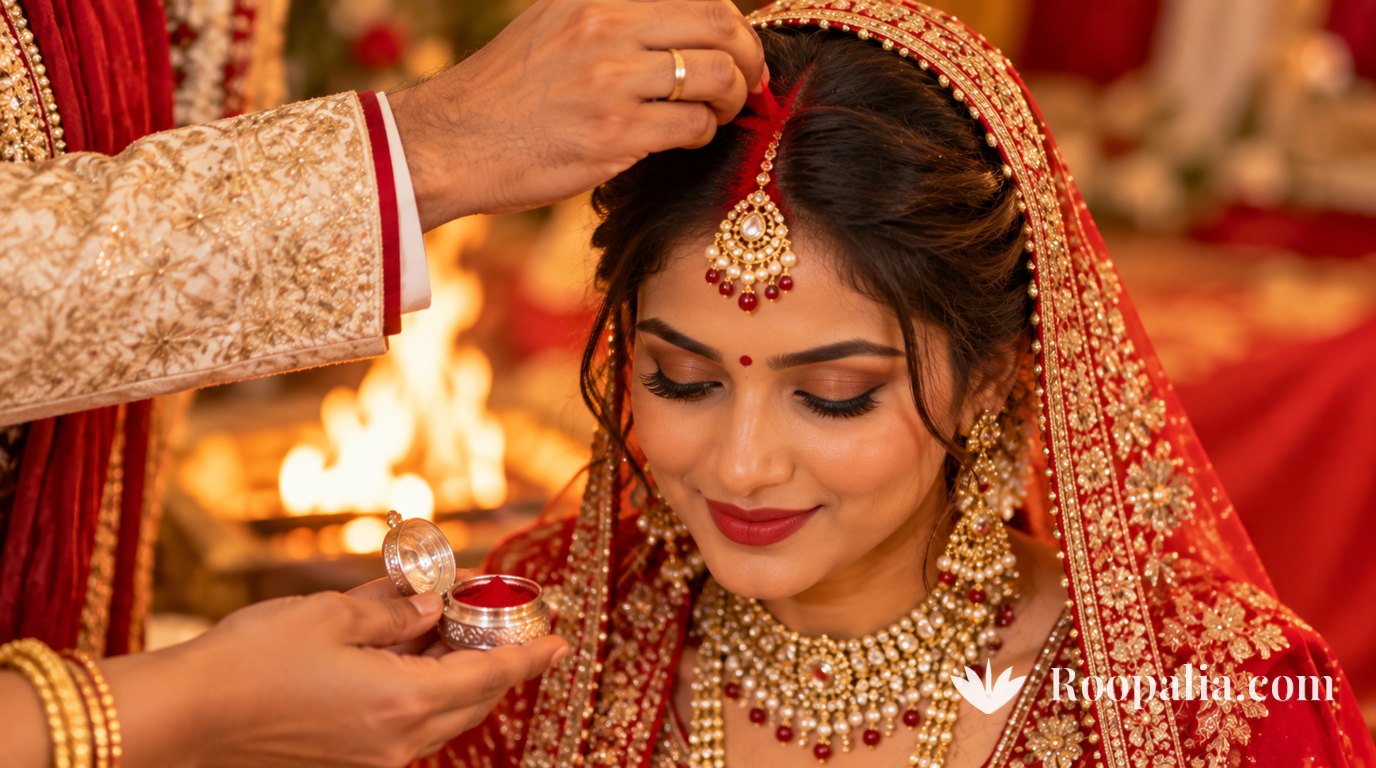
Rutgers University researchers, writing in the American Journal of Public Health in 2017, tested 118 sindoor samples and found 43% of those bought in India above the FDA lead limit. New York City’s health department warns that sindoor can contain lead even when it is not on the label, and advises never using it in food, keeping it away from children and washing hands after use. The meaning of sindoor and how to choose a safer one are in why sindoor is applied.
None of this is a case against kajal itself. The Charaka Samhita places collyrium in the daily routine:
सौवीरमञ्जनं नित्यं हितमक्ष्णोः प्रयोजयेत् ।
“One should daily apply the collyrium of sauviranjana, which is beneficial to the eyes.”
— Charaka Samhita, Sutrasthana 5.15 (courtesy: carakasamhitaonline.com)What the classical collyrium was made of, and what is in an unlabelled packet of surma today, are two different questions. The tradition is worth keeping; the packet is worth checking.
A wedding abroad: cold, heating and hall lighting
- Dry indoor air. Hotel heating dries skin fast; moisturise well before the base and keep lip balm in the touch-up kit.
- Test for the venue’s light. Banquet halls in the UK, US and Canada are often lit with cool white or yellow spotlights; take your trial photos under similar light.
- Don’t pack loose surma or kohl from India for the U.S. — FDA has an import alert on it. Labelled eye pencils are easy to buy locally.
- Outdoor photos: keep a shawl close; cold air reddens skin and makes noses run.
What I found — and what I didn’t
| Question | Result |
|---|---|
| When to book the trial | Found, two answers — 1–3 months (The Knot), 4–8 weeks (AI Overview) |
| Lead in traditional kohl, kajal, surma | Found — FDA |
| Lead in sindoor | Found — Rutgers (2017), NYC Health |
| Eye-makeup hygiene rules | Found — FDA, AAD |
| Kajal in the classical texts | Found — Charaka Samhita, Sutrasthana 5.15 |
| A scientific definition of “HD makeup” | Not found — industry term |
| Trial and package prices | Not given — they vary too much by city |
“Not found” does not mean “does not exist”. It is the honest result of my search, not a final verdict.
The bottom line. Good Indian bridal makeup is planned, not improvised: a trial one to three months out, four looks for four ceremonies, a base matched to your own skin, and nothing new on your face in the final week.
And check the eyes and the parting. Use kajal made and labelled for the eyes, choose a trusted sindoor, and the most photographed face of your life will be safe as well as beautiful.
Frequently asked questions
What is traditional Indian bridal makeup?
When should I get a bridal makeup trial?
How long is a bridal makeup trial and what should I wear?
What is the difference between HD and airbrush bridal makeup?
How should Indian brides with dark or brown skin choose foundation?
What is the difference between kajal and kohl, and are they safe?
Is sindoor safe for the wedding ceremony?
What makeup should a bride wear for haldi, mehndi and the reception?
Sources and cautions: checked against the U.S. FDA (kohl/kajal/surma lead warning; Eye Cosmetic Safety; Lead in Cosmetics), NYC Health (sindoor FAQ), a Rutgers University study in the American Journal of Public Health (2017, as reported by Futurity), the American Academy of Dermatology (makeup and acne), The Knot (Jessica Booth, trials), Wikipedia, Airbrush makeup, and the Charaka Samhita, Sutrasthana 5.15 (courtesy: carakasamhitaonline.com). Three things should be said plainly. First, no brand is recommended and there are no affiliate links. Second, I found no scientific definition of “HD makeup”, two different trial timelines, and no reliable price range, so none is given. Third, this is beauty information, not medical advice; see a doctor about eye irritation, allergies or pregnancy. “Not found” does not mean “does not exist”.