
Why the parting? Why not the forehead?
This question is rarely asked, and its answer is the most interesting part.
A bindi sits between the eyebrows; sindoor goes into the parting of the hair. The two places are different, and both were chosen deliberately.
The crown of the head, where the parting begins, is regarded in tradition as the highest and most sensitive point of the body. It is the same spot where a newborn has a soft fontanelle — the gap that stays unclosed by bone for months after birth. It is why a mother blesses a child by placing her hand on the head, and why touching that spot has always been treated as the greatest privilege.
When a groom fills his bride's parting during the wedding, he is asking for exactly that privilege — and she is granting it. That is why sindoor daan is considered the most decisive ritual of a Hindu wedding.

Sindoor and bindi are not the same thing
This confusion is very common. A bindi sits between the eyebrows and is linked to the Ajna chakra of yogic tradition; unmarried girls wear it too. Sindoor is filled into the hair parting and has traditionally been tied to marriage. The placement, the meaning and the customs around them are all different. Read about the bindi in detail here.
The Ramayana story every Indian child knows
The best-known story about sindoor involves Hanuman, and it is charming enough that it has been retold for centuries.
After Ravana was defeated and Rama, Sita, Lakshmana and Hanuman had returned to Ayodhya, Hanuman came one day to Sita's chamber. She was at her adornment, filling her parting with sindoor.
Hanuman asked, out of simple curiosity — "Mother, why do you apply this sindoor?"
Sita replied that she wore it wishing for Rama's long life and wellbeing.
Hanuman reasoned: if a pinch of it keeps the Lord so pleased, then covering his whole body in it would keep him pleased forever. And so he smeared sindoor over himself from head to foot.
When Rama saw him like that, he smiled. From that day, the tradition of offering sindoor to Hanuman began — and to this day, devotees across India offer him sindoor mixed with jasmine oil.
An honest note — this story comes from folk tradition and from texts associated with Hanuman worship, not from the original Valmiki Ramayana. That does not make it any less meaningful; folk narratives are as genuine a part of a living tradition as anything else. But sites that present it as "written in the Valmiki Ramayana" are overstating the case.
What is sindoor actually made of?
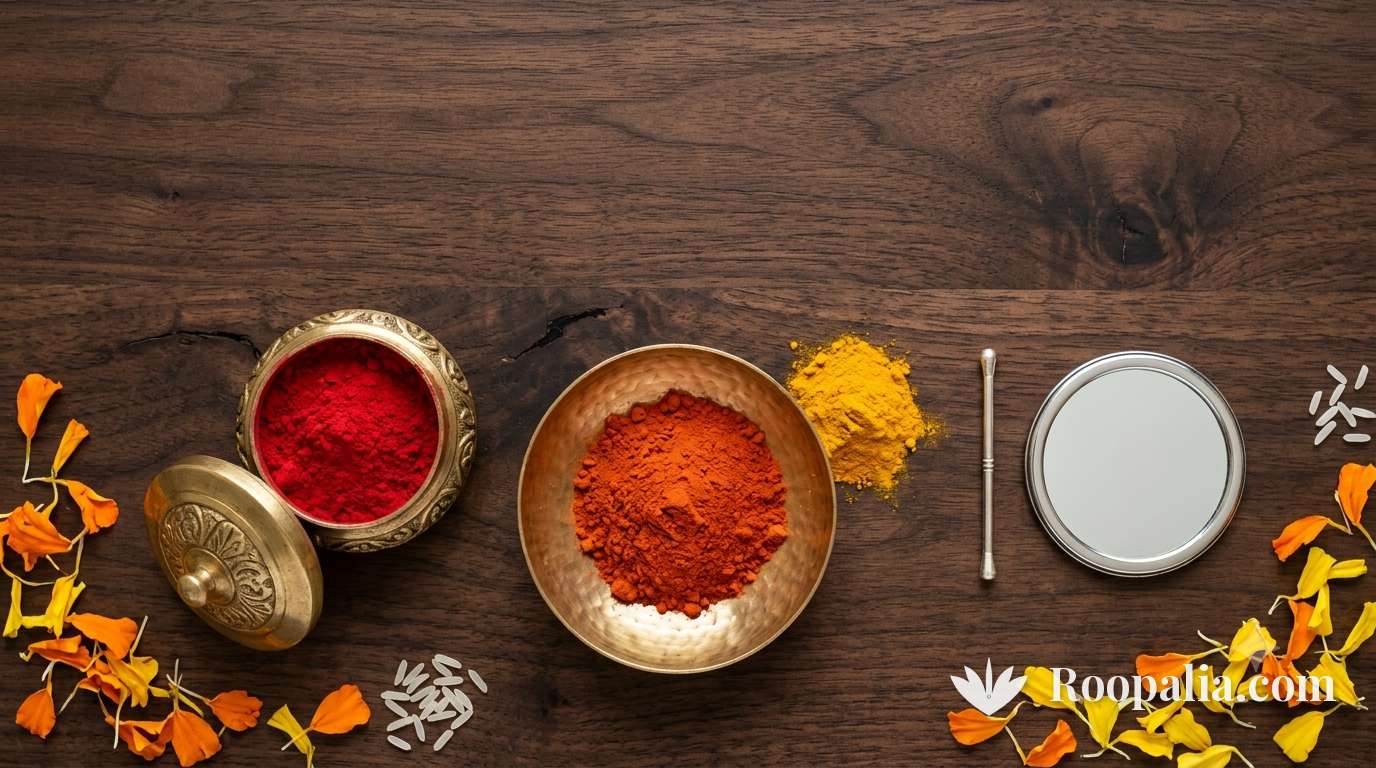
Traditional sindoor was made from the reaction between turmeric and slaked lime (or alum). Turmeric on its own is yellow, but the moment lime is added it turns a deep red. Saffron, sandalwood or other herbs were sometimes added. It was entirely safe.
Today's market sindoor is often something else. To achieve that vivid red, two things are commonly added — vermilion, a mercury compound (mercury sulfide), and red lead, a lead compound (lead tetroxide). Both are harmful to the body.
⚠️ Sindoor and health — the part few people mention
This is the most important section of this article, and I am writing it plainly.
Many articles claim that "sindoor contains mercury, which reduces mental stress". That claim is false, and it is dangerous. Mercury does not reduce stress — it is a toxic heavy metal.
Researchers at Rutgers University in the United States tested 118 sindoor samples — 95 from South Asian stores in New Jersey and 23 from shops in Mumbai and Delhi. Roughly 80 percent of the samples contained lead, and in 43 percent of those bought in India the level exceeded the limit set by the US FDA. The study appeared in the American Journal of Public Health.
A 2026 study by the CEPHED institute in Nepal found the same pattern — of all the products tested, sindoor was the most contaminated, with some samples reaching 124 ppm of lead against a safe limit of 1 ppm.
Lead can damage the brain, the nervous system, the kidneys and the reproductive system. The risk is highest for children and pregnant women.
How to choose safer sindoor — five practical checks
1. Read the ingredients. "Turmeric" or "herbal" is a good sign; "vermilion" or "red lead" means put it back.
2. Be wary of an extremely bright, glossy red. Natural sindoor is duller and leans towards orange.
3. Don't buy loose, unlabelled sindoor.
4. Wash your hands after applying it — lead most often enters the body from hand to mouth.
5. Keep it away from children, and never use it in food — poisoning cases have occurred where it was used as a colouring.
If you are pregnant or breastfeeding, or if you notice irritation, itching or thinning hair around the parting, switch your sindoor and speak to a doctor.
Safe sindoor at home
Take a teaspoon of turmeric powder, add a pinch of edible lime and a few drops of water — the colour turns deep red almost instantly. Dry it and grind it. This is the traditional method and contains no metals at all. The shade will be less vivid than shop-bought sindoor, but it will be safe.
How sindoor differs across India
One tradition, a different form in every region — that is the pleasure of it.
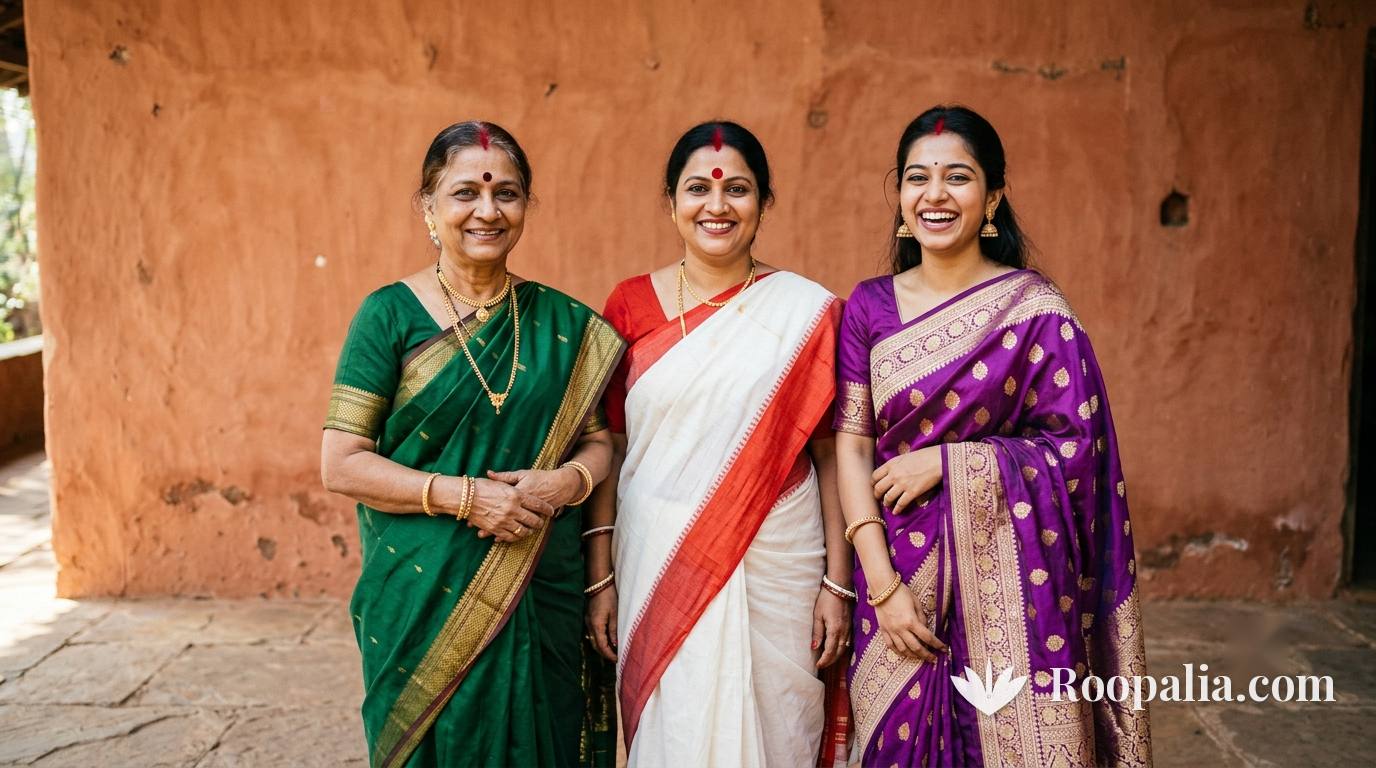
North India — a deep red line running the full length of the parting. The longer the line, the more auspicious it is held to be.
Bengal — the sindoor here is the broadest and the most vivid, and on the last day of Durga Puja there is sindoor khela, where married women smear sindoor on one another.
Maharashtra — a fine line at the start of the parting, often worn with a chandrakor bindi and a nath.
South India — a long line along the parting is far less common here; a small round kumkum dot on the forehead is the usual form. This is why a married South Indian woman may show no visible line of sindoor at all — and it does not mean the tradition isn't being kept.
Sindoor is also one of the sixteen adornments of the solah shringar — the full list and the meaning of each is in our solah shringar guide.
Is wearing sindoor compulsory?
The straight answer — no.
No scripture states that any fault attaches to not wearing sindoor. Sindoor daan is a ritual within the wedding ceremony; whether it is worn daily afterwards has always been a social custom, not a religious command.
Many women today wear it for festivals and family occasions and not from day to day — and that is entirely their own decision. Measuring a woman's devotion by looking at her parting is neither tradition nor good manners.
On widowed women and sindoor
Traditionally, sindoor was set aside on widowhood, because it had been tied to marriage. This is a social practice.
Today many women make their own decision about it, and society is slowly shifting too. This is an emotionally delicate subject, and nobody has the standing to lecture anyone about it — not in the name of tradition, and not in the name of modernity.
For women living abroad

Two questions come up again and again.
"Should I wear it to the office?" — entirely your choice. If you want to, a fine, light line at the start of the parting sits most naturally and doesn't look out of place with Western clothing. If someone asks, one sentence covers it: "It's a traditional marriage marker, rather like a wedding ring here." That comparison lands immediately.
"Where do I buy it here?" — this needs more care, not less. The FDA in the United States has issued warnings about sindoor, and research found lead in samples bought from South Asian stores as well. Having a box sent from India is no guarantee of safety either. The best route is to make it at home from turmeric and lime, or to buy a certified herbal sindoor with the full ingredients printed on the label.
And if your daughter asks why you wear that red line — don't stop at "it's our tradition". Tell her why that spot on the head was chosen, what Sita said to Hanuman, and why you pick the sindoor you pick. A girl who knows the reason adopts a tradition by understanding it, not out of fear of breaking it.
In closing
Keep the tradition — with your eyes open
Sindoor is the most recognisable mark in an Indian woman's life — a pinch of red holding marriage, family and identity together. There is nothing wrong with that tradition. What is wrong is that we put something on our heads every single day without ever asking what is in it. Sindoor made from turmeric and lime honours the tradition exactly as well as the leaded kind — it simply doesn't harm you. Whether to wear it is your decision; but what you wear, wear knowingly.
Frequently Asked Questions
Why is sindoor applied?
What is the difference between sindoor and a bindi?
Is sindoor harmful to health?
How do I know if my sindoor is safe?
Does the mercury in sindoor reduce stress?
Why is sindoor offered to Hanuman?
Is it necessary to wear sindoor every day?
Why don't South Indian women show a line of sindoor?
Where can I buy safe sindoor abroad?
Can sindoor cause hair loss?
📷 AI-generated images. For illustration only.
🙏 This article is general information. For any health concern, skin problem or worry about lead exposure, please consult your doctor.