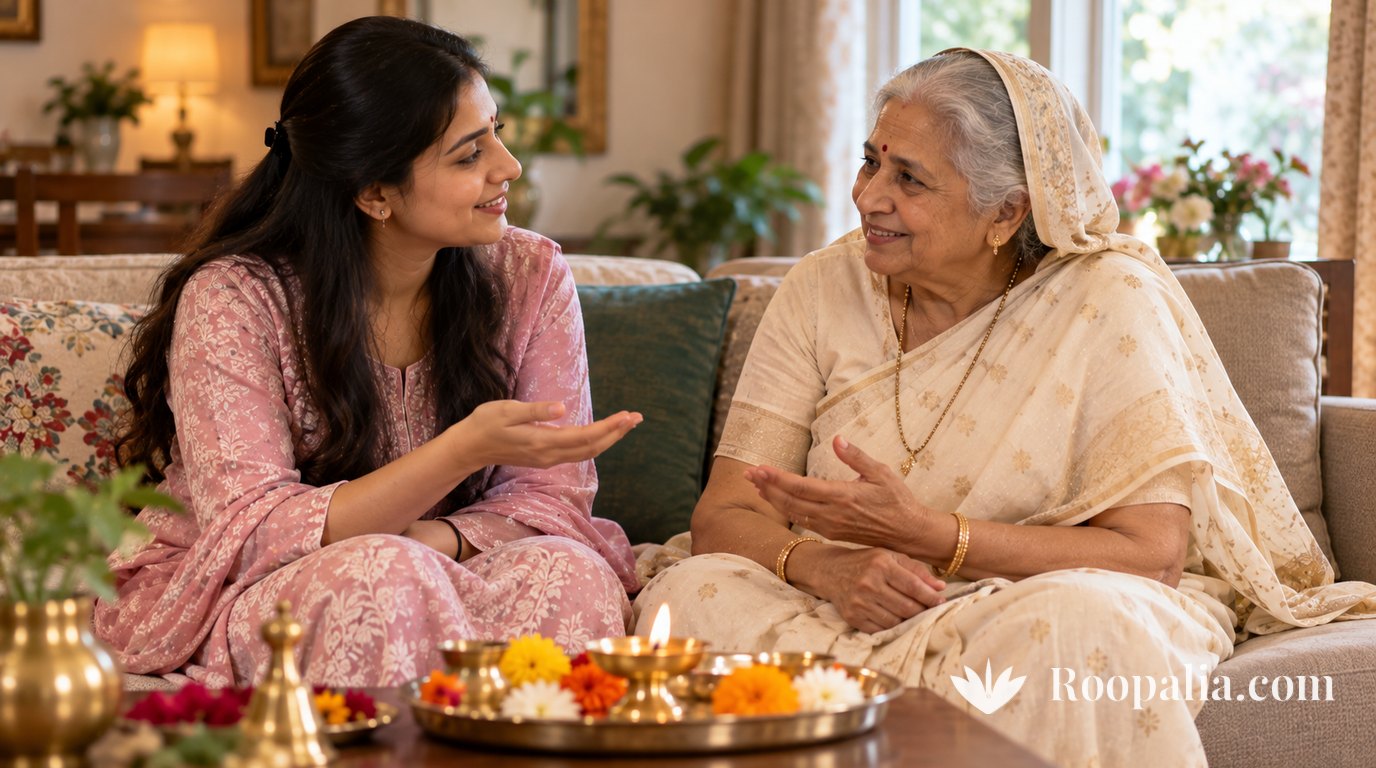
Every Hindu woman has heard some version of it: “Don’t go near the puja room for four days.” Some grew up with it as a fixed rule, some with a gentle “just pray in your mind”, and some with no rule at all. So when you search can we pray during periods or can we go to the temple during periods, you are really asking a bigger question — is this in the scriptures, or is it custom?
Most pages answering this say “the shastras say” without naming a single text. I checked translations of the texts this belief comes from — the Taittiriya Samhita, the Vasishtha Dharmasutra, the Manusmriti and the Agni Purana — and read what they actually say. Here it is, with chapter and verse.
Can Hindu women pray during periods? The short answer
In the main texts I read, I found no direct, word-for-word ban on praying, fasting or entering a temple during menstruation. The rules that do exist concern three days of separation, food, marital relations and household work. One Purana — the Agni Purana — prescribes an expiation if a menstruating woman touches the image of a deity. And the widely followed family custom is simple: keep your fast, let someone else perform the idol puja, and pray in your mind.
What you were told vs. what the texts say
| Common belief | What I found in the texts |
|---|---|
| “The scriptures forbid puja during periods.” | Not found as a direct prohibition in the Taittiriya Samhita, the Vasishtha Dharmasutra or the Manusmriti. |
| “Don’t touch the idol.” | Found in a sense — the Agni Purana (174.1–3) prescribes an expiation if the image is touched. |
| “Women can’t enter temples.” | Not found word for word in these texts; many temples have their own rules. |
| “Break your fast if your period starts.” | Not found; the tradition is that the fast continues. |
| “Stay apart for three days.” | Found — Vasishtha Dharmasutra 5.5–6. |
| “Menstruation is sinful.” | The same Vasishtha Dharmasutra (5.4) says it takes away a woman’s sins. |
Where the belief comes from: the story of Indra
The oldest source is a story in the Taittiriya Samhita of the Krishna Yajurveda. After Indra killed Vishvarupa, he asked the earth, the trees and women to share his guilt. Women agreed, and took a boon in return:
“They took a third of his guilt, it became (a woman) with stained garments; … Therefore one should not converse with (a woman) with stained garments”
— Taittiriya Samhita 2.5.1, tr. A. B. Keith (Krishna Yajurveda, Kanda II, Prapathaka 5; no link given, as the online page does not open for readers)Notice what the rule is about: conversation, sitting together and food. Worship, idols and temples are not mentioned. The Bhagavata Purana retells the story: “As a result of those reactions, women manifest the signs of menstruation every month.” (Bhagavata Purana 6.9.9, tr. A. C. Bhaktivedanta Swami Prabhupada, courtesy: Vedabase)
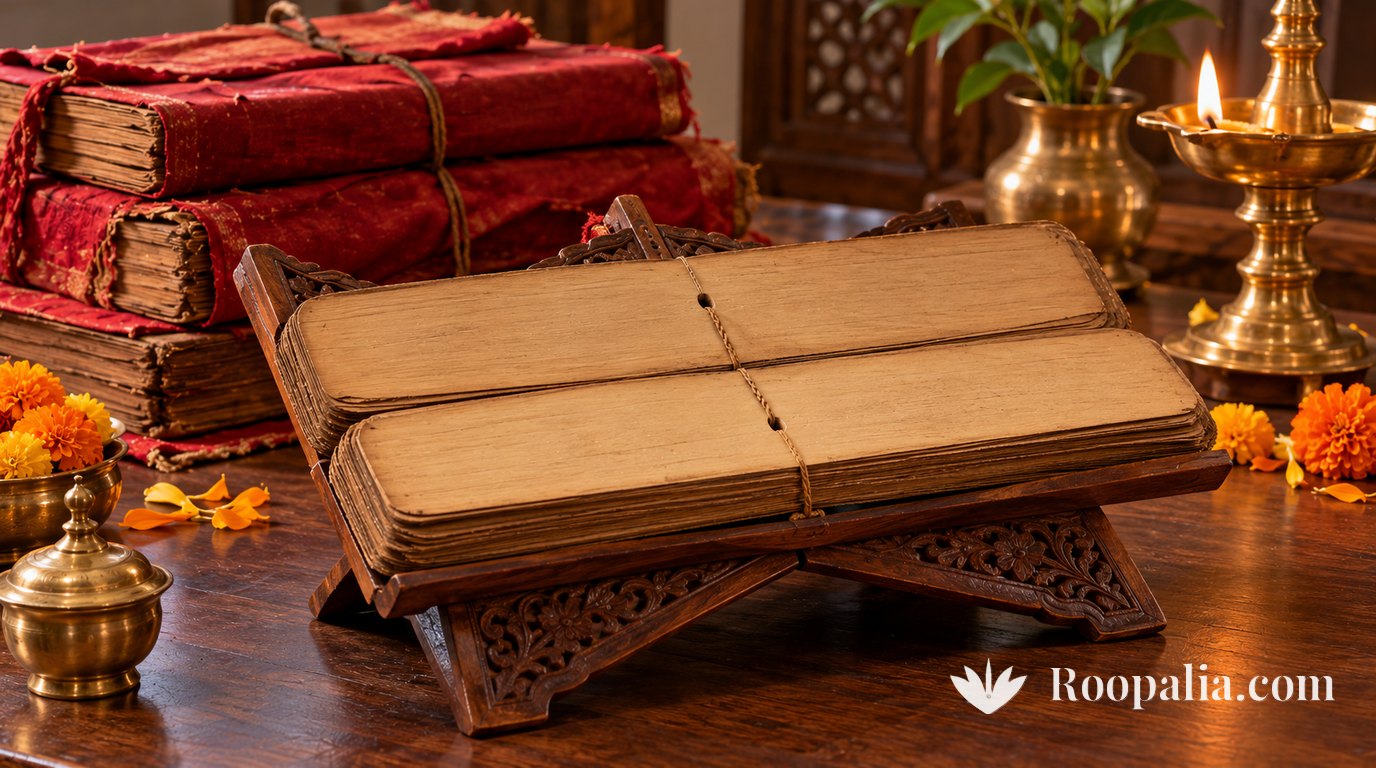
The law books built on this story. The Vasishtha Dharmasutra says “A woman in her courses is impure during three (days and) nights”, and lists what she should avoid — collyrium, oil, sleeping in the day, touching the fire, household work. But one line earlier it says: “For month by month the menstrual excretion takes away her sins.” (Vasishtha Dharmasutra 5.4–6, tr. Georg Bühler, courtesy: sacred-texts.com)
The Manusmriti mostly addresses the husband: not to approach his wife during her courses (4.40), not to converse with a menstruating woman (4.57). On purification it says “a menstruating female becomes pure by bathing after the menstrual secretion has ceased (to flow).” (Manusmriti 5.66, tr. G. Bühler, courtesy: sacred-texts.com; chapter 4 here. Verse numbers differ between editions; these follow Bühler.) The Parashara Smriti (chapter 7) speaks of purity on the fourth day, with rites to the gods and ancestors after the flow has fully stopped — I name it without a link, as the translation I found carries no translator’s name.
The idol and the temple: what the Agni Purana says
Of all the texts I checked, the clearest link between menstruation and the deity’s image is in the Agni Purana, chapter 174, a chapter on expiations for lapses in worship. If the image has been touched by “a woman in her courses”, the worshipper should repeat a mantra a hundred times, bathe twice and worship again with the five Upanishadic syllables. (Agni Purana 174.1–3, tr. N. Gangadharan, courtesy: wisdomlib.org)
So touching the image is treated as a fault requiring expiation — which is why many families avoid it. But this is not a ban on prayer, and I found no word-for-word ban on entering a temple in these texts. Individual temples have their own customs, and when you visit one, those deserve respect.
And then there is the other side of Hindu tradition — where a goddess’s menstruation is the reason for a festival.
Where menstruation is celebrated
As Wikipedia puts it, “Hinduism's views on menstruation are diverse.” (Menstrual taboo, courtesy: Wikipedia)
- Ambubachi Mela, Kamakhya (Assam): the goddess is believed to go “through her annual cycle of menstruation during this time stretch”; the temple closes for three days and reopens to a great festival. (Ambubachi Mela, courtesy: Wikipedia)
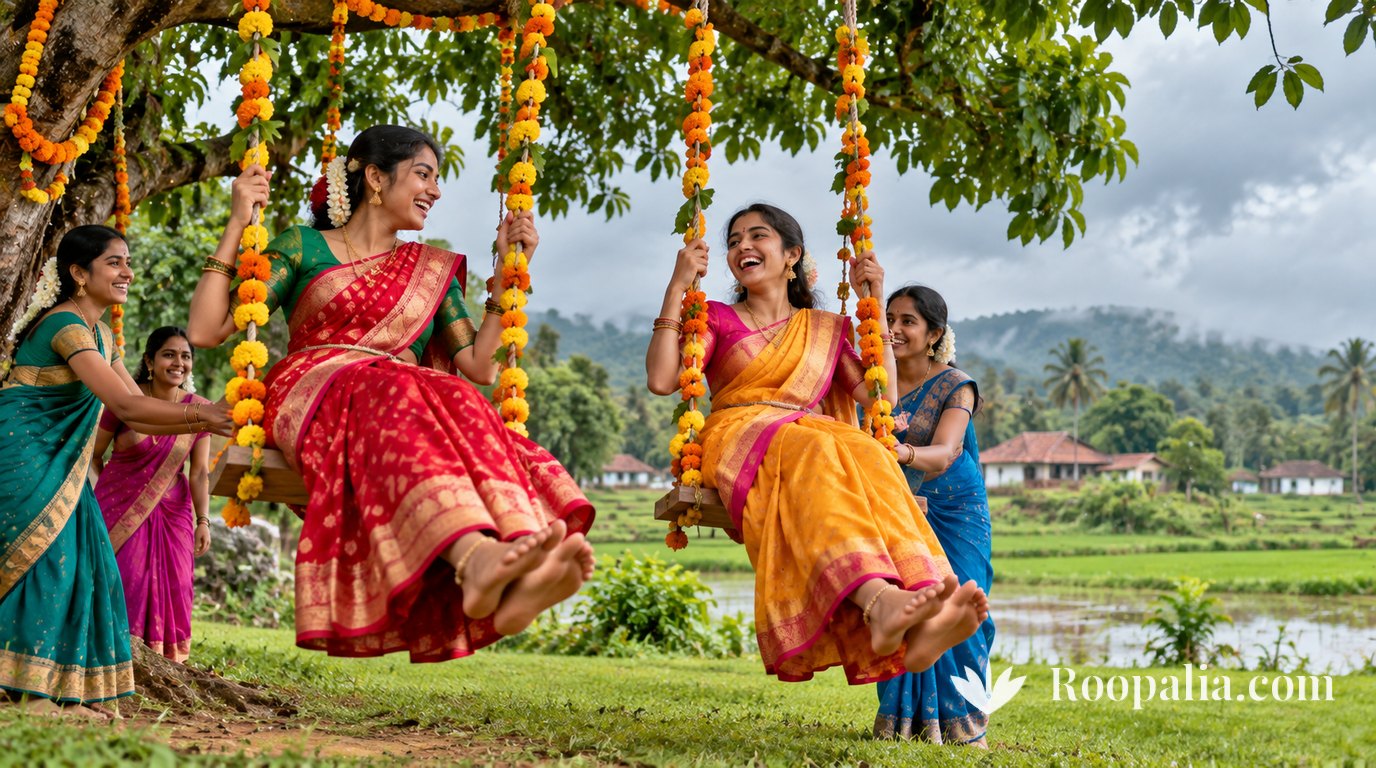
- Raja Parba, Odisha: “According to popular belief as women menstruate, which is a sign of fertility, so also Mother Earth menstruates.” For three days farming stops, and girls in new clothes play on swings. (Raja Parba, courtesy: Wikipedia)
The Sabarimala case
The question has also reached India’s highest court. “On 28 September 2018, the Supreme Court of India ruled that women of all ages could enter the temple of Sabarimala”, by a 4–1 majority. The temple’s earlier bar on women aged 10 to 50 was linked to its deity’s celibate form, not to a general scriptural rule. After review petitions, the matter is before a larger bench. (Entry of women to Sabarimala, courtesy: Wikipedia; status as on the page on 9 October 2026)
If your period starts during a fast
Karwa Chauth, Navratri, Ekadashi, the sixteen Mondays — a period arriving mid-fast is common. I could not find the original text of the rule, but a verse quoted in the tradition says a woman’s vow is not broken by her period. In practice most families do this:
- Continue the fast. The vow stands.
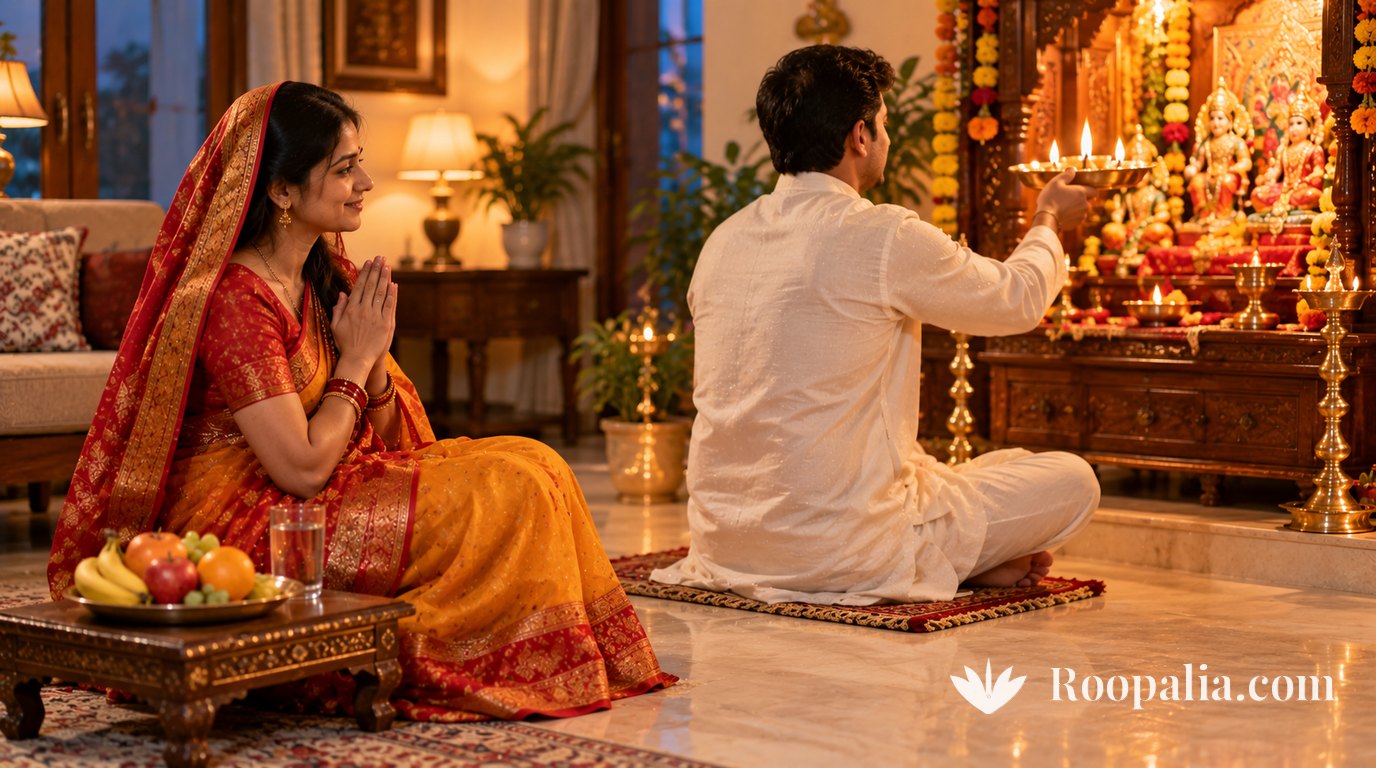
- Hand over the idol puja. Husband, mother-in-law or a daughter performs the aarti and offerings on your behalf.
- Stay present. Sit nearby with folded hands, listen to the katha, chant in your mind.
- Move the closing rite. Many families hold the udyapan or kanya puja on a later day.
For the full Karwa Chauth story and moonrise rite, see Karwa Chauth vrat katha; for fasting food, what to eat during Hindu fasting.
Your health comes first
A period is a normal part of the cycle: “Your period can last between 2 and 7 days, but it will usually last for about 5 days.” (NHS — Periods). The WHO wants menstruation understood as “positive and healthy not something to be ashamed of” (WHO), and UNICEF India states plainly that “period blood is not bad or impure.” (UNICEF India)
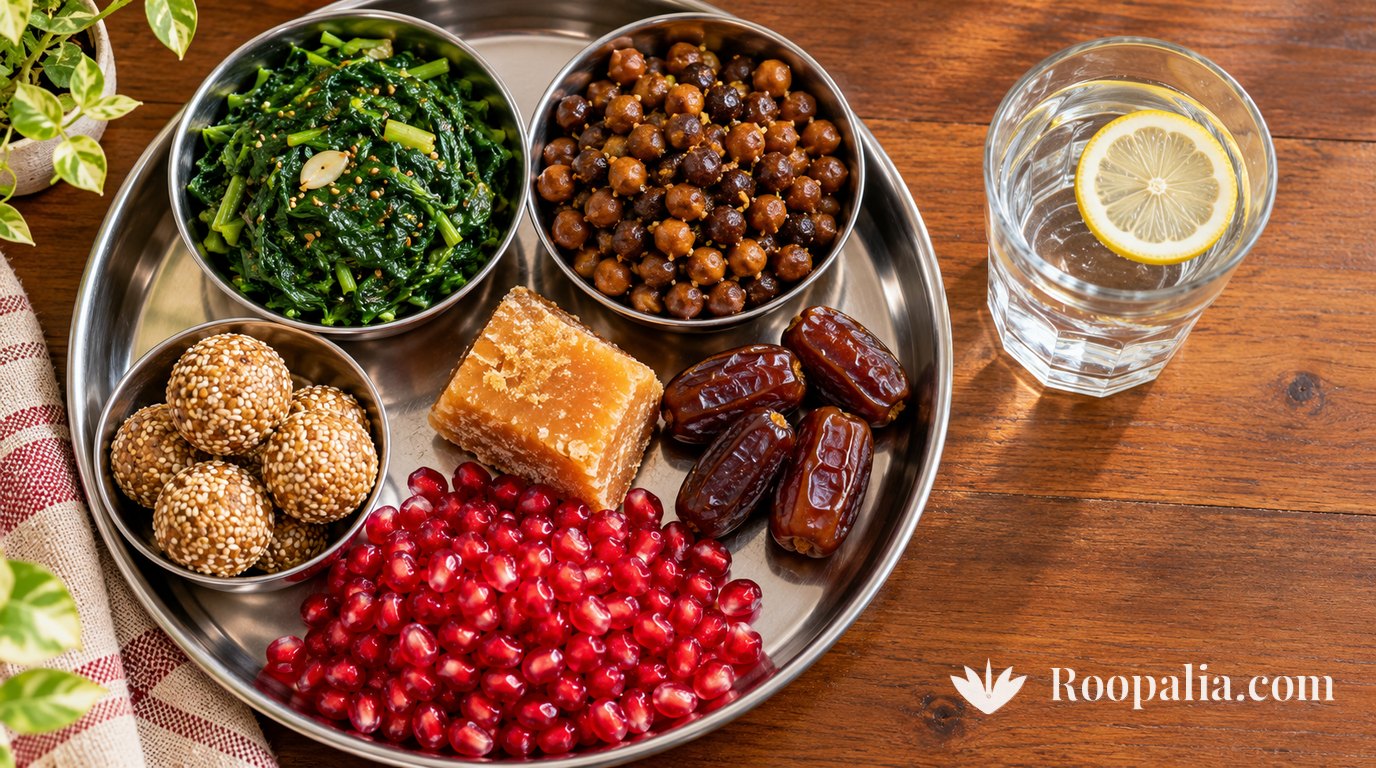
One caution for fasting days: “Heavy periods and pregnancy are very common causes of iron deficiency anaemia.” (NHS — Iron deficiency anaemia). If your period is heavy, or you feel dizzy or exhausted, do not keep a waterless fast — drink water, eat fruit, and speak to a doctor. The NHS advises seeing a GP when heavy periods are affecting your life.
Living outside India: when there is no one else to do the puja
Many women outside India live alone, or are the only one at home who performs the daily puja. “Let someone else do it” is not always possible. What women in that situation commonly do:
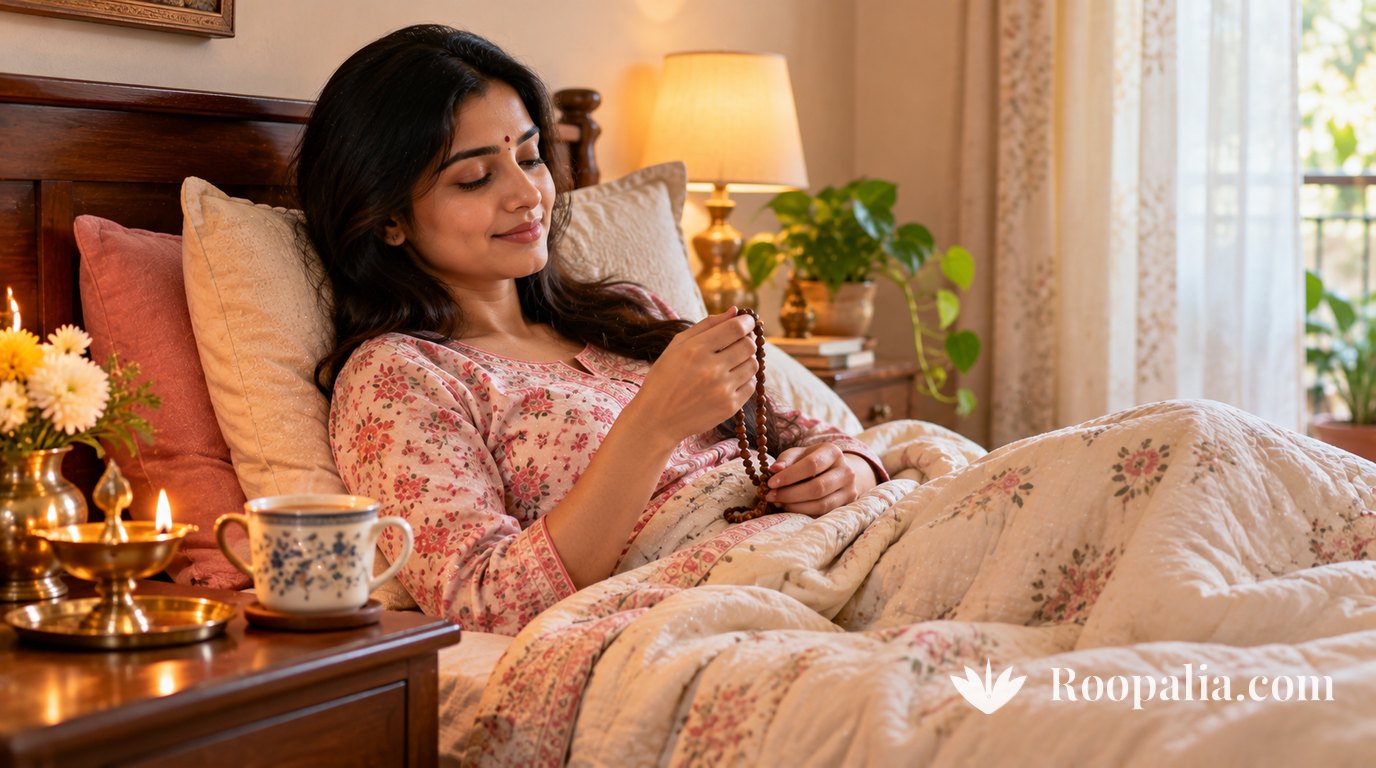
- Manasa puja — offering flowers, lamp and food to the deity in your mind; no touching needed.
- Family on video — a mother or mother-in-law in India performs the aarti while you join on screen.
- Ask the temple — every temple outside India has its own arrangements; the priest or committee will tell you their practice.
- Work and fasting — on a working day with a heavy period, a fruit-and-water fast is the safer choice.

For a simple home routine without a temple nearby, see puja at home without a temple nearby.
Talking to your elders about it
For many families this is not a debate but a habit, and elders follow it out of love and care. A conversation works better than an argument: ask where the rule came from in your family, share what the texts say, and agree on what feels right — perhaps a fast that continues, puja by someone else, and no one made to feel unclean. The traditions themselves, as we saw, range from three days of rest to festivals that celebrate menstruation.
What I found, and what I did not
| Question | Result |
|---|---|
| Origin of the belief | Found — Taittiriya Samhita 2.5.1; Bhagavata Purana 6.9.9 |
| Three days of separation | Found — Vasishtha Dharmasutra 5.5–6 |
| When purity returns | Found — bathing after the flow stops (Manusmriti 5.66); the fourth day (Parashara Smriti 7) |
| Touching the idol | Found — expiation in the Agni Purana 174.1–3 |
| A word-for-word ban on puja or temple entry | Not found in these texts |
| A rule to break a fast | Not found; tradition keeps the fast |
| Menstruation seen positively | Found — Vasishtha 5.4; Ambubachi; Raja Parba |
“Not found” does not mean “does not exist”. It is the honest result of reading these texts, not a final verdict; Hindu law literature is vast and community customs differ.
In short. The rules around menstruation come from a Vedic story and appear in the law books as three days of separation and rest. The Agni Purana prescribes an expiation for touching a deity’s image, but I found no word-for-word ban on prayer, fasting or temple entry in these main texts.
The path most families take is a gentle one: keep the fast, let someone else perform the idol puja, and keep praying in your heart. If your family follows a different custom, that is a tradition too — the point is to follow it with understanding, not fear.
Frequently asked questions
Can we pray during periods in Hinduism?
Can we go to the temple during periods?
Can we fast during periods?
What should I do if my period starts on Karwa Chauth?
What to do if periods come during Navratri?
Can I chant mantras or take God’s name during periods?
How many days after periods can we do puja?
Why are periods considered impure in Hinduism?
Sources and cautions: sources consulted — Taittiriya Samhita 2.5.1 (tr. A. B. Keith; the online page does not open for readers, so it is not linked), Bhagavata Purana 6.9.9 (tr. A. C. Bhaktivedanta Swami Prabhupada; courtesy: Vedabase), Vasishtha Dharmasutra 5 and Manusmriti 4–5 (tr. Georg Bühler; courtesy: sacred-texts.com), Agni Purana 174 (tr. N. Gangadharan; courtesy: wisdomlib.org); Parashara Smriti 7 named only (no translator credited). Traditions: Wikipedia (Ambubachi Mela, Raja Parba, Menstrual taboo, Entry of women to Sabarimala); health: NHS, WHO, UNICEF India. Three things should be said plainly. First, I found no word-for-word ban on puja, temple entry or fasting in these texts, and no original text for the fasting rule; that is the result of a search, not a final verdict. Second, every temple and family has its own custom; respect it. Third, this article does not encourage anyone to fast and is not medical advice; with heavy periods, dizziness or weakness, consult a doctor. No brand or shop is recommended.