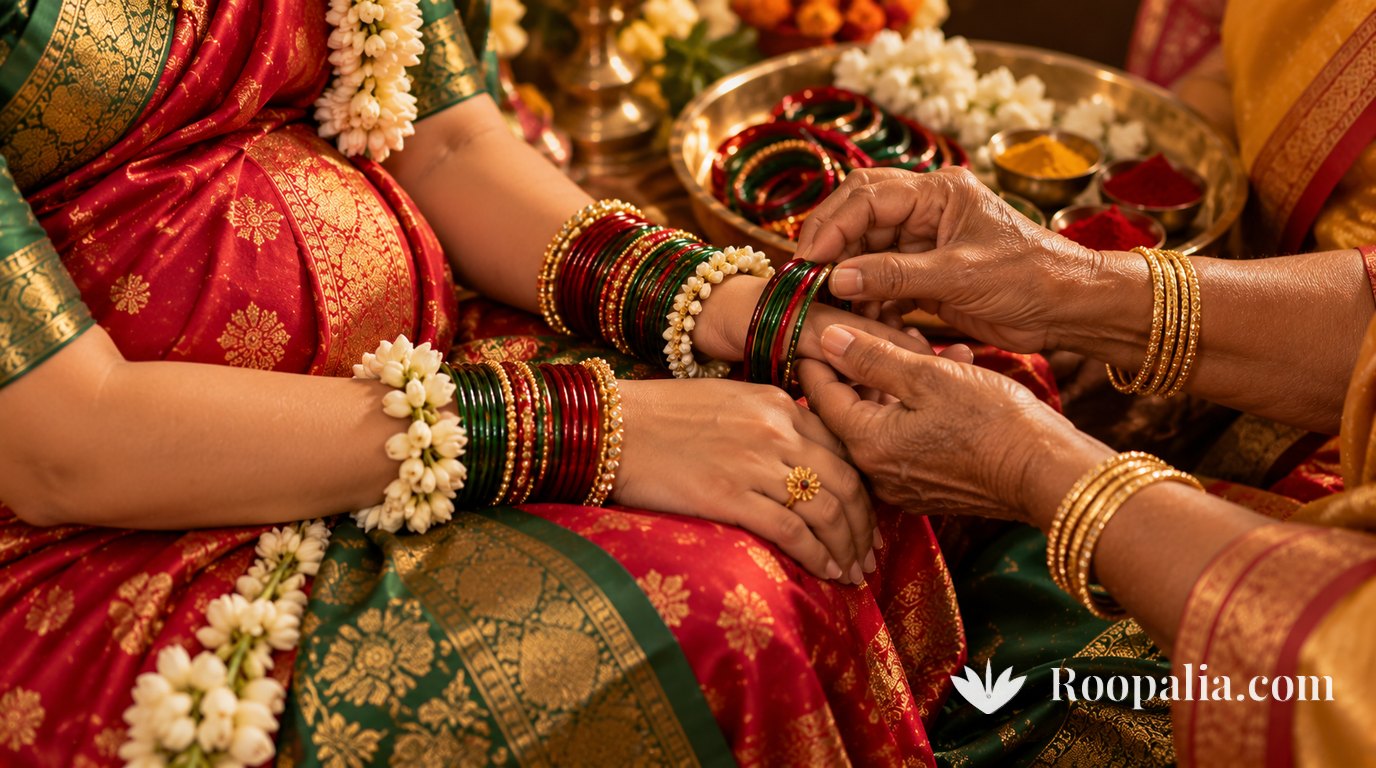
Call it an “Indian baby shower” and everyone at the office understands. But spend ten minutes at a godh bharai and you notice the difference: almost nothing is for the baby. The gifts, the songs, the food, the seat of honour — they are all for the mother.
That is not a modern twist. In the oldest written form of this rite, the whole ceremony is about her — down to the songs she is asked to sing.
🙏 This guide is written for families who want to understand the ceremony, explain it to friends, and host it far from grandparents. A Hindi version, with the full step-by-step ritual and the samagri list, is here.
What is godh bharai called in English?
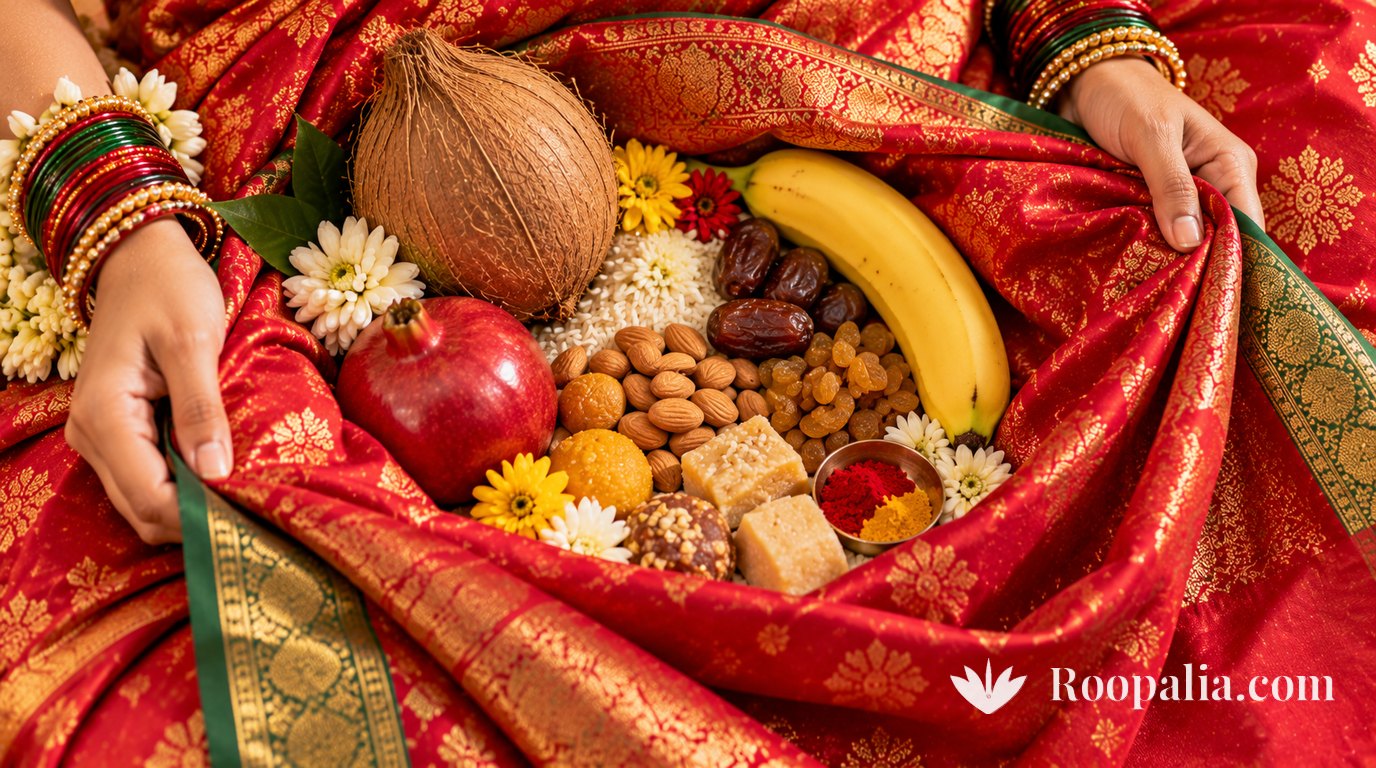
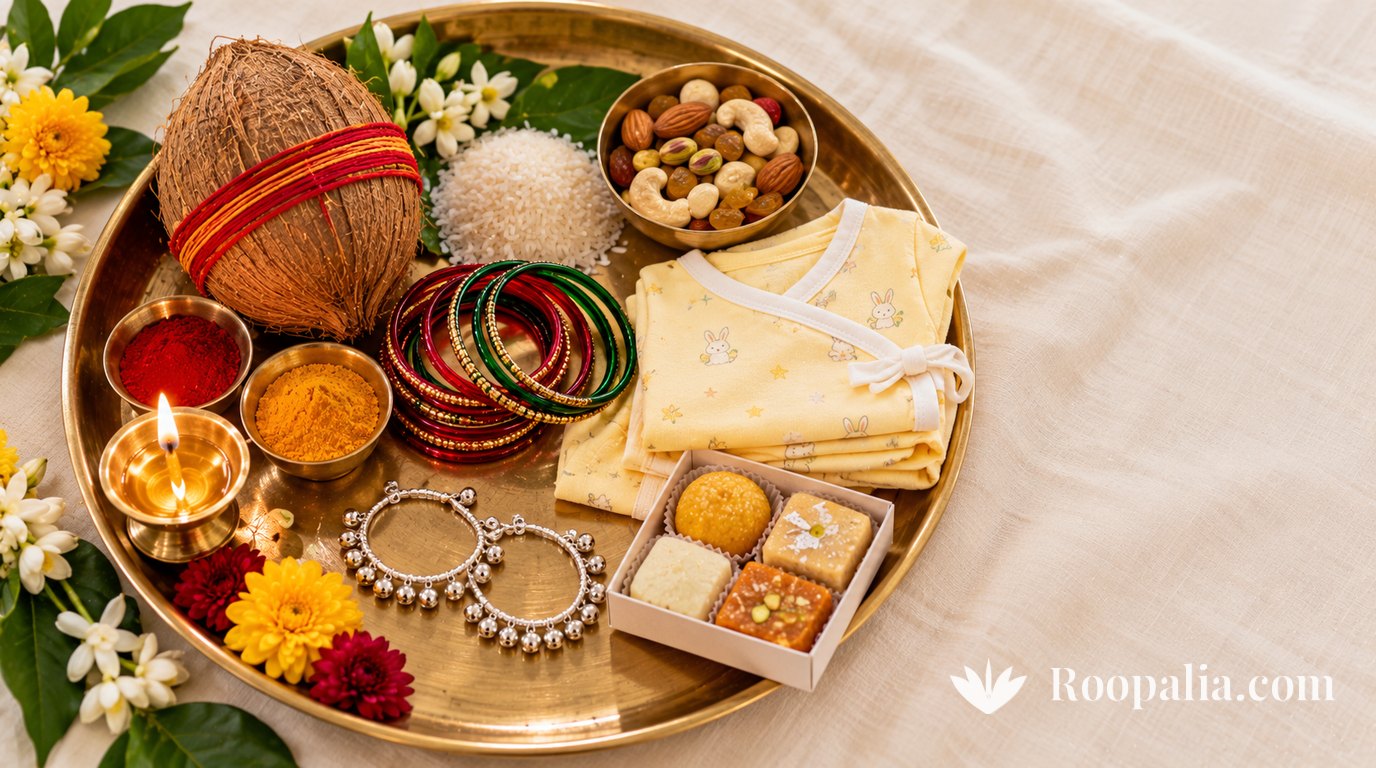
Godh bharai is usually translated as “Indian baby shower”; literally it means “filling the lap”. Older women of the family fill the fold of the mother-to-be’s sari with a coconut, fruit, dry fruit, rice and sweets, bless her, and celebrate her with songs and her favourite food. Its Sanskrit name is Simantonnayana — “parting the hair upwards” — the third of the sixteen Hindu samskaras (courtesy: Wikipedia, Simantonnayana).
| Godh bharai | Western baby shower | |
|---|---|---|
| Centre of attention | The mother | The baby (and the gift list) |
| Core act | Filling her lap, tilak, blessings, songs | Opening gifts, games |
| Roots | A Vedic samskara described in the Grihya Sutras | A 20th-century social custom |
| Typical timing | Around the seventh month | Often in the third trimester |
Godh bharai, seemantham, valaikappu, dohale jevan — what is the difference?
They are regional forms of the same pregnancy rite. The names and the emphasis change; the idea of honouring the mother does not.
| Name | Where | What stands out |
|---|---|---|
| Godh bharai, Seemant | North India | Lap filled with fruit and dry fruit; songs |
| Seemantham | Andhra Pradesh, Telangana, Karnataka, Kerala | A more formal puja; often combined with bangles |
| Valaikappu | Tamil Nadu | Red and green glass bangles, often at the mother’s parents’ home |
| Dohale jevan | Maharashtra, Konkan | Flower jewellery, a swing, and the mother’s cravings |
| Shaadh | Bengal | A meal of the mother’s favourite dishes |
| Shimant, Kholo bharvano | Gujarat | “Kholo” is the lap |
(Regional names courtesy: Wikipedia, Simantonnayana.)
Valaikappu: the bangle ceremony
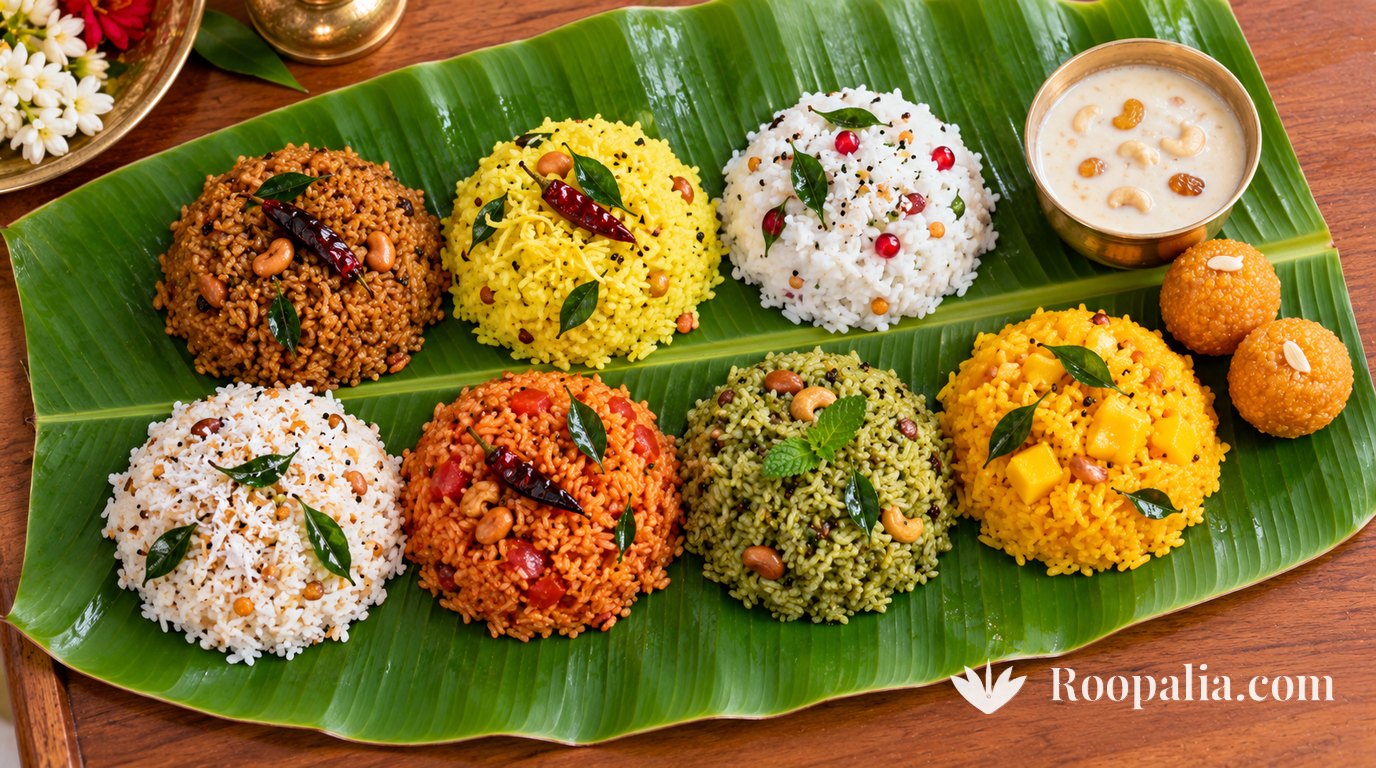
The name joins two Tamil words, valaiyal (glass bangle) and kaapu (protection). Women guests garland the mother and slide red and green glass bangles onto her wrists in odd numbers; it is usually held in the fifth and seventh months, and many families serve seven kinds of rice (courtesy: Wikipedia, Valaikaapu). You will also hear that the sound of the bangles soothes the baby; that is a belief, not a medical claim. Why bangles carry so much meaning is explained in why bangles are worn.
Dohale jevan: honouring the cravings
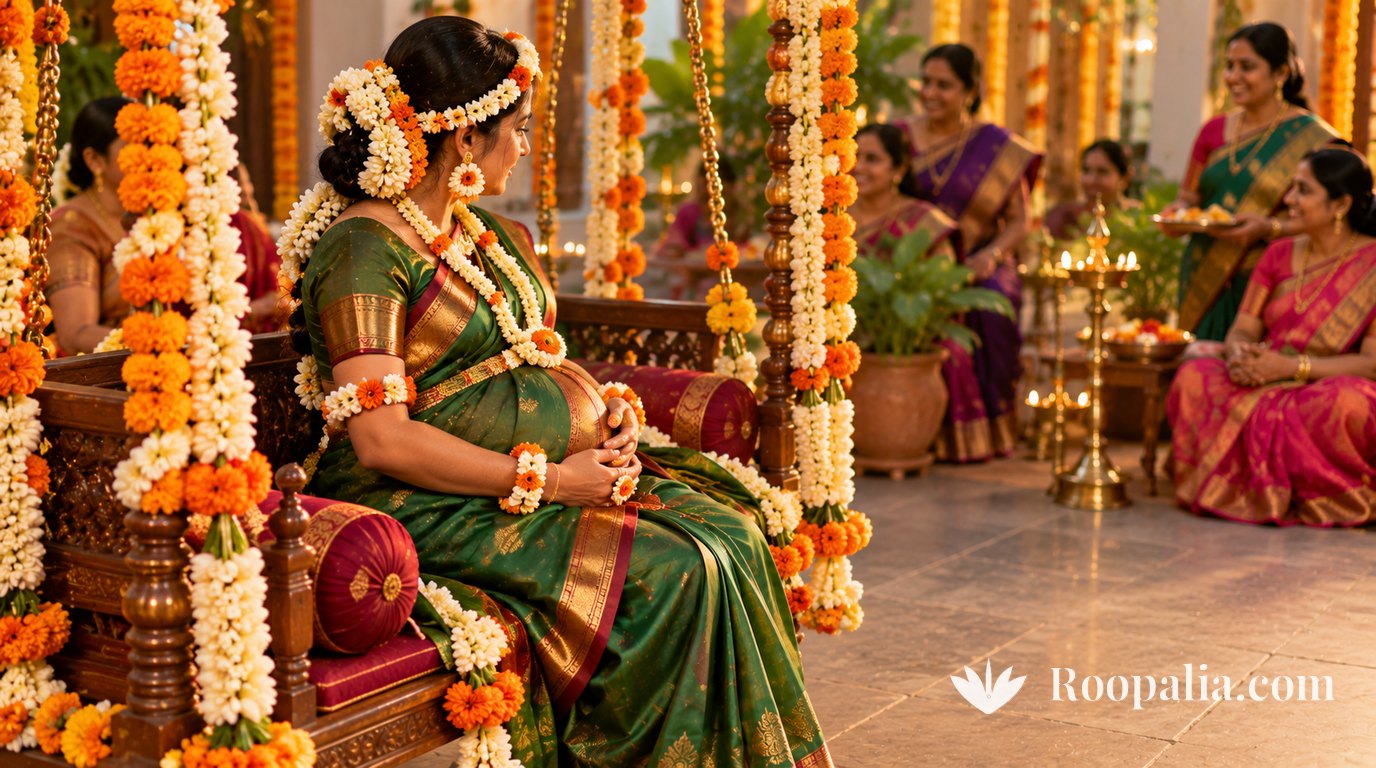
In Marathi, dohale are a pregnant woman’s cravings. The ceremony is built around them: her favourite dishes, flower jewellery, and a decorated swing.
Where does godh bharai come from?
From the Vedic rite of Simantonnayana, described in the Grihya Sutras. I read the Paraskara Grihya Sutra’s account in Hermann Oldenberg’s translation. In the sixth or eighth month of the first pregnancy, the wife sits on a soft seat west of the sacred fire; the husband parts her hair upwards from the forehead with a bunch of unripe udumbara (cluster fig) fruits, darbha grass, a porcupine quill with three white spots and a full spindle; and two lute players sing (Paraskara Grihya Sutra 1.15, courtesy: sacred-texts.com).
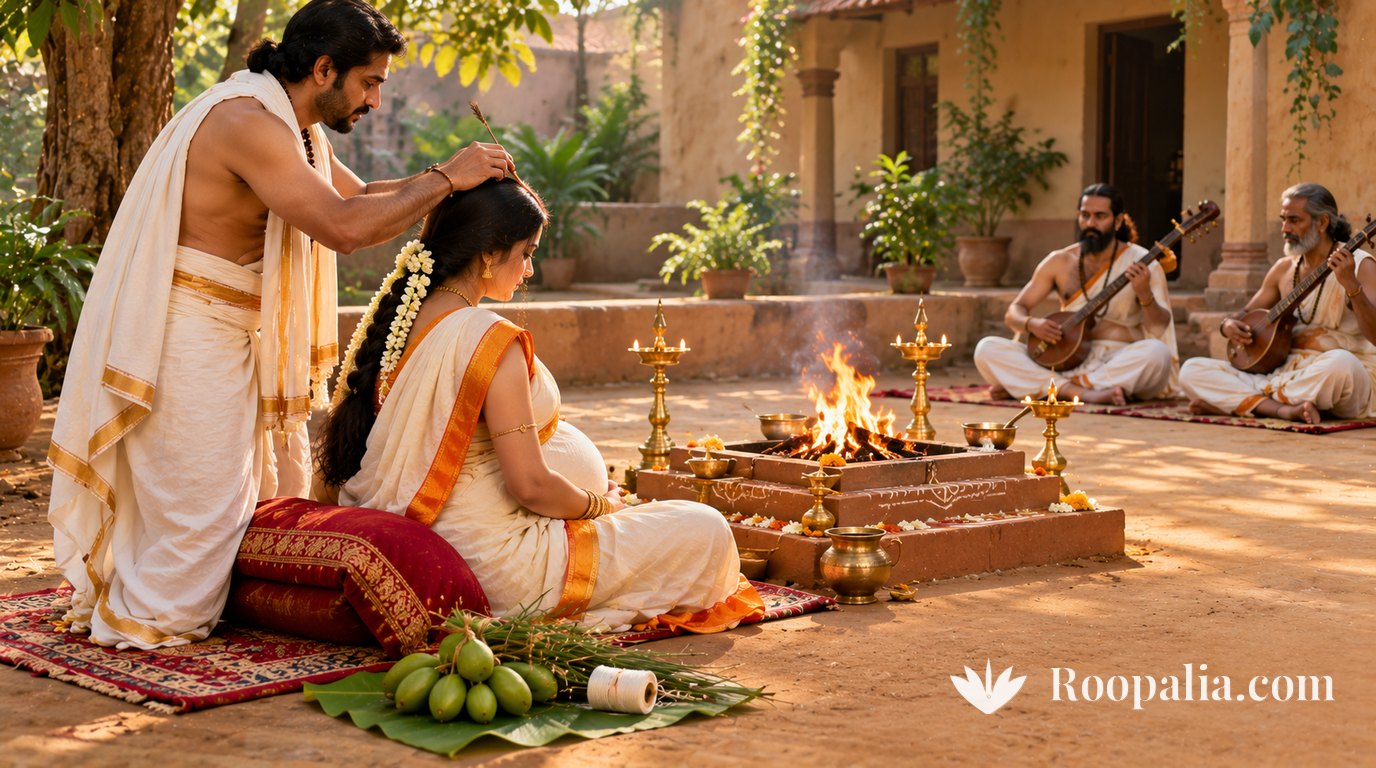
“Let him cause her to sing merrily, wearing, if she likes, many gold ornaments.”
— The Grihya Sutras, Part 1 (SBE 29), I.22.16–17, tr. Hermann Oldenberg (courtesy: sacred-texts.com)That second text, which places the rite in the seventh month, is printed in the same volume; the page does not name which Grihya Sutra it is, so I cite it by section. Either way, the two things every godh bharai still has — songs, and a dressed-up mother in the seat of honour — are in the oldest written version.
In which month is godh bharai done?
Usually around the seventh month of pregnancy. Paraskara gives the sixth or eighth month, the other text in SBE 29 gives the seventh, and Tamil families often hold valaikappu in the fifth and seventh. Both texts speak of the first pregnancy; whether to repeat it for later children is a matter of family custom. Exact auspicious dates depend on your local calendar and family priest.
The month is the easy part. The harder part, outside India, is explaining the ceremony to half the guests.
How to host godh bharai outside India
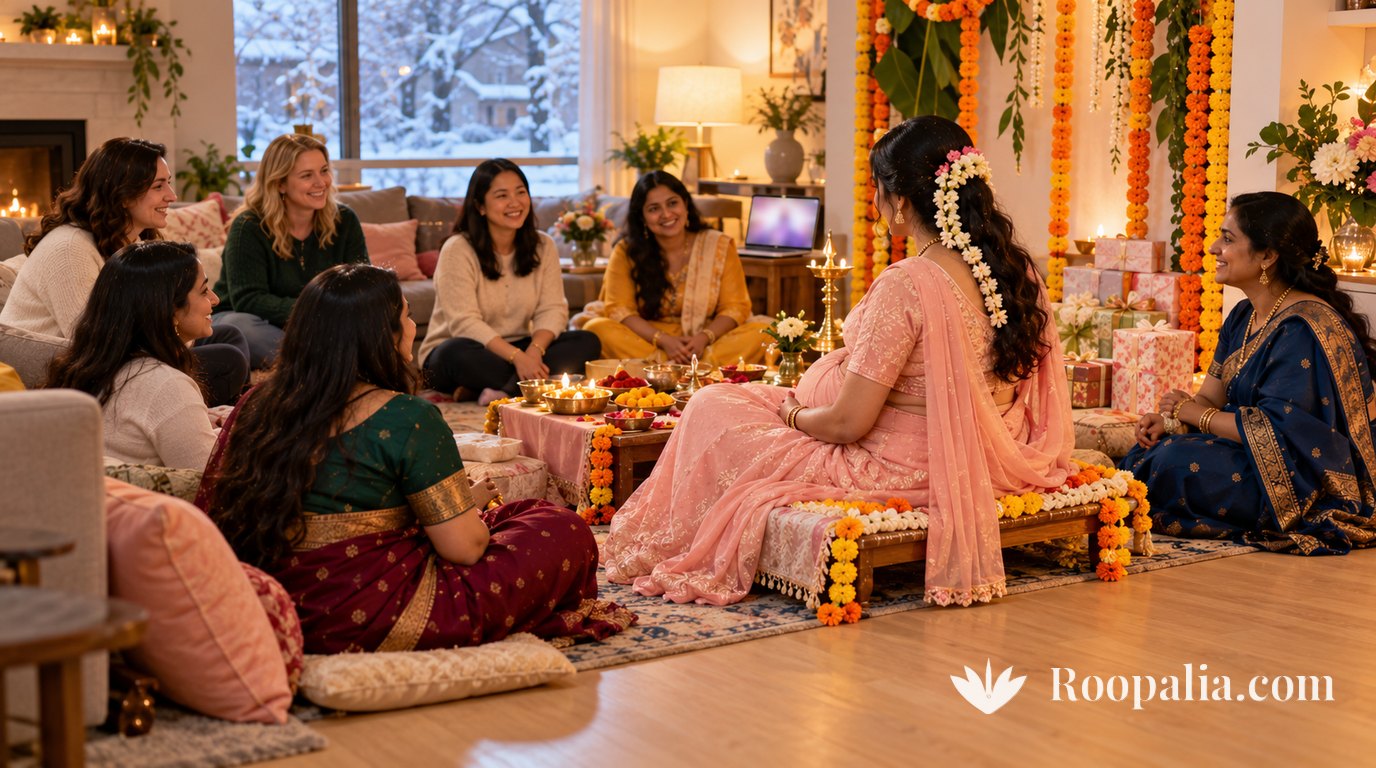
- Invitation wording. “Join us for a godh bharai — a traditional Indian blessing ceremony for mother and baby.” Add a line on dress (“Indian or festive wear welcome”) so nobody feels unsure.
- Explain it in thirty seconds. Before the lap-filling, someone tells the room what it means: the women of the family fill her lap with things that stand for abundance, and each guest gives a blessing.
- Let every guest take part. Give each person a piece of fruit or a handful of dry fruit to place in her lap, and invite a one-line blessing in any language.
- Grandparents on video. Ask them to lead a song or say the first blessing; record it.
- Gifts. In godh bharai the tradition is gifts for the mother — a sari, bangles, something for her comfort — alongside anything for the baby. No particular brand or shop is needed; a homemade sweet counts.
- The thali. Coconut, rice, dry fruit, fruit, sweets, turmeric, kumkum and a lamp are all available at Indian grocery stores.
- Timing. A weekend near the seventh month. If the plan involves flying to India for the ceremony, check late-pregnancy travel rules with the airline and your doctor first.
🤰 Keep the mother comfortable
Long rituals mean long sitting: give her a back cushion, water, breaks and a cooler room. Heavy jewellery and heavy silk are optional — even the old text says “if she likes”. Do not ask her to fast for the ceremony, and for anything about diet or activity in pregnancy follow her own doctor or midwife; the NHS page Keeping well in pregnancy is a good general starting point.
The other godh bharai: before marriage
The same name is used for a separate pre-wedding ritual, widely followed in Rajasthan, Haryana and western Uttar Pradesh. After the match is fixed, the women of the groom’s family drape a red chunri over the bride-to-be and fill her lap with a coconut, patashe (sugar drops), fruit and shagun — a way of saying she now belongs to their family. It has nothing to do with pregnancy. Its steps, what is given, and how it differs from the roka, sagai and tilak are in a separate guide: godh bharai before marriage.
After the birth, the next family rite is the naming ceremony — see a Hindu naming ceremony at home — and later the mundan.
What I found, and what I did not
| Question | Result |
|---|---|
| Scriptural root | Found — Simantonnayana, third of the sixteen samskaras |
| Month | Found — Paraskara 1.15: sixth or eighth; SBE 29 I.22: seventh |
| Songs and jewellery | Found — SBE 29 I.22.16–17 |
| Filling the lap with fruit and dry fruit | Not in the texts I read — folk custom |
| A verified text of godh bharai songs | Not found — lyrics not printed |
| The before-marriage godh bharai | A separate ritual — see its own guide |
“Not found” does not mean “does not exist”. It is the honest result of my search, not a final verdict.
A shower for the mother
Translate godh bharai as “baby shower” if you must, but host it as what it is: a blessing for the woman who is about to become a mother. Seat her high, fill her lap, sing to her, feed her what she craves, and let every guest — from Chennai or from Calgary — put something into her hands.
What is godh bharai called in English?
In which month is godh bharai done?
What is the difference between godh bharai and a baby shower?
What is valaikappu?
What is seemantham?
What gifts are given at a godh bharai?
Can godh bharai be done outside India, without grandparents?
Is godh bharai done only for the first baby?
Sources and cautions: the textual references were checked against published translations — the Paraskara Grihya Sutra 1.15 and section I.22 of The Grihya Sutras, Part 1 (Sacred Books of the East 29), both tr. Hermann Oldenberg (courtesy: sacred-texts.com). Regional names and valaikappu details: Wikipedia (Simantonnayana, Valaikaapu); pregnancy wellbeing: NHS. Three things should be said plainly. First, I did not find the lap-filling custom or a verified text of godh bharai songs in the texts and pages I read; that is the result of a search, not a final verdict. Second, the SBE 29 I.22 page does not name its Grihya Sutra, so it is cited by section. Third, this is not medical advice; ask your own doctor or midwife about diet, fasting, travel or long ceremonies in pregnancy. No brand or shop is recommended.