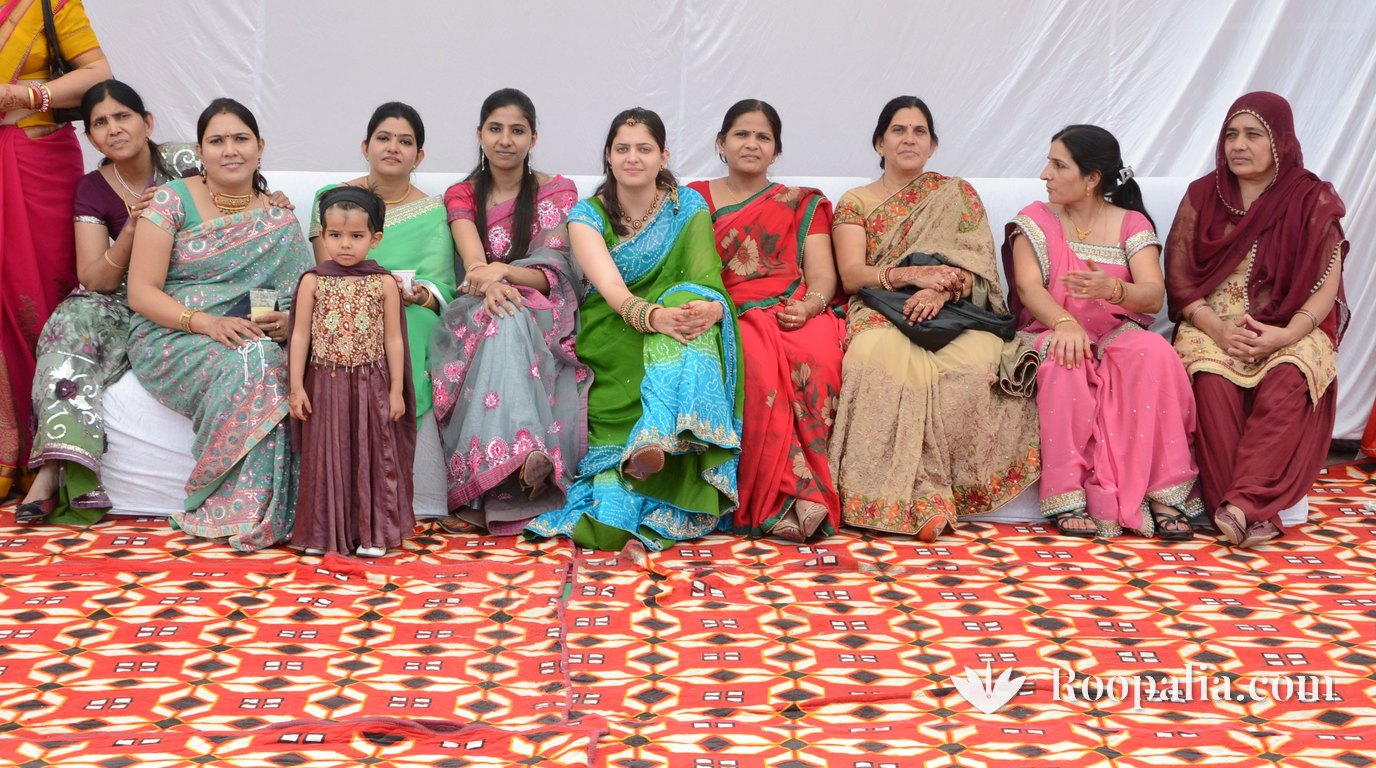
Look at the women in the photo above, all guests at the same wedding. Green, sky blue, pink, grey, beige, a maroon suit. Every one of them is dressed up, nobody is in plain white or black, and nobody is in a head-to-toe bridal red. That, in one picture, is the guest dress code.
Quick guide: what to wear to each event
What to wear to a haldi ceremony as a guest
The haldi is the morning when family and friends smear a paste of turmeric on the bride or groom. Wear light cotton in yellow or another warm colour, and assume it will be stained. Turmeric sets fast in silk and velvet and is hard to wash out of white.
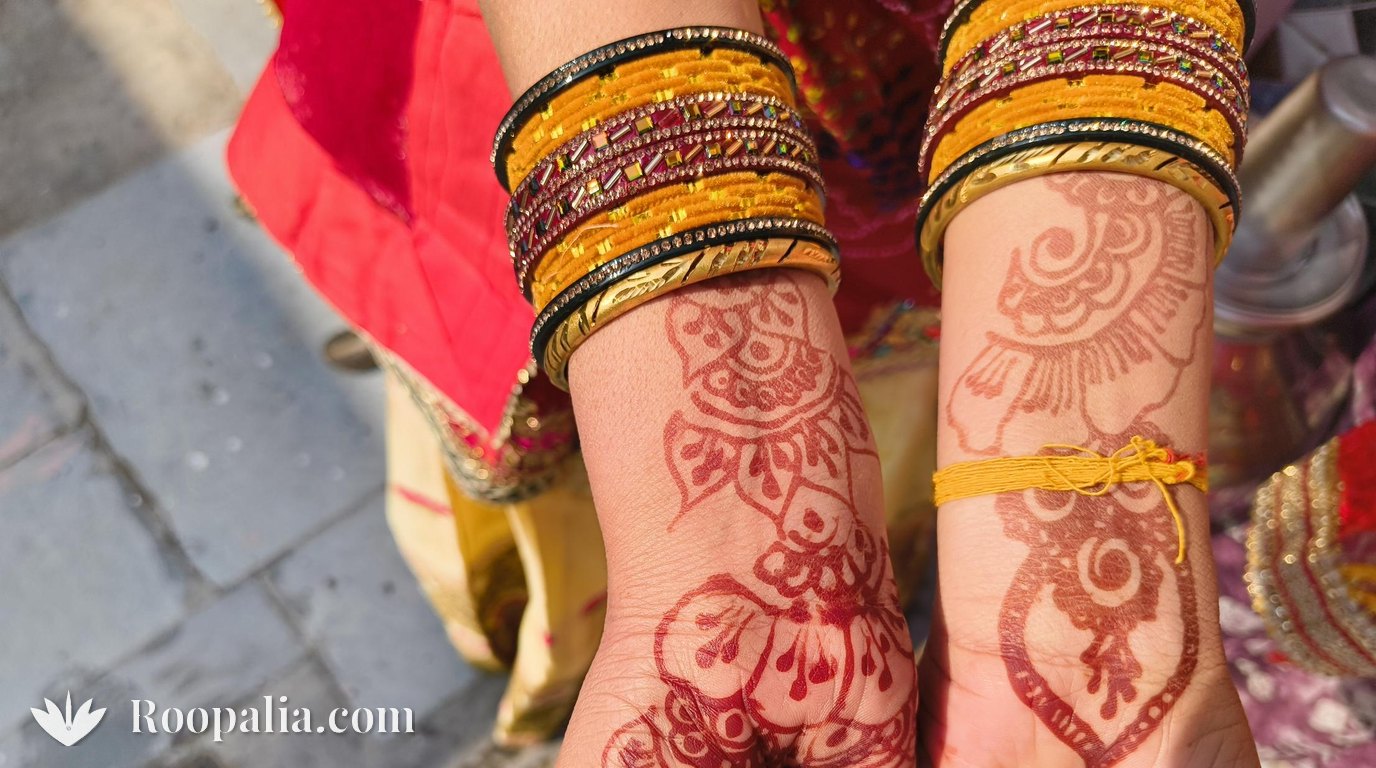
- Fabric: cotton, mulmul, chanderi or linen.
- Jewellery: leave the good gold at home. Light bangles or flower jewellery are enough.
- Shoes: flat sandals. The floor gets slippery with paste and water.
What to bring to a haldi
You are not expected to bring a gift to the haldi itself. Guests usually carry an old towel or handkerchief, wet wipes, and a change of clothes for the next event. Our guide to ubtan and the haldi paste explains what goes into it.
What to wear to a mehndi
Many families hold a separate mehndi night, and family and friends get henna on their hands and forearms too (courtesy: Wikipedia, Mehndi). Green is the colour people associate with it, but any bright colour works.
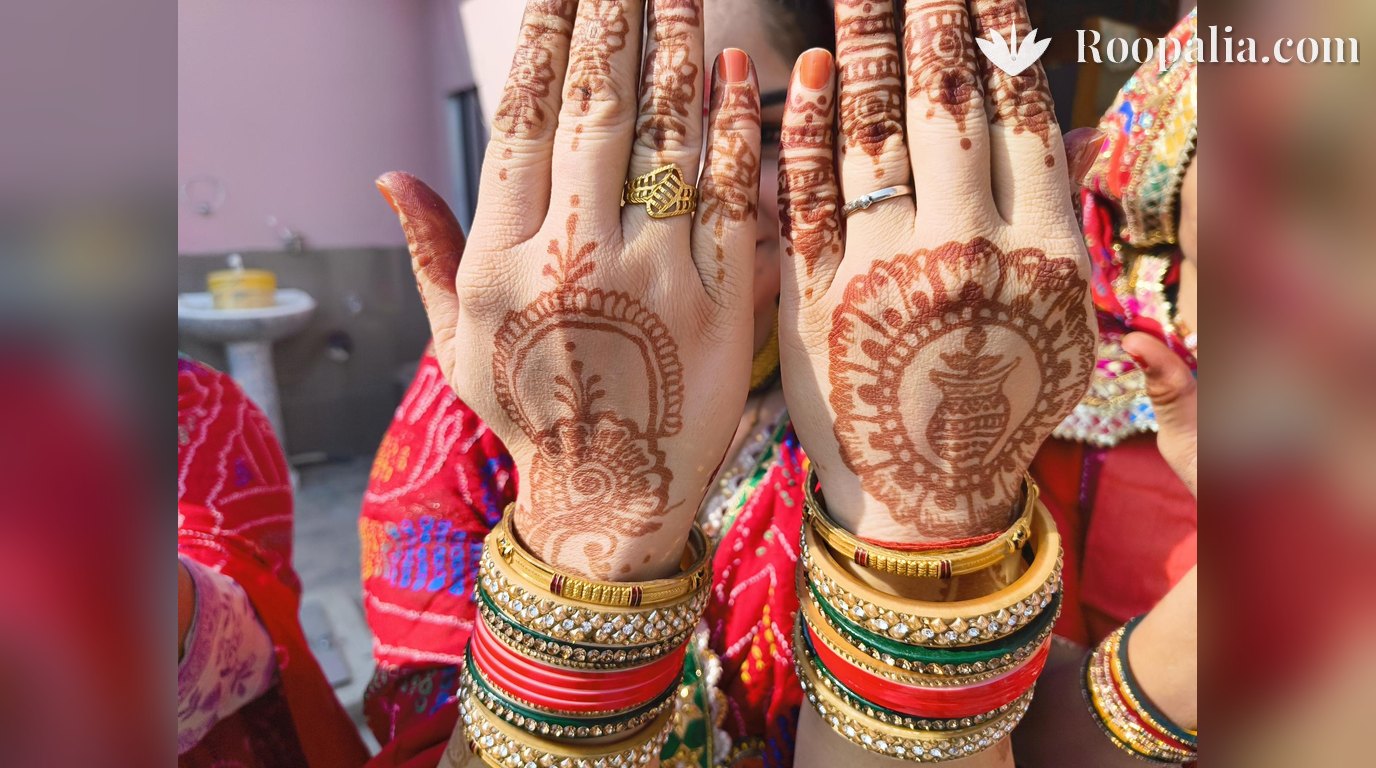
The practical rule: short or elbow-length sleeves, so you do not have to push fabric up while the henna dries. Take off rings until it has set. If you want your own henna, our page on how long to leave henna on will help.
What to wear to a sangeet night
The sangeet is the music and dance evening, and you will be pulled onto the floor. Choose something you can move in: a light lehenga, a flared sharara, a salwar suit or a pre-draped saree. Sequins, mirror work and gota look good under night lights.
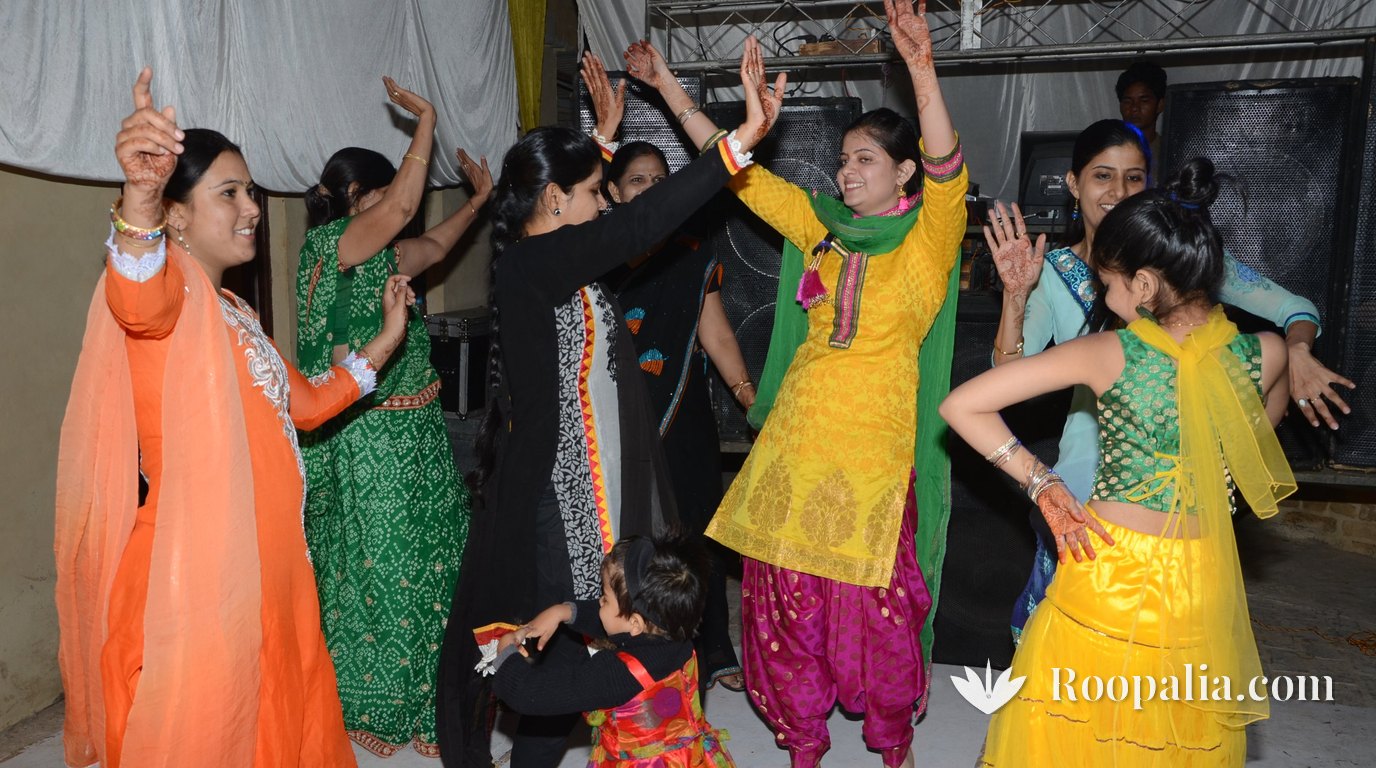
Pin your dupatta so it stays put, and wear juttis or low heels. In the photo above nobody is in heavy bridal brocade: everything is light, flared and easy to dance in.
The wedding ceremony itself is where most guests get it wrong, and colour is the usual reason.
What to wear to the wedding ceremony
The ceremony, with its seven rounds of the sacred fire, is the most formal part. Wear a saree, a dressy salwar suit or a lehenga, with your shoulders covered. You may sit on the floor or on low chairs for a long time, so avoid anything very tight.
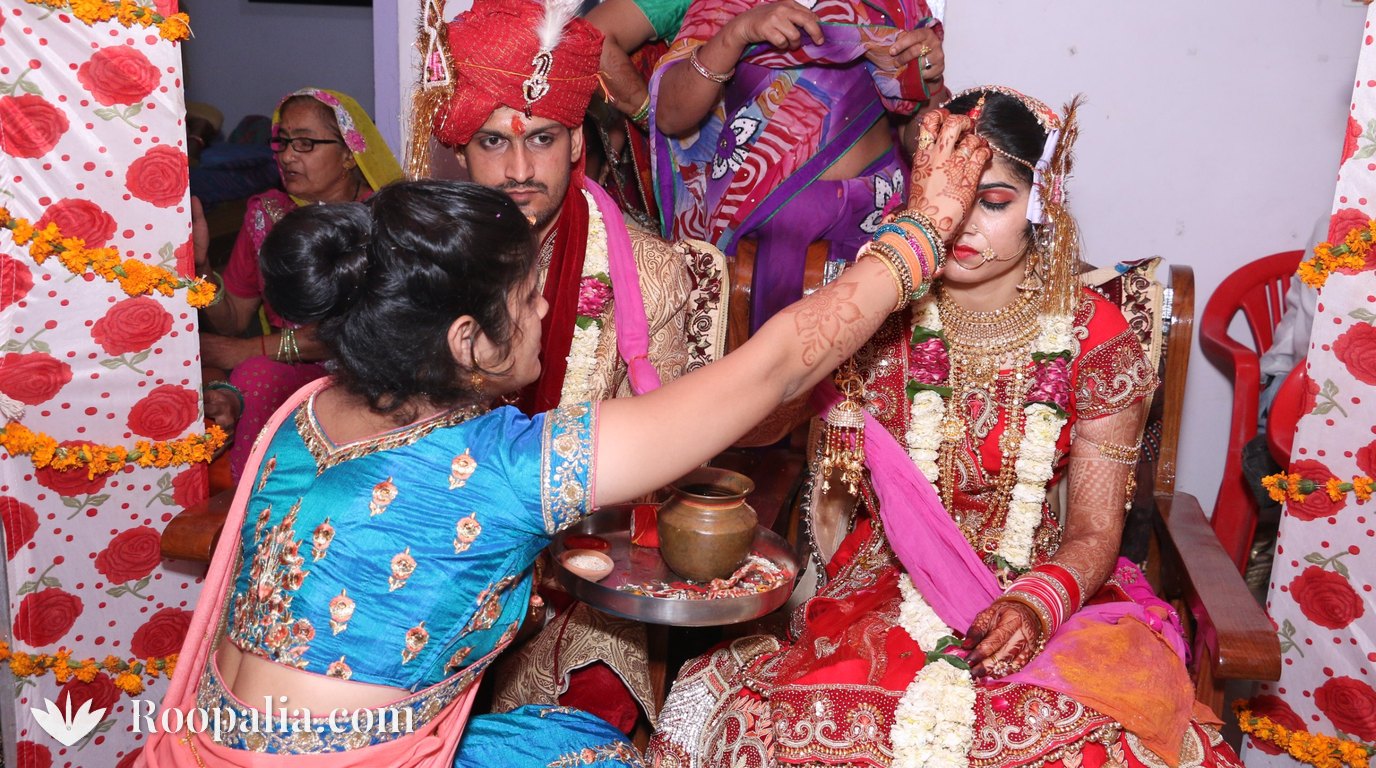
This photo shows the difference clearly. The bride is in red with a large nath (nose ring) and red bridal bangles. The woman beside her is beautifully dressed in blue and pink, but nowhere near the bride’s colours. Red is the most favoured colour for Hindu bridal saris (courtesy: Wikipedia, Sari).
Do I need to cover my head?
At a Sikh wedding in a gurdwara, yes: everyone covers their head, men and women, and shoes come off. At a Hindu ceremony it is not required of guests, but many women of the family drape a dupatta or the end of the saree over their head during the rituals, and it is seen as respectful if you do the same. Carry a scarf or dupatta just in case.
Colours not to wear to an Indian (Hindu) wedding
- Red: the bride’s colour. A full red lehenga on a guest can look like competition. Try maroon, wine, coral or burnt orange.
- All-white: in many Hindu homes white is linked with mourning; widows traditionally wore white saris (courtesy: Wikipedia, Sari). Cream with colourful embroidery or a bright dupatta is usually fine.
- Black: many families consider it inauspicious, especially at the ceremony. At evening receptions, embellished black is now seen more often.
- Neon: not forbidden, just harsh in photos.
Opinions really do vary. In South India, cream and gold saris are worn on happy occasions, and some modern city families have no colour rules at all. If you are unsure, ask the couple. They will be glad you asked.
Can a non-Indian (white) woman wear a saree or lehenga?
Yes, and most Indian families take it as a compliment. Wearing Indian clothes to an Indian wedding you have been invited to is generally seen as joining in, not as costume. Many well-known women from outside India have worn saris, often designed for them by Indian designers (courtesy: Wikipedia, Sari).
- First saree? Ask a woman in the family to drape it for you on the day, or choose a pre-draped saree. Our step-by-step saree guide shows the common drape.
- Not comfortable in a saree? A salwar suit or an anarkali is just as correct and much easier to manage.
- Western clothes are fine too: a long, colourful dress with covered shoulders works at most events.
The one thing guests are advised to avoid is wearing religious symbols as decoration, such as sindoor in the hair parting, which means a woman is married.
Jewellery: what guests can wear, and what belongs to the bride
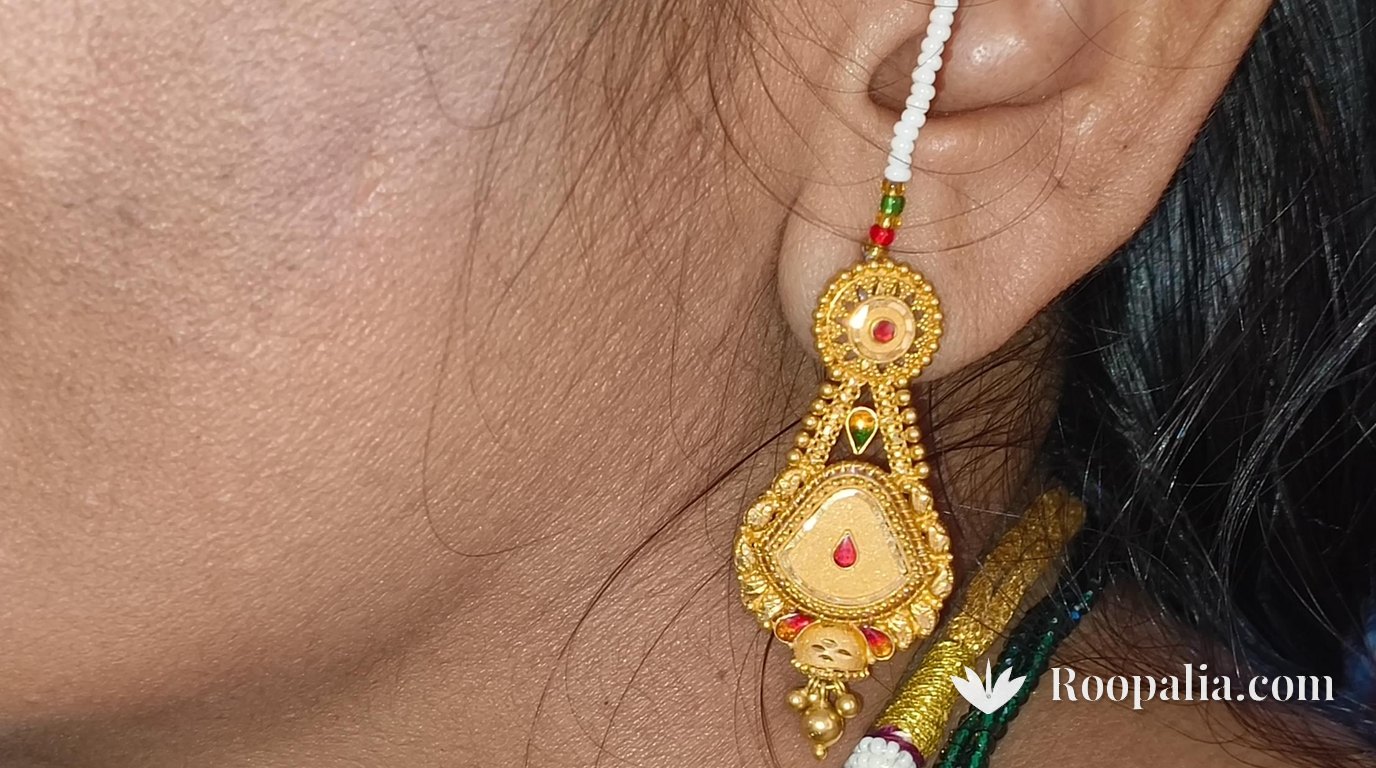
Fine for any guest: statement earrings like the one above (often with a bead chain over the ear to take the weight), necklaces, bangles that match your outfit, and a small maang tikka on the forehead for the sangeet or reception.
Usually worn only by the bride or married women: a large nath, sindoor, the mangalsutra, toe rings, and the red bridal chooda bangles.
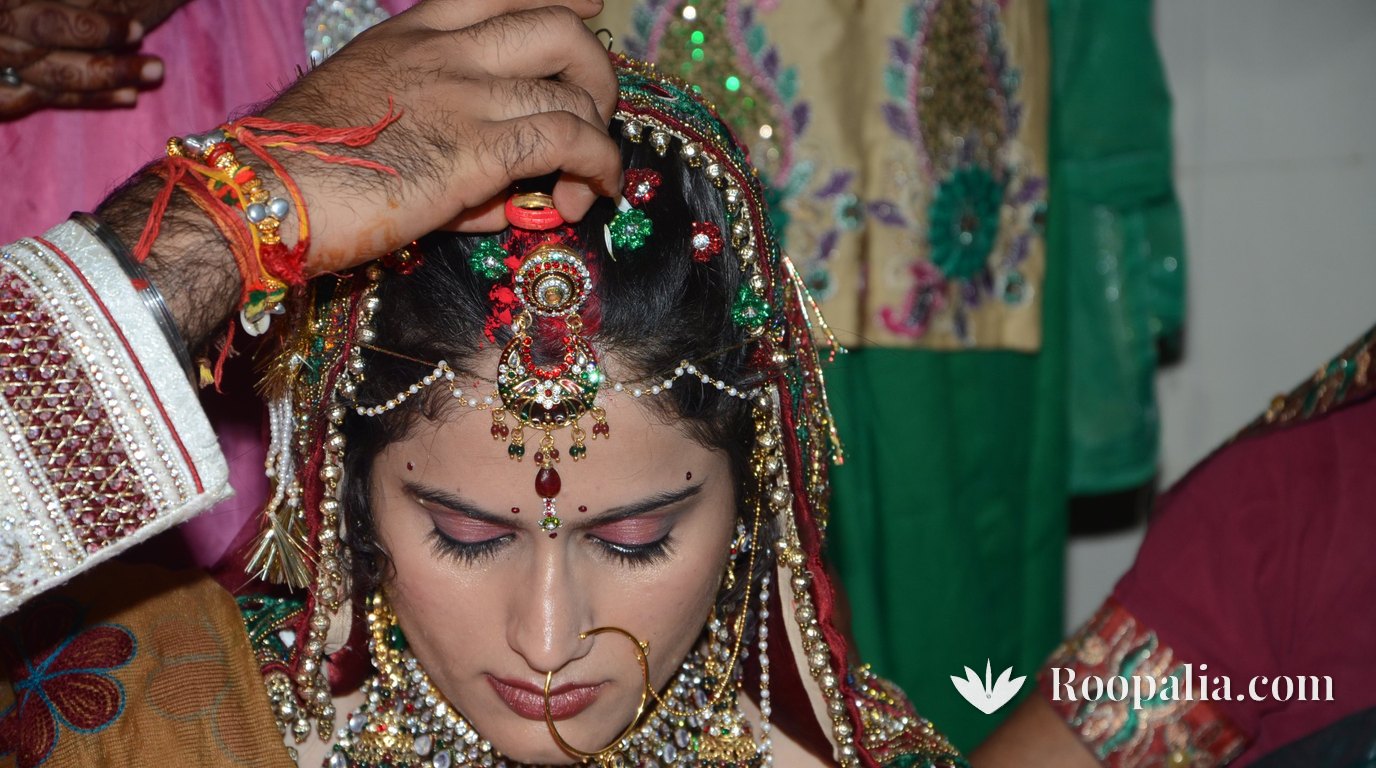
This is the moment after the pheras when the groom fills the bride’s hair parting with sindoor. The big nath and the sindoor both mark her as the bride, which is why guests leave them out.
What to wear to an Indian wedding as a male guest
- Haldi and mehndi: a cotton kurta-pyjama in yellow, white or a light colour.
- Sangeet: a kurta with a Nehru jacket.
- Baraat and ceremony: kurta-pyjama, a bandhgala or a sherwani that is plainer than the groom’s. The groom wears a sherwani with his own family’s style of turban (courtesy: Wikipedia, Hindu wedding); at many North Indian weddings the family ties a safa on male guests for the baraat too.
- Reception: a suit is always correct.
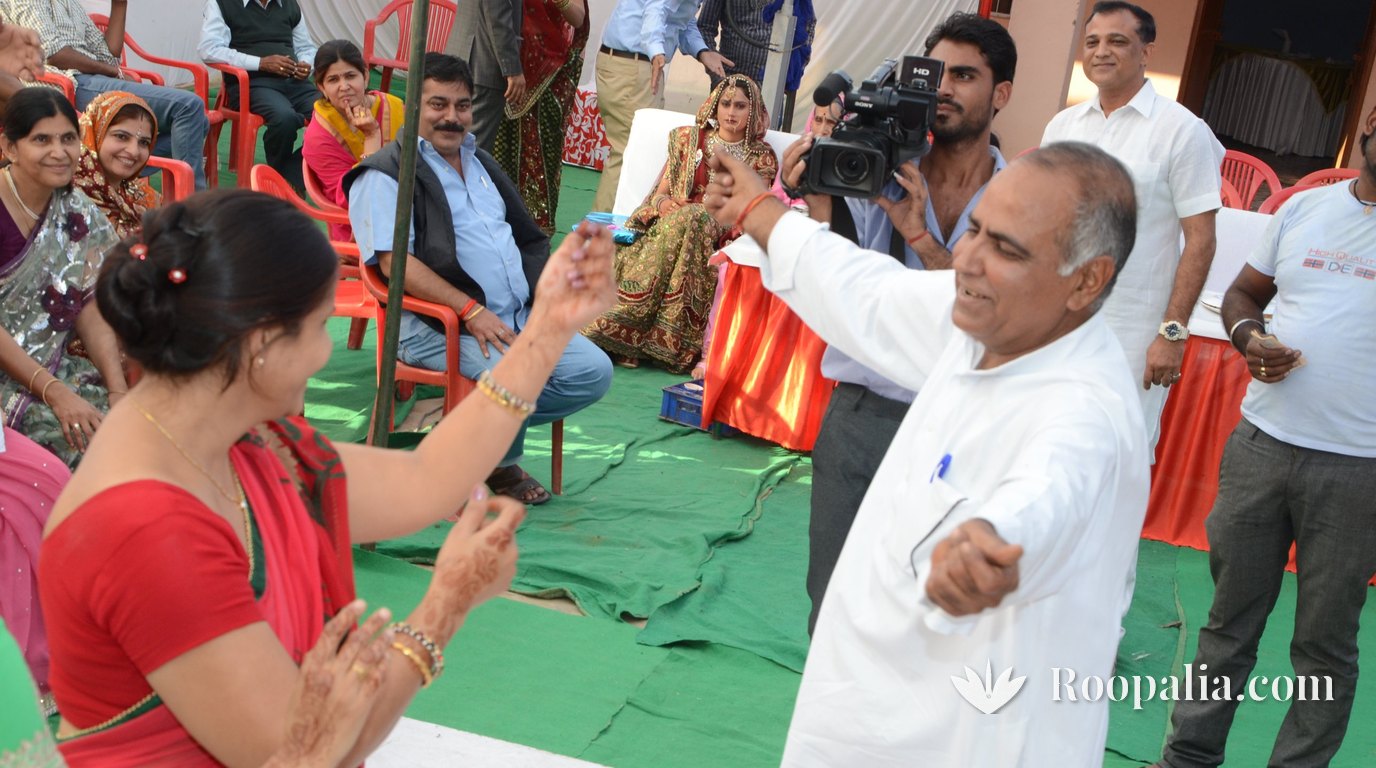
The man in white in the photo above is dancing in a simple kurta, which is exactly what most older relatives wear to daytime functions.
Dressing for an Indian wedding outside India
Indian weddings in the UK, Canada, the USA or Australia bring their own problems:
- Cold weather: wear thin thermals under a saree or lehenga, and a long coat or heavy shawl over it. Velvet lehengas and full-sleeve blouses are made for winter weddings.
- Getting an outfit: Indian clothing can often be rented in cities with a large Indian community, borrowed from Indian friends, or stitched by a tailor from a saree. Ask the bride’s family; someone usually has a spare.
- Venues: hotel ballrooms are warm, but the baraat and photographs often happen outdoors. Keep a shawl to hand.
For the order of events and etiquette, from the baraat to the vidaai, read our guest’s guide to an Indian wedding.
Dress for the event in front of you: something you can get turmeric on in the morning, something you can dance in at night, and something modest and colourful for the ceremony. Leave red, the nath and the sindoor to the bride, and you will fit in at almost any Indian wedding.
Frequently asked questions
Can I wear black to an Indian wedding reception?
Can you wear white to an Indian wedding?
Can a guest wear red to an Indian wedding?
What should a non-Indian woman wear to an Indian wedding?
What do male guests wear to an Indian wedding?
Do guests need to cover their heads at an Indian wedding?
Sources: Wikipedia (Sari, Hindu wedding, Mehndi); other points are based on common practice seen at weddings and vary by family and region.
All photos in this article are real photographs, credited 'Photo: Dhanpat Singh'.