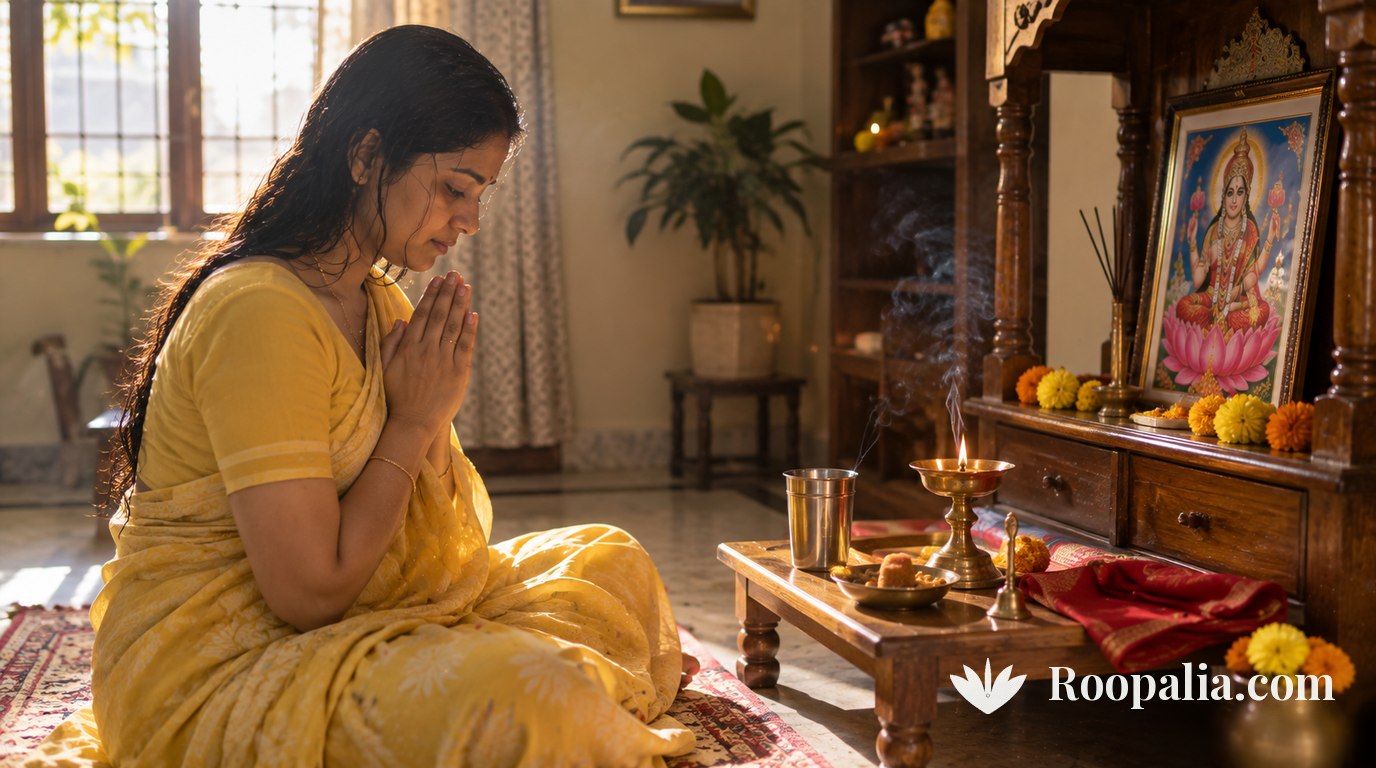
Whose day is Friday? Three traditions, three sets of rules
Start here, because everything that follows depends on it.
1. The Santoshi Mata vrat
Count: 16 consecutive Fridays · Offering: jaggery and roasted chickpeas · Sour food: completely forbidden · Udyapan: on the 16th Friday, eight boys are fed
2. The Vaibhav Lakshmi vrat
Count: 11, 21 or 51 Fridays (as vowed) · Offering: kheer or a white sweet · Sour food: no special prohibition · Udyapan: on the final Friday, prasad given to seven or eleven married women
3. Shukra graha remedies
Not a fast at all but an astrological practice — donating white items, chanting the Shukra mantra. Fasting is not required.
Here is where the trouble starts. Most pages online blend the rules of all three — Lakshmi's method inside the Santoshi Mata vrat, the sour-food ban inside the Vaibhav Lakshmi vrat. That is why one question gets you three different answers.
So decide first which fast you are keeping. If your family's practice involves jaggery and chickpeas, it is the Santoshi Mata vrat. If it involves kheer and a red cloth, it is Vaibhav Lakshmi. You do not need to combine them — and that alone removes most of the anxiety people carry into this fast.
Where Friday's scriptural roots actually are
The worship of Santoshi Mata is comparatively recent — we cover that history carefully in the katha article. But Friday's link with Lakshmi is not recent at all, and this rarely gets mentioned.
The Skanda Purana contains a section called the Varalakshmi Vrata Mahatmya, in which Parvati asks Shiva which single observance is most beneficial for women. Shiva answers with the Varalakshmi Vratam and tells the story of Charumati of Kundinapura. That vrat too falls on a Friday — the one preceding the Shravana full moon — and it is still kept on a large scale across South India.
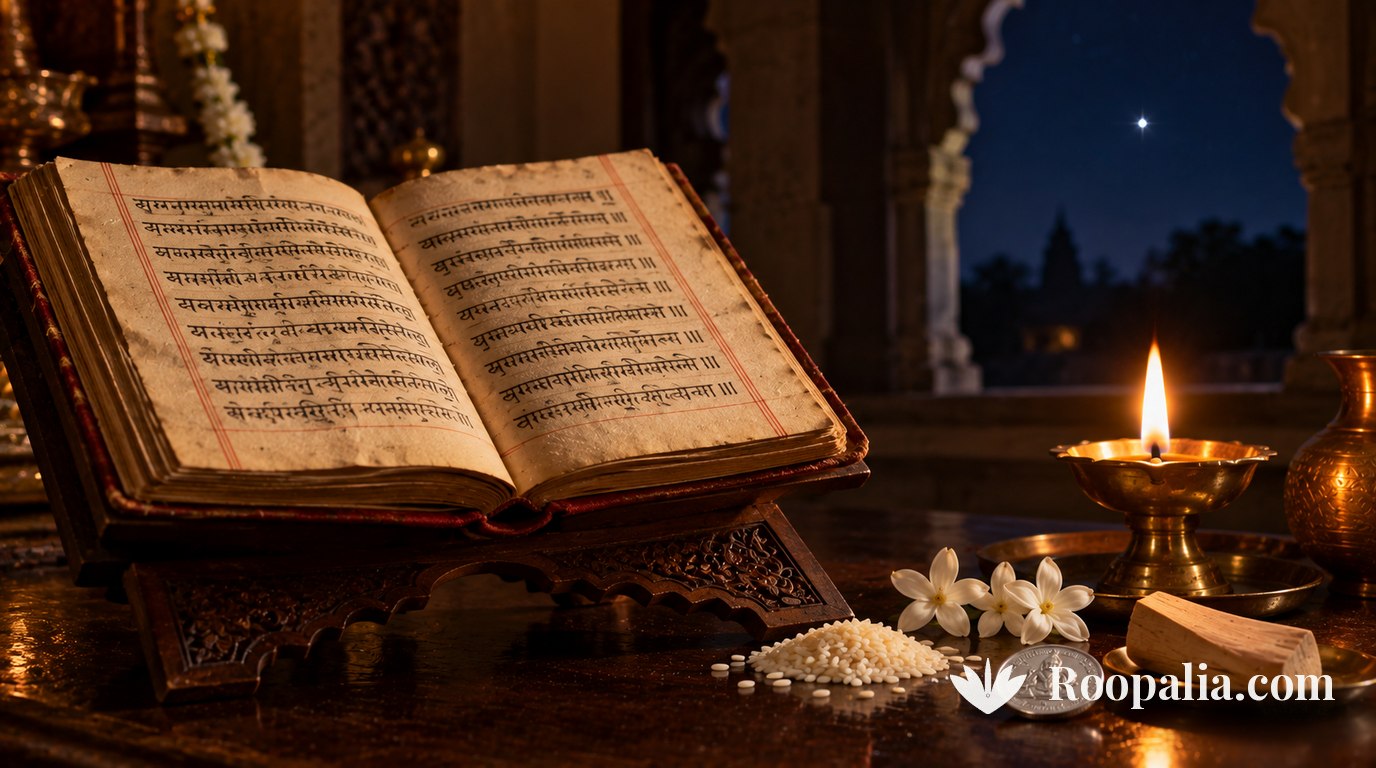
The second thread comes from jyotish. The Navagraha Stotra, traditionally attributed to Vyasa, gives this verse for Shukra:
Hima-kunda-mṛṇālābhaṁ daityānāṁ paramaṁ gurum,
sarva-śāstra-pravaktāraṁ bhārgavaṁ praṇamāmyaham.
Meaning: I bow to Bhargava (Shukracharya), whose radiance is like snow, the kunda flower and the lotus stem, the supreme teacher of the daityas, the expounder of all the shastras.
That single verse explains Friday's entire colour scheme — white. White flowers, rice, sandalwood, kheer, silver. It is not invented; it follows from how Shukra is described.
And for Lakshmi worship the most authoritative text is the Shri Suktam, from the khila-sukta tradition attached to the Rigveda. If an elaborate ritual feels out of reach, reciting the Shri Suktam alone on a Friday is considered complete worship.
The sankalp — the first step
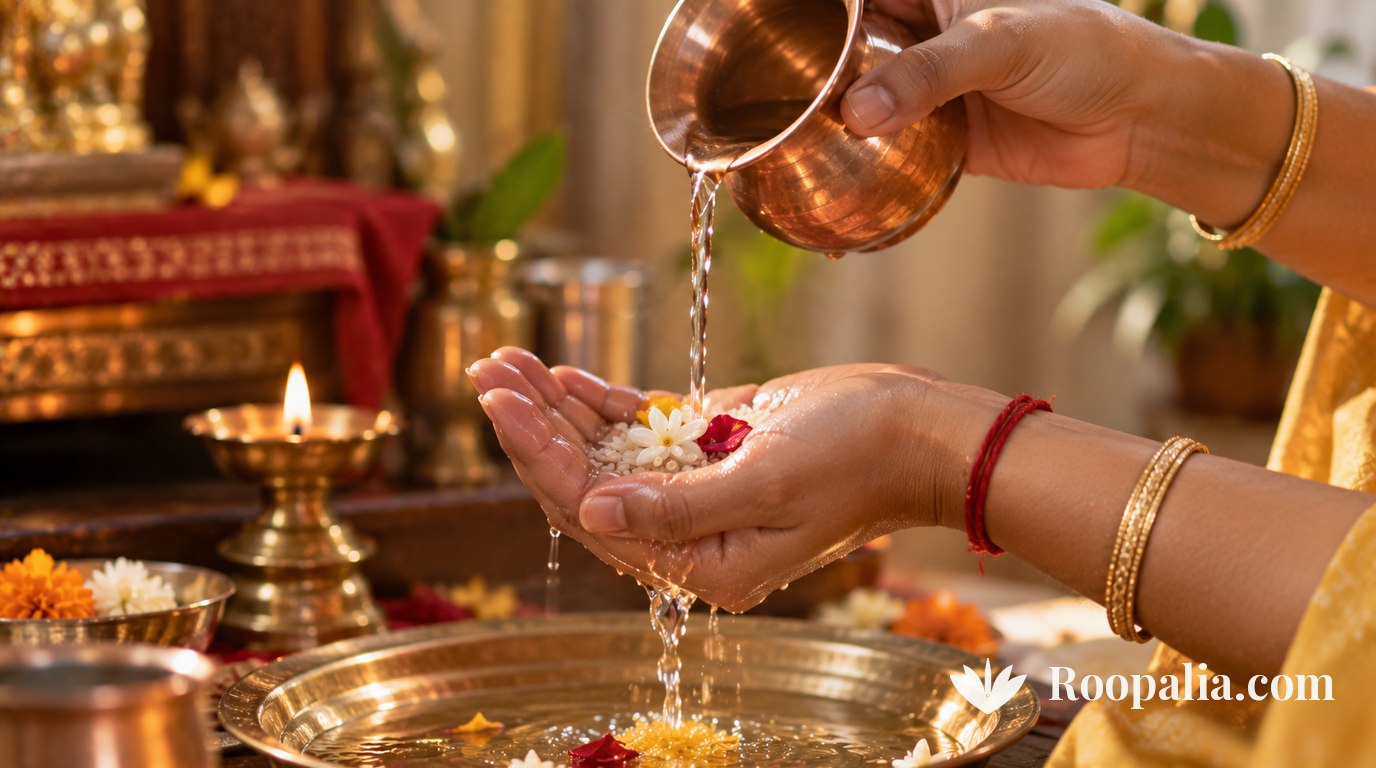
Before starting, you take a sankalp. This is not a formality — the sankalp is where you fix how many Fridays you will keep, and that number decides the date of your udyapan.
After your bath, sit at the shrine. In your right palm hold a little water, a few unbroken rice grains and a flower. Say aloud or in your mind: "I, (name), begin the (sixteen / twenty-one) Friday vrat today with faith. Mother, let me complete it without obstacle." Then release the water into the puja plate or at the root of a plant. The vow is made.
One piece of practical advice from experience: do not vow sixteen or twenty-one on your first attempt. If work, children and travel make four straight months look hard, vow five Fridays instead. Complete them, then extend. A large vow left unfinished is weaker than a small one completed.
Shukravar vrat puja vidhi — step by step
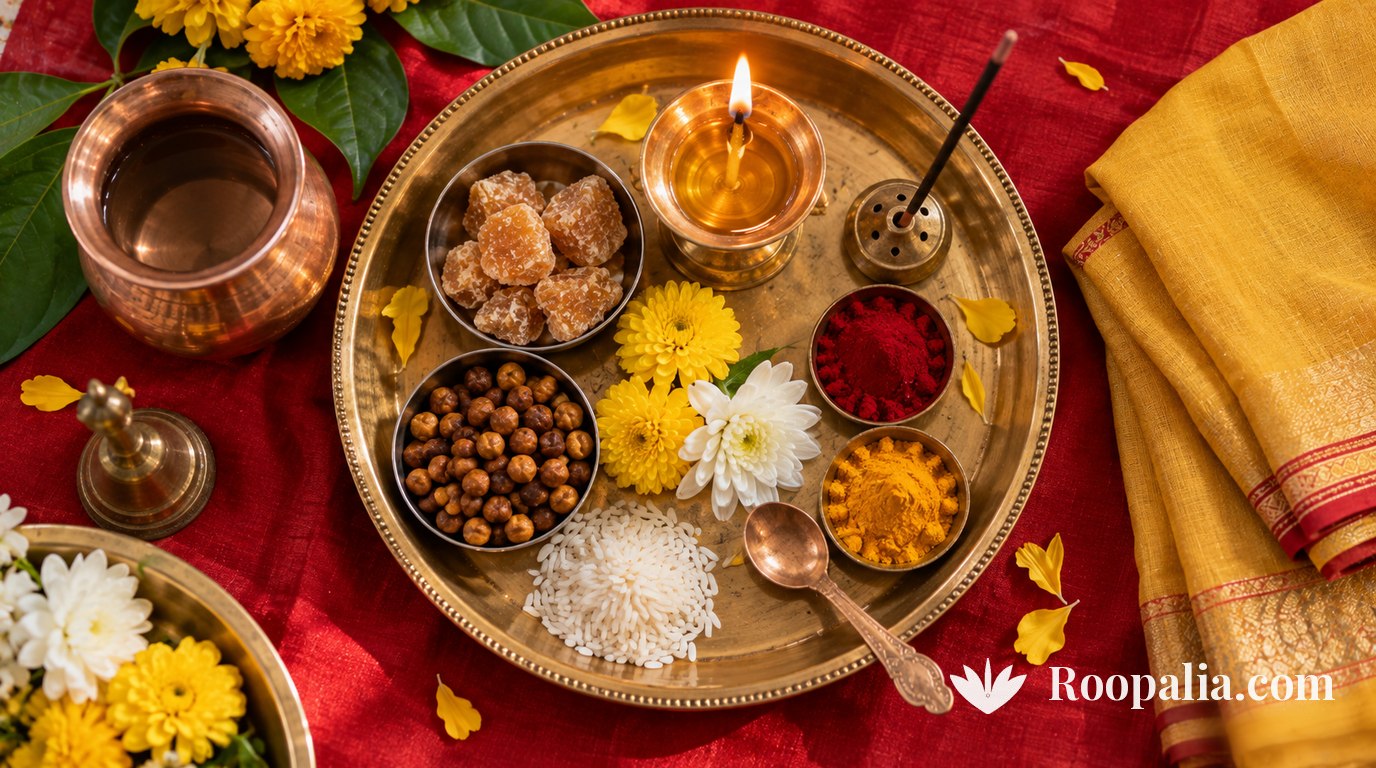
1. Bathe before sunrise. Wear white or pale yellow if you can.
2. Clean the shrine. Spread a red or yellow cloth on a low stool and place the image of the Goddess on it.
3. Light a ghee lamp and incense. Keep a vessel of water beside you.
4. Apply the tilak, offer rice grains and flowers — white flowers are considered especially auspicious on Friday.
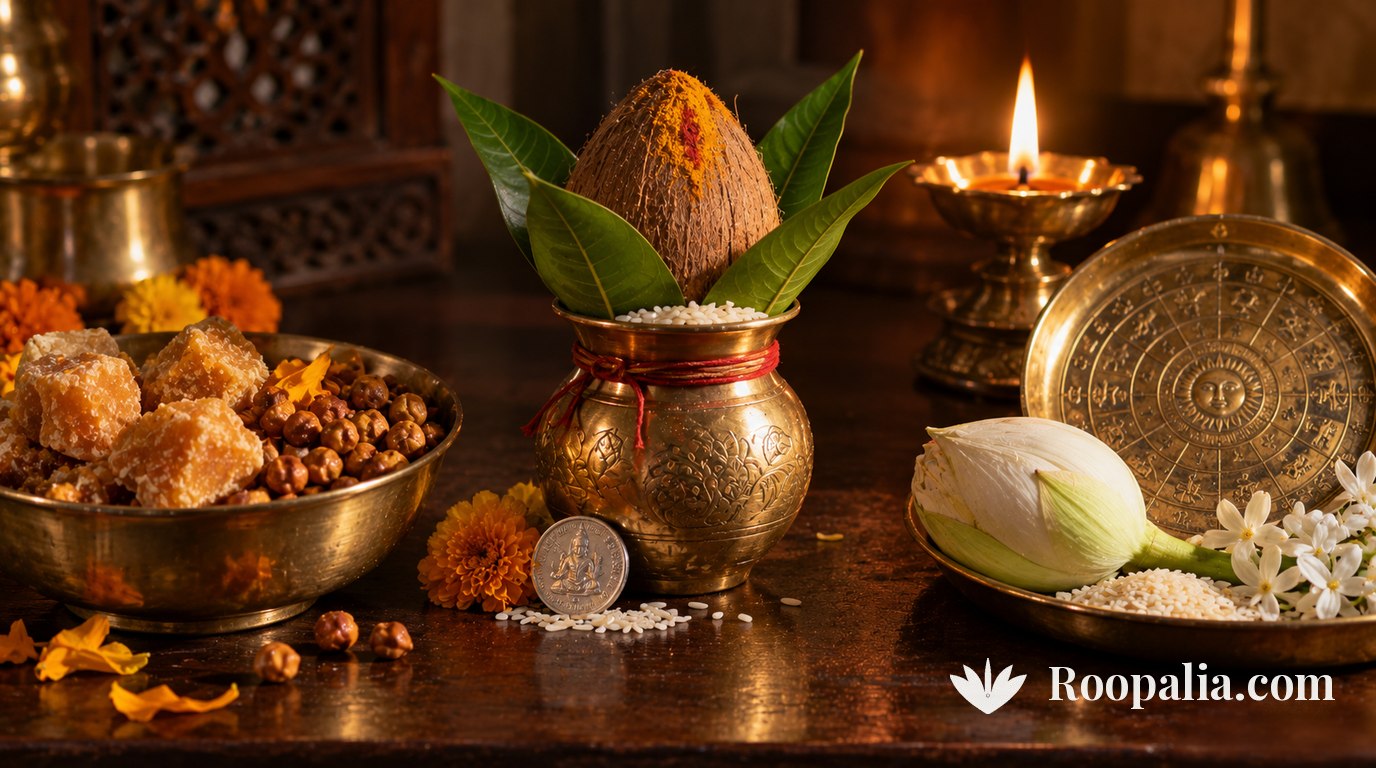
5. Make the offering — jaggery and roasted chickpeas for the Santoshi Mata vrat; kheer or a white sweet for Vaibhav Lakshmi.
6. Read or listen to the vrat katha. This is a required part of the ritual, not an optional extra. The full katha is here.
7. Perform the aarti and sprinkle water to close the puja.
8. Distribute the prasad. The jaggery and chickpeas go to the household first; tradition also prescribes offering some to a cow.
One thing to watch: rushing is the commonest mistake. Fifteen unhurried minutes beat half an hour done in a hurry.
What can you eat during the Friday fast — and what not
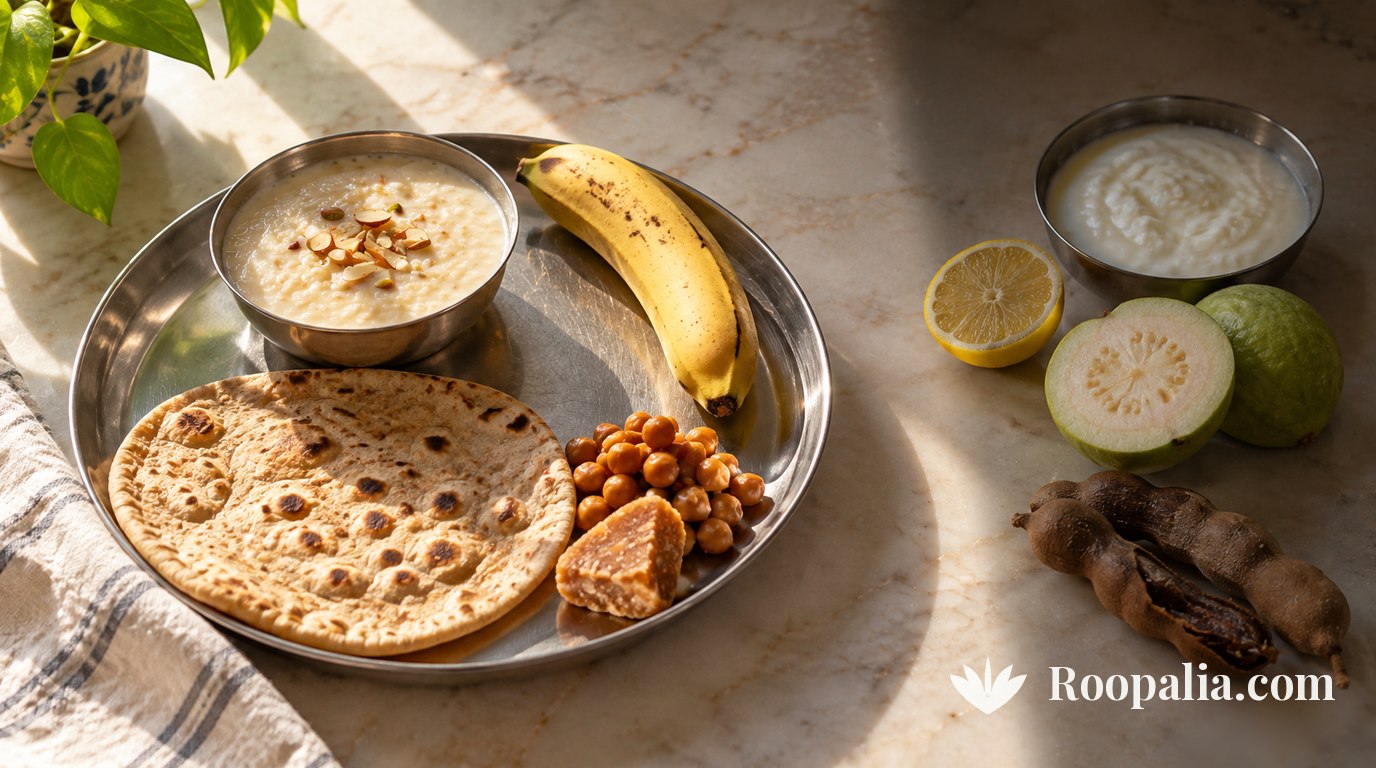
The most searched question of all, and the answer depends on which fast you are keeping.
In the Santoshi Mata vrat:
- Allowed — jaggery and chickpeas (the central prasad), milk, kheer, banana, roti, rice, plain vegetables, dry fruits.
- Avoided — lemon, tamarind, curd, buttermilk, tomato, amla, pickle, raw mango, and anything sour. Also onion, garlic and meat.
The ban is not just for you — this is the rule people miss
In the Santoshi Mata vrat the tradition is that no one in the house is served anything sour that day, and nothing sour is brought in from another home either. This is not a minor detail — the entire turning point of the katha rests on it. Sour food slipped into the udyapan meal is exactly what triggers the crisis in the story.
The meaning underneath is deeper still. The opposite of santosh (contentment) is craving. Sourness is the taste that makes the tongue ask again. In a fast kept for contentment, removing that one taste is symbolic — the prohibition is not really against lemons; it is against wanting more.
In the Vaibhav Lakshmi vrat there is no such prohibition on sour food. The ordinary rules of a sattvic fast apply — no onion, garlic or meat.
Can you eat guava during the Friday fast?
Asked often enough to deserve its own answer.
A ripe guava is sweet; an unripe one is sour. The rule follows taste, not the name of the fruit. So in the Santoshi Mata vrat a ripe, sweet guava is fine; an unripe or sour one is not.
Apply the same logic elsewhere: sweet pomegranate, banana, ripe papaya, chikoo and sweet grapes are all fine. Orange, sweet lime, kiwi, raw mango and pineapple are not.
Can you eat roti during the Friday fast?
Yes. The Friday fast does not have to be waterless or grain-free. In most families it is ekbhukt — one normal meal in the day, which may include roti, rice, dal and vegetables, leaving out sour and tamasic items.
Those who keep it more strictly take only fruit, and some take only jaggery, chickpeas and water. All three forms are accepted. Choose what your body can carry. Nothing in the tradition says that making yourself ill counts as merit.
What time should the Friday fast be broken?
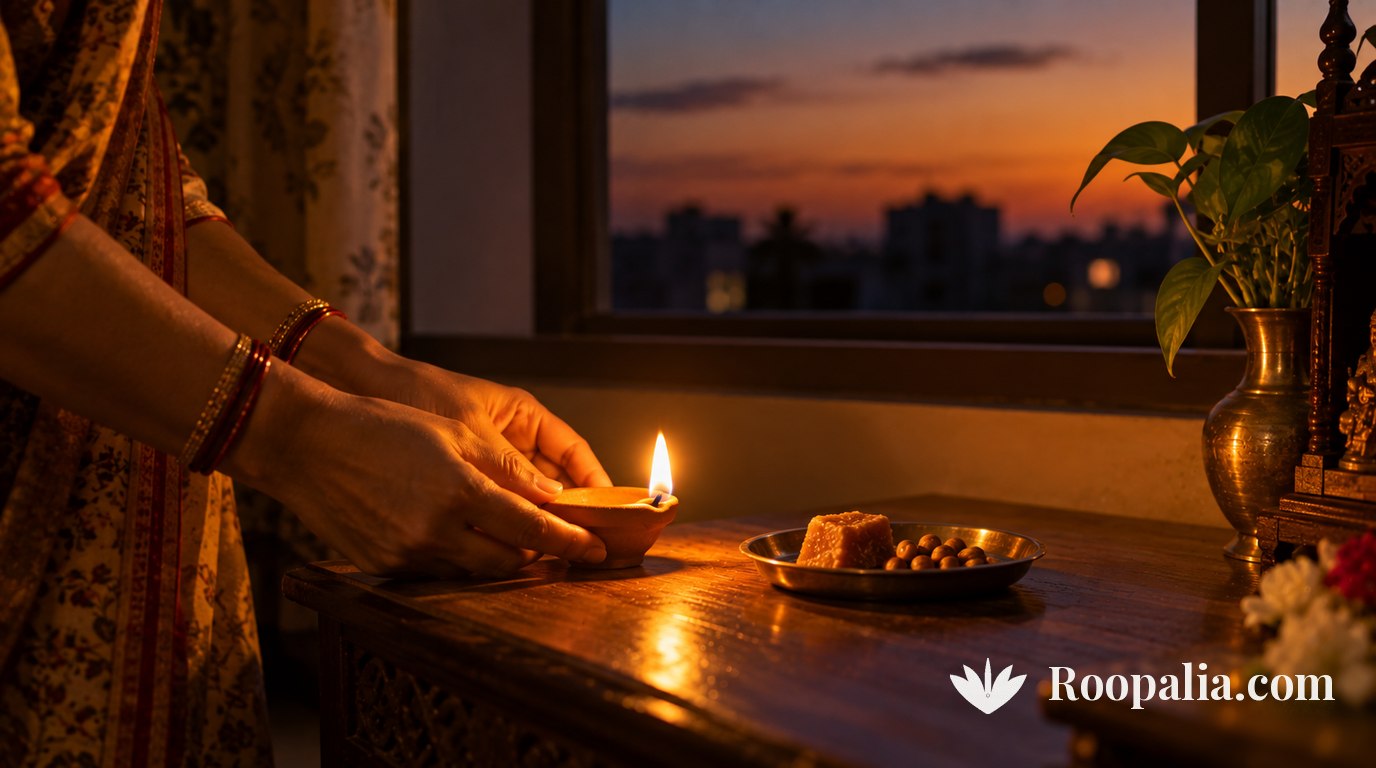
There is no clock time fixed by tradition, and that is rarely said plainly.
The general rule: break the fast in the evening, after sunset, having lit the lamp and completed the katha and aarti. Some families break it just before sunset, others after the first stars appear.
This matters especially if you live outside India. The timing follows your own city's sunset, not India's clock. In London, sunset is past nine in June and around four in December — the fast is broken by the local sunset both times. Any weather app or panchang will give you the time.
And if your health does not allow waiting until evening — diabetes, pregnancy, blood pressure, or medication that cannot be taken on an empty stomach — break the fast at midday. No text says a vrat must damage the body. The vow is one of intention, not of hunger.
How many Fridays, and when to begin?
Count: sixteen for Santoshi Mata; eleven, twenty-one or fifty-one for Vaibhav Lakshmi. Some families continue until the wish is fulfilled.
When: any auspicious Friday. Beginning on the first Friday of the shukla paksha (waxing fortnight) is considered particularly good, and the months of Shravana, Margashirsha and Chaitra are held to be favourable.
Two practical points
Do not begin during Malmas or Kharmas. New vows and udyapan ceremonies are both postponed in those periods. A fast already underway simply continues.
If you miss a Friday: don't panic. The accepted solution is to not count that Friday, carry on from the next one, and add one extra Friday at the end. Missing due to illness, travel or menstruation carries no fault. During menstruation most families keep the fast but have someone else perform the puja, or simply remember the Goddess mentally — follow your own family's practice.
Which mantra to chant on Friday
- Santoshi Mata: Om Shri Santoshi Mahamaye Gajanandam Dayini, Shukravara-priye Devi Narayani namostute.
- Lakshmi: Om Shreem Hreem Shreem Mahalakshmyai Namah — 108 times. Or recite the Shri Suktam.
- Shukra graha: Om Shum Shukraya Namah — along with the Navagraha Stotra verse given above.
If the Sanskrit trips you up, don't worry about it. Call in whichever language your heart settles into — the tradition has always placed feeling above pronunciation.
Rules of the Friday fast — do's and don'ts
Do:
- Bathe early, wear clean clothes, and clean the house. In Lakshmi worship, cleanliness is treated as part of the ritual.
- Light a lamp at the main door in the evening.
- Give something away — white items (rice, milk, sugar, white cloth) are traditional on Friday.
- Watch your speech. What the katha stresses hardest is not fasting — it is not quarrelling.
Don't:
- Sour food (in the Santoshi Mata vrat), onion, garlic, meat, alcohol.
- Insult anyone or speak harshly. Tradition treats this as a heavier lapse than breaking the fast itself.
- Turn the fast into display or comparison.
Something worth saying plainly
You will read in places that breaking a rule will "anger the Goddess" or make the fast worthless. That language produces fear, not devotion. The tradition has its structure and keeping it properly is good — but the whole point of this vrat is contentment, and fear is the opposite of contentment. If something slips, correct it next Friday. That is enough.
How to perform the udyapan
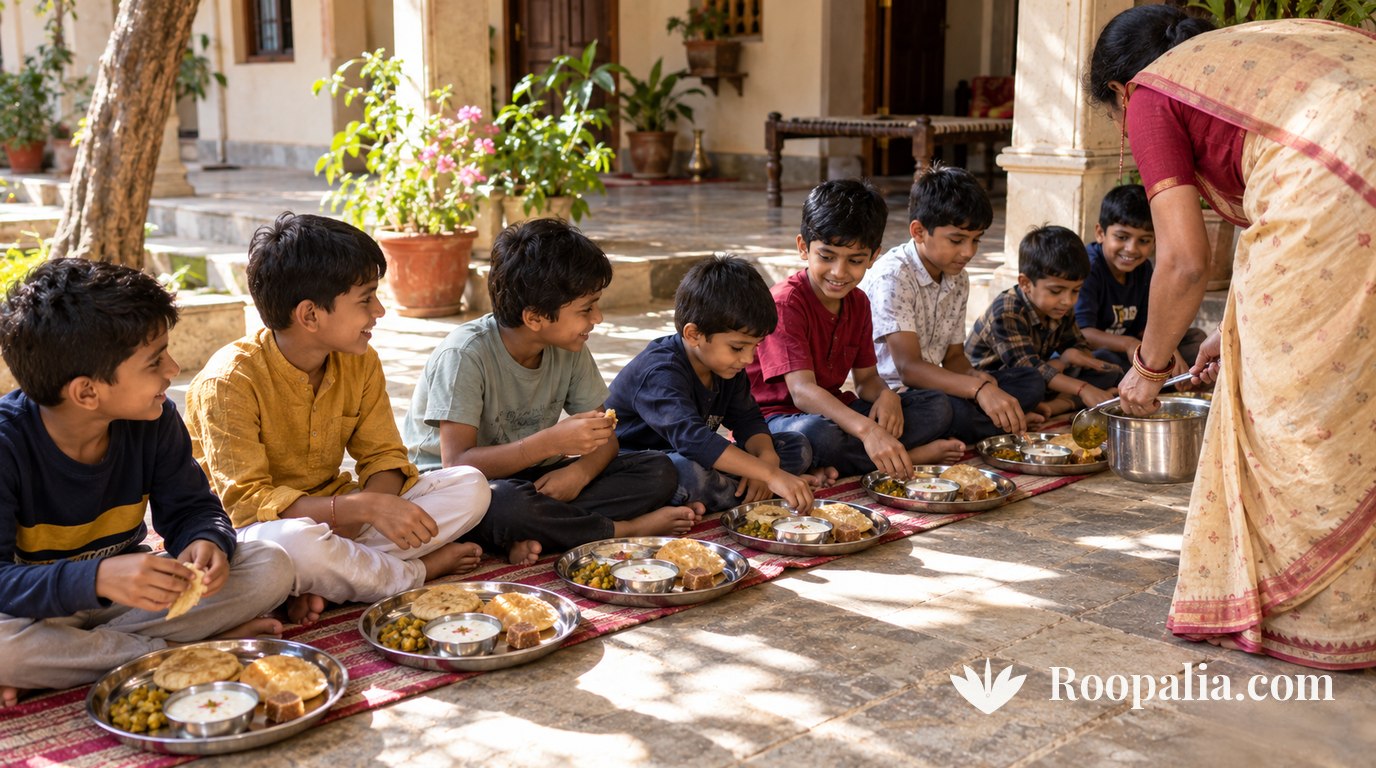
The udyapan falls on the last Friday — the sixteenth for Santoshi Mata, or whichever Friday completes your vow for Vaibhav Lakshmi.
Santoshi Mata udyapan
Samagri: jaggery, roasted chickpeas, kheer, puri, plain vegetables (no souring agents), coconut, banana, flowers, vermilion, rice grains, incense, a ghee lamp, red or yellow cloth.
Method: bathe, perform the full puja and read the katha. Then feed eight boys — puri, kheer, vegetables and jaggery-chickpeas. Afterwards give them a small offering or dakshina, touch their feet and take their blessing.
The critical rule: nothing sour anywhere in that meal or in the house that day — no curd, no lemon, no tamarind, no pickle, no tomato. Check everything cooking in the kitchen. In the katha, this single lapse is what brings the crisis.
Why eight boys? No scriptural reason is given; the number comes from the katha, where eight boys are fed at the udyapan, and the practice repeats it. If eight are not available — and outside India they often aren't — feed as many as you can and give the value of the rest to someone in need. The intention is complete either way.
The Vaibhav Lakshmi udyapan is different: a special puja on the final Friday, kheer as the offering, and prasad and gifts given to seven or eleven married women. Some versions also involve gifting the vrat booklet.
A word about that booklet
Several Vaibhav Lakshmi pamphlets state that you must gift seven, eleven or twenty-one copies of that same booklet at the udyapan, or the vrat will not succeed. This instruction does not appear in any Purana or dharmashastra — it appears in the pamphlets themselves. Give a gift if you wish to, but do not give it believing the fast fails otherwise. In the tradition of daana, what matters is the recipient and the intention, not the count of objects.
Keeping this fast outside India

This is actually one of the easiest vrats to keep outside India — no muhurat to calculate, no rare materials. Five things to keep in mind.
1. Break the fast by your own city's sunset. Don't watch India's clock. Any weather app gives you the time.
2. Substitutes are fine. No jaggery? Use jaggery from an Indian store, or muscovado or dark unrefined cane sugar. No roasted chana? Plain roasted chickpeas with no salt or seasoning. No fresh flowers? One white flower is enough.
3. Check labels for hidden sourness. This matters more abroad — citric acid, acidity regulator, tamarind and vinegar hide inside packaged bread, sauces, crisps and ready-made spice mixes.
4. Open flame. Many apartments have very sensitive smoke detectors. Light a small ghee lamp under the kitchen extractor or near a window. Where flames are forbidden outright, the tradition accepts a mental offering in place of the lamp.
5. If eight boys aren't available, invite however many you can, or do the udyapan jointly with another Indian family. Failing that, donate the equivalent number of meals to a local food bank.
Unlike Chhath, Navratri or Karwa Chauth, this fast needs no timing calculation, which makes it the simplest of them all. For the festivals that do need timings, we work out the windows for cities worldwide — see the Karwa Chauth moonrise and the Navratri ghatasthapana guides.
Explaining the day to children
When a child asks why you aren't eating, don't wave it away with "it's a vrat." That age is asking for a reason.
This fast is easy to explain, because its name is its meaning. Santoshi means the one who gives contentment. Tell the child: "Today we remind ourselves that what we have is enough." A seven-year-old understands that — and in the present moment they may need it less than we do.
Then give them a job: rolling the lamp wick, arranging the jaggery and chickpeas on the plate, handing out prasad. What is done by hand is what gets remembered. We've written about this approach at length in our guide to raising children with Indian values.
In closing
This fast isn't about asking — it's about stopping
Most Hindu vrats attach to a request: a child, long life, wealth, health. The Friday fast is the one whose name is simply "contentment." What it asks you to want is not more, but stillness with what is already here. There is hardly a cheaper offering in the whole tradition than jaggery and roasted chickpeas, and that is probably the point. On the day you set down a plain plate with nothing sour on it and light one lamp, you are not asking for anything — you are stopping, once a week, to say that this is enough.
Frequently Asked Questions
What are the rules of the Shukravar (Friday) vrat?
Which fasts are kept on Friday in Hinduism?
Can you eat roti during the Friday fast?
Can you eat guava during the Friday fast?
What time should the Friday fast be broken?
How many Fridays should the vrat be kept, and when should it start?
How is the udyapan performed and what is needed?
What is the difference between the Santoshi Mata and Vaibhav Lakshmi vrats?
Can men keep the Friday fast?
What should I do if I miss a Friday, or if my period falls on one?
📷 AI-generated images. For illustration only.
🙏 This article is general cultural and religious information. Scriptural references are drawn from the Skanda Purana (Varalakshmi Vrata Mahatmya) and widely available editions of the Navagraha Stotra; vrat practices vary by region and family. If you have diabetes, are pregnant, have blood pressure issues or take regular medication, consult your doctor before fasting.